How to Surf a Beach Break

Neptune
June 10, 2026
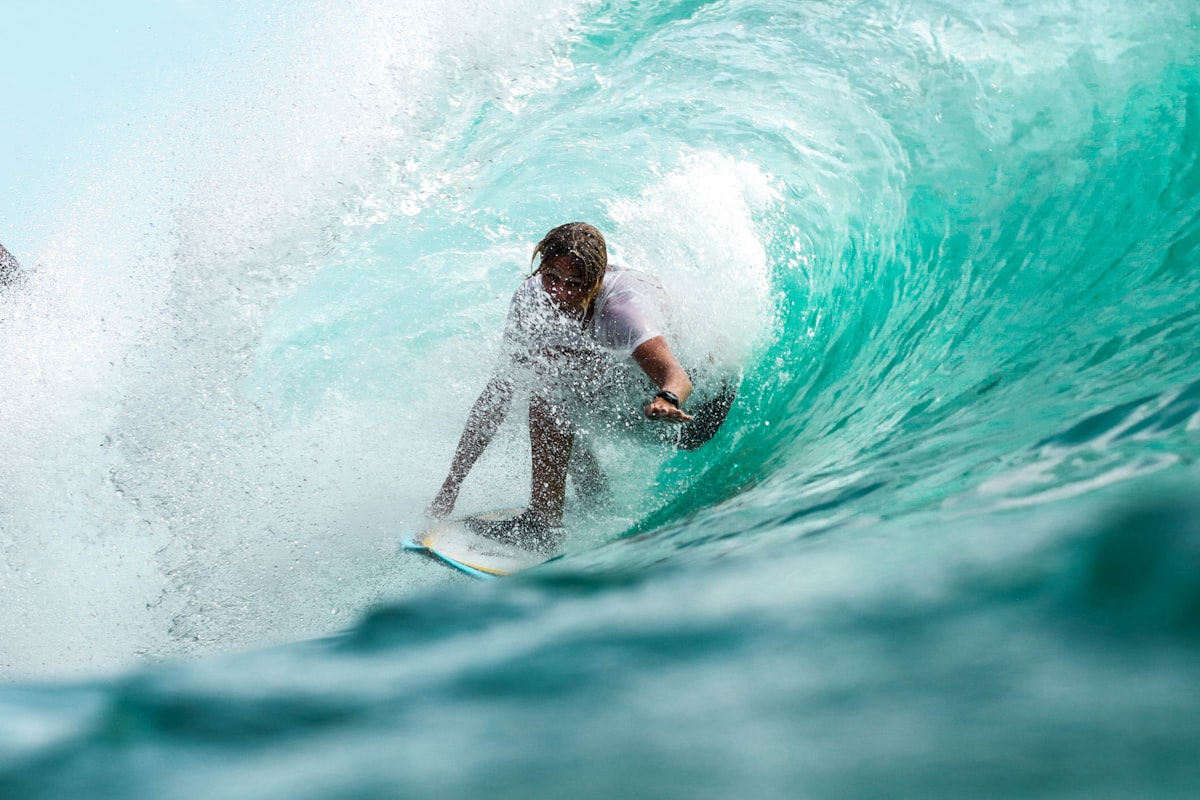
The Wave Everyone Starts On — and Few Ever Master
Most first waves break over sand. The bottom is forgiving. It also moves.
Yesterday's peak may be thirty yards down the beach today.
This guide is the companion to our dedicated breakdowns of point breaks and reef breaks. Beach breaks deserve their own treatment because the skill they test isn't bravery or local knowledge — it's the ability to read shifting, ever-changing sand and put yourself in the right place at the right time, over and over.
What Makes a Beach Break a Beach Break
A beach break is any surf spot where waves break over a sandy seafloor rather than reef or rock. That simple definition hides the entire challenge. Reef and rock are fixed — the contour of the bottom doesn't change from one swell to the next, so the wave breaks in the same place, the same way, for decades. Sand is the opposite. It's constantly pushed around by waves, tides, and currents, and the shape of the bottom rewrites itself week to week.
The part of the bottom that actually creates your wave is the sandbar — a raised mound or ridge of sand sitting offshore of the beach. When a swell rolls in from deep water and hits the shallow water over a sandbar, it slows, stands up, and breaks. The deeper water on either side of the bar lets waves pass through unbroken. So a beach break isn't really one continuous wall of whitewater; it's a series of breaking peaks sitting on top of sandbars, separated by deeper channels where the wave doesn't break.
Understanding this single fact — the wave breaks over the bar and stays open over the channel — is the foundation of everything else in this article.
Why the Sand Moves
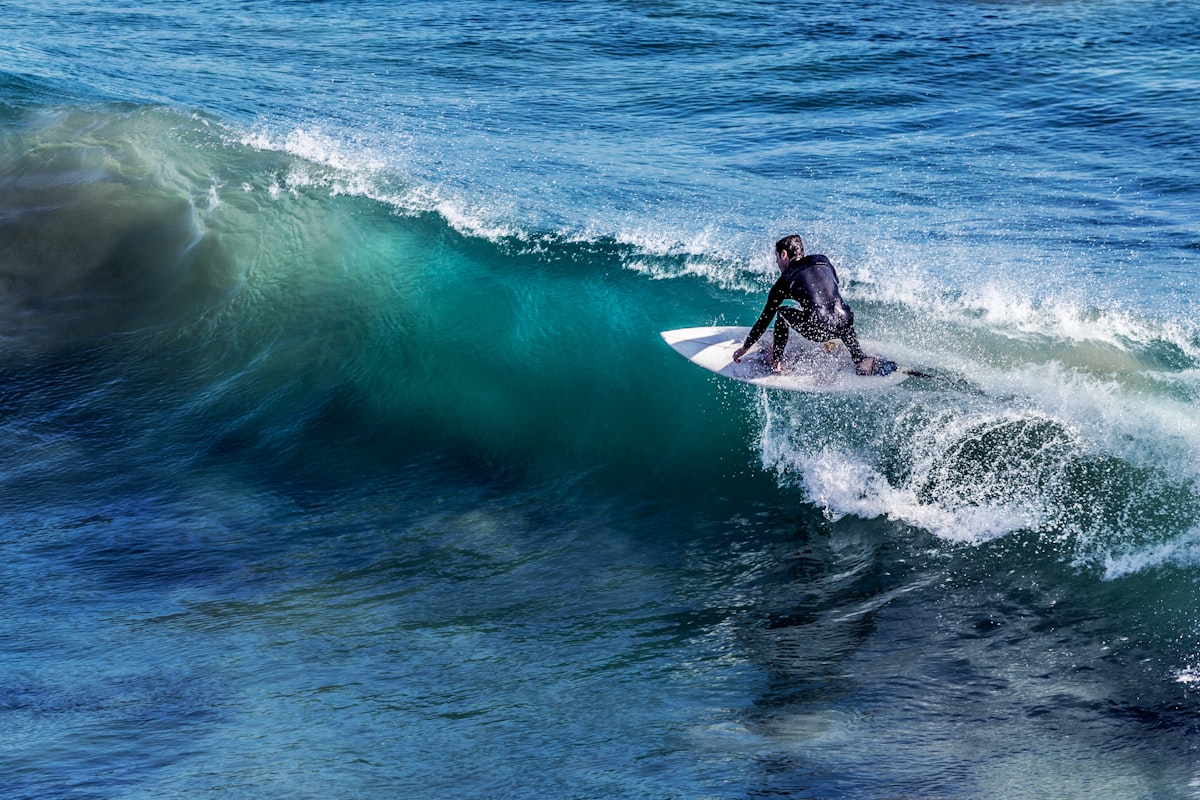
Sandbars are built and torn down by the waves themselves. A long stretch of small, clean swell tends to push sand shoreward and organize it into well-defined bars with clean channels between them — this is when a beach break is at its best. A big, stormy, disorganized swell does the opposite: it flattens bars, fills in channels, and homogenizes the bottom into a long, featureless ramp that produces ugly closeouts.
This is why a beach break can be magic one month and unsurfable the next, with no obvious change in the swell. The bottom has changed. Seasoned beach-break surfers think in terms of how the bars are "set up" right now, not just what the forecast says. Two feet of clean swell over a good bar beats four feet over a flat, washed-out beach every time.
Reading a Beach Break Before You Paddle Out
The most valuable surfing you'll ever do happens on the sand, fully dry, watching. Beach breaks reward patient observation more than any other wave type because the information you need is right there on the surface — you just have to know what you're looking at. (For a deeper dive on this skill, see our guide on how to read the beach before you surf.)
Give yourself a full ten minutes before you suit up. Here's what to look for.
Find the Channels First
Counterintuitively, you should look for the places where waves aren't breaking before you look for where they are. Those flat, deeper lanes between the breaking peaks are channels, and they're your friends for two reasons. First, they're the easiest, driest path to paddle out — you ride the rip of water flowing back to sea instead of punching through whitewater. Second, the channels tell you exactly where the bars are: the bar is the breaking peak immediately next to the channel.
Look for water that's darker (deeper), choppier or more textured, and noticeably calmer in terms of breaking waves. That's your highway out.
Locate the Peaks
Now look at where the waves are standing up tallest and breaking with a defined shoulder. A good peak has an obvious apex — a point where the wave starts breaking — and then a wall that peels left, right, or both away from that apex. That peeling shoulder is what you'll ride. A wave that stands up and falls over all at once, top to bottom, along its whole length is a closeout, and no amount of skill will let you make it. On a beach break you'll see both, often side by side. Your job is to fish out the peeling peaks and ignore the closeouts.
Watch Several Sets, Not One Wave
A single wave tells you almost nothing on a beach break because the peak shifts. Watch five or six full sets and you'll start to see a pattern: this bar is producing a makeable right; that one down the beach is mostly closing out; the peak between them swings left on the bigger waves. Patterns that hold across multiple sets are the bars. One-off peaks that never repeat are just the chop of a disorganized swell.
Take a Lineup Marker
Working on your surf technique? Partner with Neptune on iPhone and Apple Watch.
Get the free appOnce you've found the peak you want, line it up against something fixed on land — a lifeguard tower, a distinctive house, a gap in the dunes — so you can find the same spot once you're floating offshore with no sense of where you are. This is the oldest trick in surfing and it's never more useful than on a featureless beach where everything looks the same from the water.
Paddling Out the Smart Way
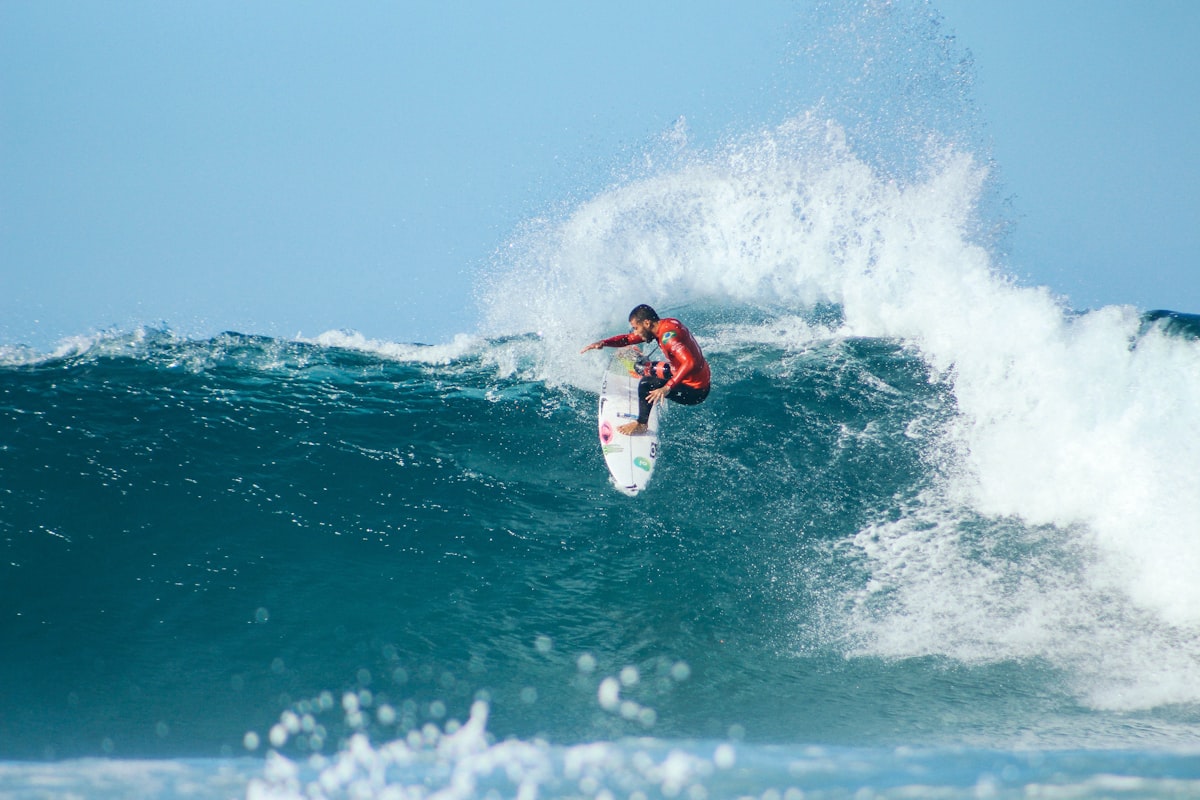
The single biggest energy-saver at a beach break is using the channels. New surfers instinctively paddle straight out from wherever they parked, which usually means straight into the heaviest whitewater on the strongest bar. Watch the people who make it outside without breaking a sweat and you'll notice they angle toward a channel, ride the outgoing current, and only cut across to the peak once they're past the breaking waves.
A few principles for getting out efficiently:
- Time your entry. Walk or paddle out during a lull between sets, not as a set is detonating on the bar in front of you.
- Use the rip, then exit it. The current flowing seaward through a channel is essentially a free escalator out. Ride it past the impact zone, then paddle laterally along the back of the lineup to your peak. Just don't sit in the channel itself to catch waves — by definition, that's where they don't break. (If the idea of riding a current out makes you nervous, read our breakdown of how to spot and survive a rip current — the same water that helps you here is the water you need to respect.)
- Keep moving laterally. Beach-break currents constantly push you down the beach. You'll need to paddle back up-current toward your lineup marker far more often than you'd expect.
The Real Skill: Staying in the Spot
Here is the defining challenge of beach-break surfing, the thing that separates people who score from people who flail: you are always drifting, and the peak is always moving.
Two forces work against you constantly. The first is lateral current — the river of water moving along the beach that pushes you down-coast minute by minute. You can be sitting in the perfect spot, look up two minutes later, and be forty yards away from it without having felt yourself move. The second is the shifting peak — because sand bars aren't perfectly uniform and swells arrive at slightly different angles, the exact takeoff point wanders around even on a single bar.
The combined effect is that a beach break never lets you sit still. Surfers who treat it like a reef break — paddle out, find the spot, and park there — spend the whole session in the wrong place getting frustrated. Surfers who score treat positioning as a continuous, active job.
How to Manage the Drift
- Re-check your land marker constantly. Every couple of minutes, glance at your lineup reference and correct your position. Small, frequent corrections beat one big desperate sprint after you've drifted off the bar entirely.
- Watch where the best waves keep breaking, and migrate to it. If the last three good ones broke twenty yards inside and up the beach from you, that's where the bar is right now. Move to it. The wave is telling you where to sit; listen.
- Sit slightly to the up-current side of the peak. Position yourself a touch up-current of where you actually want to take off, so the drift carries you into the spot rather than out of it. You're playing the current instead of fighting it.

Wave Selection: Beating the Closeout
The defining frustration of beach breaks is the closeout — the wave that pitches over all at once with no peeling shoulder to ride along. Beach breaks produce more closeouts than any other wave type, especially when the bars are washed out or the swell is too big for the bank. Learning to tell a makeable wave from a closeout before you commit is the highest-leverage skill you can develop here.
A few reads that save you from doomed waves:
- Look for the angle, not the size. A makeable wave shows you a clear shoulder — a section of unbroken wall angling away from the peak. A closeout stands up parallel to the beach, a straight uniform line with no high point. If you can't see which way the wave will peel, it probably won't.
- Find the apex. Take off at the highest point of the wave — the spot that breaks first — and head toward the open shoulder. If there's no defined apex and the whole thing is one flat line, sit it out.
- Smaller and cleaner beats bigger and squarer. A waist-high wave with a real shoulder beats a head-high closeout that detonates on your back the instant you stand up.
- Watch the bar's history. If waves on this bar have closed out all session, the next one probably will too.
There's no shame in letting a closeout roll under you. Patience is a wave-selection skill, and at a beach break it's the difference between three good rides and twenty thrashings.
Tides, Swell Size, and the Beach-Break Sweet Spot
Beach breaks are unusually sensitive to tide because the water depth over a shallow sandbar changes dramatically as the tide rises and falls. A bar that produces fat, mushy, unbreaking waves at high tide can switch on and start throwing clean, hollow peaks as the tide drops and the water over it shallows out. As a rule of thumb, many beach breaks are at their best on a mid tide, either pushing or dropping, though every bank is different. Keep a mental log of what your local does on which tide — it's the single most useful piece of local knowledge you can build. (Our guide on how tides affect surfing goes deep on the mechanics.)
Swell size matters just as much. Beach breaks have a window. Too small and the waves don't have the power to stand up and break with shape. Too big and the sandbars get overwhelmed — the waves break too far out, close out across the whole beach, and the lineup turns into a washing machine of current and whitewater. The sweet spot, where the swell matches the bars, is when beach breaks are genuinely world-class. The famous beach breaks of the world aren't soft and forgiving on their best days; they're some of the most demanding waves on Earth precisely because perfectly set-up sandbars can produce flawless, hollow tubes.

A Beach-Break Game Plan You Can Use Tomorrow
Bring it all together and the approach is simple, even if executing it takes practice:
- Watch from the sand for ten minutes. Find the channels, then the peaks, then watch several sets to see which bars are actually producing makeable waves.
- Pick your peak and take a land marker. Line your chosen bank up against something fixed on shore.
- Paddle out through the channel. Use the outgoing current, time your entry to a lull, and conserve your energy.
- Position up-current of the peak and stay active. Re-check your marker every couple of minutes and let the drift feed you into the spot.
- Be ruthless about wave selection. Take the peeling shoulders, let the closeouts go, and don't be afraid to migrate to wherever the good ones keep breaking.
- Re-read everything as the tide changes. The bank that was firing at mid tide may shut off at high. Stay observant and be willing to move — or paddle one bar down the beach where the next channel and peak are doing something better.
The Mindset That Wins at Beach Breaks
The surfers who thrive on beach breaks aren't necessarily the most talented — they're the most adaptable. They've made peace with the fact that the wave will never stay still, and they've turned constant re-reading into a habit rather than a chore. Where a beginner sees chaos and bad luck, an experienced beach-break surfer sees information: the channel showing the way out, the apex pointing toward the open face, the drift quietly carrying them off the bank.
That adaptability is a transferable skill. Learn to read a beach break — a moving target with no fixed answers — and reef breaks and point breaks start to feel almost easy by comparison, because the bottom finally holds still. The humble beach break, the wave we all start on, turns out to be the best teacher of the most important surfing skill of all: paying attention.
So next time you pull up to your local stretch of sand, resist the urge to rush in. Read the water first. The ocean is telling you exactly where to be — beach breaks just make you earn the answer every single time.
Read it. Then take it to the water.