How to Paddle Out the Smart Way

Neptune
May 2, 2026
The Hidden Skill That Separates Surfers From Strugglers
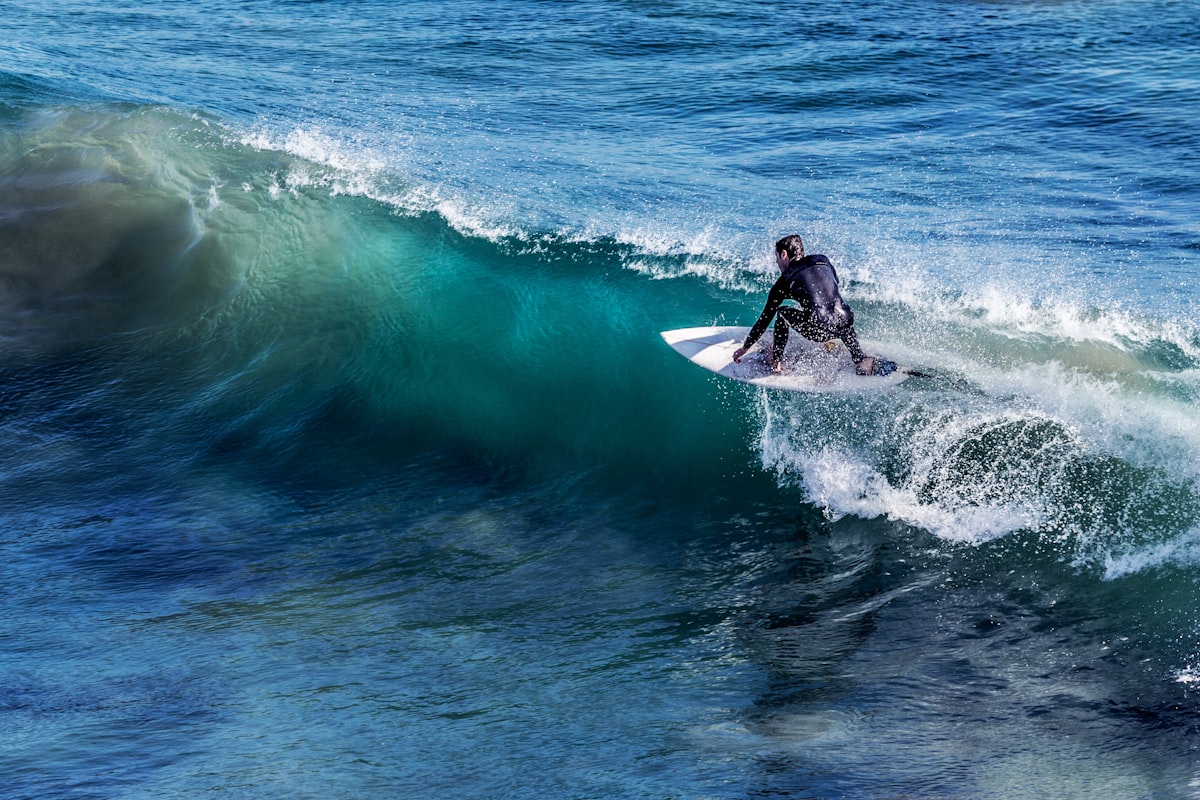
Beginners take a straight line and get pummeled. Experienced surfers use channels and current.
Same ocean. Two different sessions.
The difference isn't fitness or technique in the conventional sense. It's the ability to read the ocean's structure — the channels, rips, lulls, and patterns that experienced surfers use as moving walkways from shore to lineup. This is one of the least-taught skills in surfing, and one of the highest-leverage. Learn it, and you'll spend less energy getting outside, catch more waves per session, and surf better because you arrive at the takeoff zone with gas left in the tank.
Why Energy Management Matters More Than You Think
Surfing is overwhelmingly an anaerobic sport in short bursts (the actual ride) wrapped inside an aerobic endurance challenge (everything else). Studies on competitive surfers have shown that roughly 50-60% of session time is spent paddling, 30-35% is spent waiting, and only 4-8% is actual time on a wave. Every minute you waste fighting the ocean to get outside is a minute you're not surfing — and it's depleting the energy you need to catch and ride waves once you arrive.
If you can cut your paddle out from three minutes to one, over the course of a 90-minute session that might mean six or seven extra rides. Smart paddling out is the closest thing to free progression that exists in this sport.
Step One: Read the Beach Before You Go Out
The smart paddle out starts before your feet touch the water. Spend three to five minutes watching the lineup from elevated ground (a parking lot, dune, or seawall works well) before you suit up. You're looking for four specific things.
Where the Waves Are Breaking
Identify the peaks — the spots where waves consistently break first and most cleanly. These are sections of bottom contour (sandbar, reef, or point) that focus swell energy. Note their location relative to landmarks on shore. You'll use these landmarks to navigate once you're in the water and your perspective changes.
Where the Waves Aren't Breaking
This is the key insight most people miss. Look for sections of the lineup where waves don't break, or break much less consistently. These are the channels — areas where the water is deeper and waves either roll past unbroken or break with much less intensity. A typical beach break has peaks every 30-50 meters with calmer channels in between. A point break has a defined channel running parallel to the shoulder.
Water Movement Patterns
Watch how floating debris (foam, kelp, surface texture) moves across the lineup. Water pushed inland by sets has to go back out — usually through a channel as a rip current. Signs: streaks of foam moving offshore, a "river" of disturbed surface texture cutting through the lineup, discolored water from sand pulled off the bottom, or a noticeable gap in the wave train where waves dissipate. These are all rip current indicators — your best friend or worst enemy depending on how you use them.
Set Timing
Time the intervals between sets. Watch for at least 10 minutes and note how long the lulls are. If sets come every 12 minutes with 4 waves per set, you have an 8-10 minute window of relative calm to make your paddle out. If sets are every 4 minutes, your timing has to be much sharper.
Understanding Channels: Your Free Ride to the Lineup
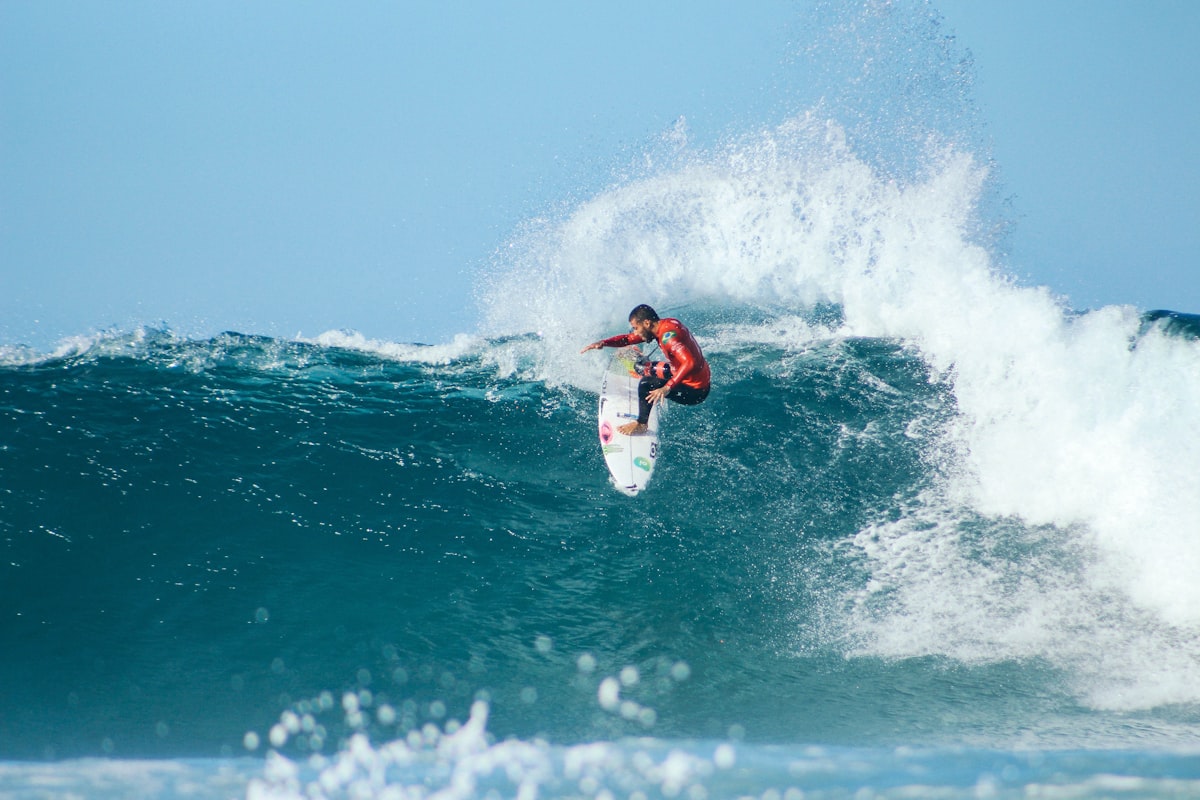
A channel is any section of the lineup where waves don't break, or break weakly. Channels exist because of bottom contour — wherever the water is deeper, swell energy doesn't get focused enough to break.
Types of Channels
Reef break channels are the most obvious and reliable. The reef has a defined edge, and the deep water on either side becomes a clear channel. Beach break channels are more dynamic because sandbars shift constantly, but you'll usually find a channel between sandbar peaks. Point break channels run parallel to the wave's shoulder.
How to Use a Channel
Your strategy is simple: paddle to the channel first, then up the channel to the lineup, then sideways into the takeoff zone. This adds distance, but it removes 90% of the resistance.
Most beginners paddle the shortest line from where they entered the water to where they want to surf. That straight line goes directly through breaking waves, forcing them to duck dive every wave and still get pushed back. Adding 20-30 meters of horizontal travel to use a channel saves you 5-10 duck dives.
Spotting Channels Once You're in the Water
From the water, channels look slightly different than from the beach. Here's what to look for:
- Smoother surface texture — channels often have a glassier appearance because they aren't being disturbed by breaking waves
- Darker color — deeper water reads as darker blue or green
- Less whitewater — even if you can't see depth, you can see where the foam isn't
- Floating debris collecting — kelp, foam patches, and seaweed often gather in channels because the currents converge there
A useful technique: pick a fixed point on shore and another point in the lineup, then trace the line between them. If that line passes through clean, dark water, you've found a channel.
Rip Currents: The Misunderstood Tool
A rip current is a strong, narrow flow of water moving offshore — essentially a river running through the surf zone in the wrong direction. They form because water pushed onshore by waves has to go somewhere, and it finds the path of least resistance back out. For swimmers, rips are dangerous. For surfers, they can be one of the most efficient tools in the ocean.
How Rips Help Surfers
A rip current can carry you from shore to the lineup at 1-3 meters per second with zero paddling effort — faster than most people can paddle. Local surfers at certain breaks essentially commute on rips, walking down the beach to where the rip starts and letting the current ferry them outside while they conserve energy.
Working on your surf technique? Partner with Neptune on iPhone and Apple Watch.
Get the free appHow to Use a Rip Safely
The cardinal rule: always know your exit before you commit to a rip. A rip will take you out, but it doesn't always deposit you exactly where you want to be. Before entering:
- Identify where the current is heading
- Plan how you'll paddle out of the rip once you've reached the lineup
- Make sure you have the fitness to paddle laterally if needed
Once you're in the rip, don't fight it. Lay flat, point your nose in the direction of travel, and paddle minimally. When you reach the exit point (usually where the rip weakens and spreads laterally), paddle perpendicular to the current to break out. Don't try to paddle straight against it; you'll lose every time.
When Not to Use a Rip
Rips become dangerous when they're moving faster than you can swim or extend beyond the surf zone. Beginners should treat them with caution: learn to identify them first, then use them in mild conditions, then graduate to larger surf as your fitness improves.
Timing the Lull: When to Make Your Move
Even at a break with great channels and useful rips, sets eventually arrive and turn the easy paddle out into a battle. Smart paddling out means making your move during the lull between sets.
The Two-Minute Rule
Watch at least one full set cycle from the beach. Count the waves in the set and time the lull afterward. Most lulls are 90 seconds to 4 minutes at beach breaks, longer at quality reef breaks.
You want to be deep in the lineup before the next set arrives. The math: lull length minus paddle-out time minus a 30-second buffer. If your paddle out takes two minutes and the lull is two minutes, you'll get caught. Wait for a longer lull, find a faster route, or start the moment the last wave of a set has passed.
Reading the Set Has Ended
The biggest beginner mistake is mistaking a mid-set lull for the end of the set. Two waves come in, a 30-second pause, and the surfer dashes for the lineup right as the third (often biggest) wave hits.
True end-of-set signs: the horizon flattens with no dark lines visible, the lineup looks calm with surfers no longer bracing, and surface texture shifts from swell-driven to wind-driven chop. If in doubt, wait. An extra 30 seconds of patience is far cheaper than getting cleaned up by a missed set wave.
What to Do If You Get Caught Mid-Paddle
Even with good timing, you'll occasionally get caught by an unexpected set. When this happens:
- Don't panic, don't turn around. Going back to shore puts you in the impact zone longer.
- Identify the strongest wave and prioritize getting under it. The first wave is often the warning; the second or third is usually the heaviest.
- Angle slightly toward the channel as you paddle to reduce the energy you absorb.
- Commit to each duck dive completely. Half-hearted dives compound — you get pushed back into the next wave with even less energy.
The single best skill for surviving a mistimed paddle out is mental: stay calm, conserve oxygen, accept that you might get pushed back, and start again.
Lineup Positioning: Arriving Doesn't Mean You're Done
Reaching the lineup is only half the battle. Where exactly you sit matters enormously.
The Peak vs. The Shoulder
The peak is where waves break first — the steepest, most powerful, and most contested section. The shoulder is flatter and less crowded. For most surfers, the right strategy is to start slightly inside or to the side of the main peak. You'll catch a few smaller waves, get a feel for the patterns, and move toward the peak as you read the rotation of the crowd. Sitting directly in the peak right when you arrive is both technically risky and socially risky — you'll burn surfers who've been waiting longer.
Triangulating Your Position
Use two landmarks on shore at perpendicular angles to lock in your position. A typical setup: "Tower in front of me, palm tree to my left over my shoulder." If the tower starts to look smaller, you're drifting outside. If the palm tree moves behind you, you're drifting down the beach. Currents push you out of position constantly, and landmarks let you correct without thinking.
The Ten-Minute Rule
At a new lineup, don't paddle for the first wave that comes your way. Sit and watch for at least 10 minutes. Note where each wave breaks, where the best waves come from, and how the crowd rotates. The lineup is a system — you'll catch better waves by understanding it than by chasing the first opportunity.
Energy Conservation: The Fitness Multiplier
Even with the best routes, paddling itself takes energy. Smart paddling means making each stroke count.
Stroke Efficiency
Most beginners paddle with short, frantic strokes — splashing the surface and producing minimal forward propulsion. Efficient paddling looks slower but moves the surfer faster.
- Reach forward fully — your hand should enter the water just past the nose, shoulder fully extended
- Pull deep, not wide — your arm should travel directly under your body, not out to the side
- Exit cleanly at the hip — pulling past your hip wastes energy
- Roll your body slightly with each stroke to engage your back and lats
A good paddler at cruising speed takes about 30-40 strokes per minute and can sustain that for the full paddle out. A panicked beginner takes 80+ short strokes per minute and burns out in 30 seconds.
Cadence vs. Sprint
Cruising paddle is for channels and calm water. Sprint paddle is for catching waves and punching through critical situations. When you're using a channel, paddle at cruising pace. When a wave is about to break on you, sprint. Most beginners sprint when they should cruise and cruise when they should sprint. Learning when to switch gears is one of the highest-leverage skills in surfing.
The Recovery Rest
Once you're in the lineup, sit up and recover. Slow your breathing. The 30-60 seconds between paddle out and your first wave is when most surfers lose composure — they paddle for a wave before they're ready. The wave you catch fresh is twice as good as the wave you catch gassed.
Bringing It All Together: A Mental Checklist
Every paddle out should follow roughly this sequence:
- Watch from shore (5-10 minutes minimum). Identify peaks, channels, rips, and set timing.
- Choose your route. Channel, rip, or combination — pick one and commit.
- Time your entry for a verified end-of-set lull with safety buffer.
- Paddle efficiently. Cruise pace through the channel, sprint when needed.
- Triangulate your position using two landmarks.
- Recover and observe before going for your first wave.
This routine becomes automatic with practice. Within a few weeks of focused attention, you'll find yourself reading channels and timing sets without conscious thought.

The Long-Term Payoff
Paddling out smart is a compounding skill. Every session, you save energy that translates to more waves caught and better surfing on those waves. The surfers who make it look easy aren't lucky — they've built thousands of hours of ocean reading into an intuition that lets them flow through the surf zone instead of fighting it.
You don't need to be a great athlete to paddle out smart. You need to be observant. The ocean constantly broadcasts information about itself, and the surfers who learn to receive it get rewarded for the rest of their surfing lives.
Next time you paddle out, slow down. Watch first. Plan second. Paddle third.
Read it. Then take it to the water.