Mastering the Bottom Turn

Neptune
March 20, 2026

Why the Bottom Turn Is the Most Important Move in Surfing
Ask a professional what separates intermediate from advanced. They will say the bottom turn.
It will not make a highlight reel on its own. Every great maneuver still runs on it.
Think of it this way: a bottom turn is to surfing what a good first step is to basketball or a proper backswing is to golf. It's the setup move that determines the quality of everything that comes after it. A weak bottom turn means you're fighting the wave. A strong one means the wave is doing the work for you.
Yet despite its importance, the bottom turn is one of the most under-practiced moves in surfing. Most surfers learn to pop up, ride the face, and maybe attempt a few turns — but they never deliberately work on the mechanics of how they redirect at the bottom of the wave. The result is a ceiling on progression that no amount of time in the water can break through.
This guide breaks down exactly how the bottom turn works, what your body should be doing at each phase, and how to practice it on both your frontside and backside until it becomes second nature.
What Exactly Is a Bottom Turn?
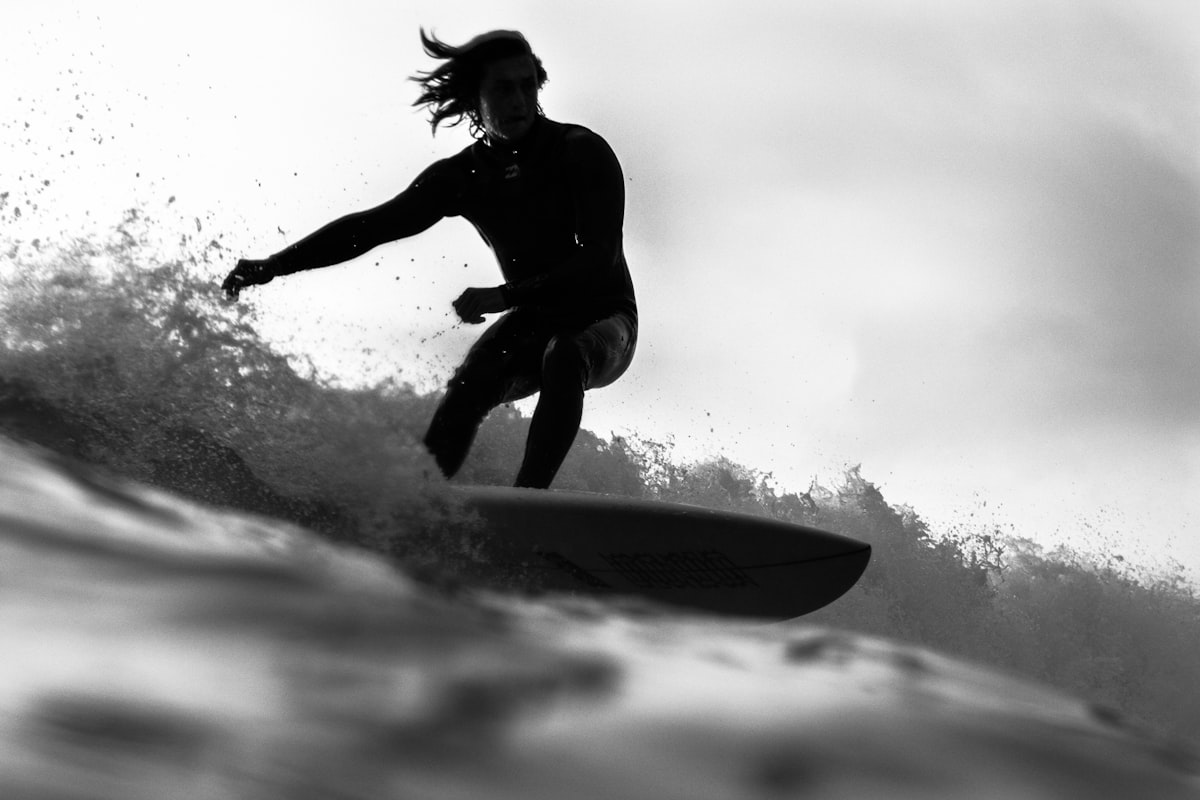
A bottom turn is the arcing turn you make at the base of the wave after dropping in. Instead of riding straight toward the shore, you redirect your momentum back up toward the face of the wave — converting your downward speed into horizontal and vertical energy.
There are two types:
- Frontside bottom turn — when you're facing the wave (the wave is breaking toward the side your chest faces)
- Backside bottom turn — when your back is to the wave (the wave is breaking behind you)
Both follow the same fundamental physics, but they feel quite different and require different body mechanics. Most surfers find the frontside bottom turn more natural, while the backside version takes more deliberate practice.
The depth, speed, and angle of your bottom turn determine what maneuver is possible next. A shallow, fast bottom turn sets up a cutback. A deep, drawn-out bottom turn builds the speed and angle needed for a powerful top turn or snap. A projected bottom turn aimed high on the wave face can launch an aerial.
The Physics Behind the Bottom Turn
Understanding why the bottom turn works will help you execute it better.
When you drop into a wave, gravity pulls you down the face. You accelerate. At the bottom of the wave — the trough, or the flat water just ahead of the breaking section — you have maximum speed but you're heading in the wrong direction (toward shore).
The bottom turn converts that speed. By engaging your rail (tilting the board onto its edge), you create a curved path that redirects your momentum from "going down" to "going across and up." The tighter and more committed your rail engagement, the sharper the turn and the more energy you redirect.
This is why speed and compression are so important. Your legs act as shock absorbers and springs:
- Compression (bending your knees) happens as you descend the face and enter the bottom turn, absorbing energy and lowering your center of gravity for stability
- Extension (straightening your legs) happens as you exit the bottom turn and project back up the wave, releasing stored energy and accelerating into your next maneuver
This compress-and-extend cycle is the heartbeat of high-performance surfing. Every turn, every maneuver, every transition on a wave is driven by this rhythm — and the bottom turn is where you first learn to feel it.
How to Execute a Frontside Bottom Turn
The frontside bottom turn is where most surfers should start. You're facing the wave, which gives you better visibility and a more natural body position.
Phase 1: The Drop
After popping up, angle your takeoff slightly toward the shoulder of the wave (the unbroken part). You want to drop down the face with some lateral momentum — not straight down toward the flats.
Keep your knees bent and your weight centered over the board. Your eyes should already be looking where you want to go: down toward the base of the wave where you'll initiate the turn.
Phase 2: Compress at the Bottom
As you reach the lowest point of the wave, bend your knees deeply. This is the compression phase. You're absorbing speed and loading energy into your legs like a coiled spring.
At this point:
- Your back knee should drop slightly inward, toward the deck of the board
- Your front foot should be pressuring the inside rail through your toes
- Your shoulders and hips should begin rotating toward the wave face
- Your leading hand (front arm) starts to reach toward the wave
Phase 3: Engage the Rail
This is where the turn actually happens. Shift your weight onto your toes and press through your front foot to tilt the board onto its inside rail. The more you commit to the rail, the tighter and more powerful the turn.
A common mistake here is staying flat on the board. If both rails are in the water, you're not turning — you're sliding. You need to feel the board up on its edge, carving an arc through the water.
Your back foot acts as a pivot point. Press down through the tail with your back foot to keep the fins engaged and control the arc of the turn.
Phase 4: Look, Lead, and Project
Your body follows your eyes. Look up at where you want to go on the wave face — the lip, the pocket, or the open shoulder. Your leading arm should point in that direction.
Working on your surf technique? Partner with Neptune on iPhone and Apple Watch.
Get the free appAs you exit the bottom of the arc, begin extending your legs. This extension drives you back up the wave face with speed and power. The more compressed you were at the bottom, the more energy you have to release.
Your hips and shoulders should be fully rotated toward the wave by the time you're heading back up the face. If your upper body is still squared toward shore, you'll lose power and straighten out prematurely.

How to Execute a Backside Bottom Turn
The backside bottom turn is mechanically more challenging because your back is to the wave. You can't see the wave face as easily, and the body rotation feels less natural.
The Key Difference: Heel Pressure
On your frontside, you engage the rail through your toes. On your backside, you engage through your heels. This means:
- Your weight shifts to your heels as you initiate the turn
- Your back knee opens outward rather than dropping inward
- Your leading arm reaches behind you, toward the wave face
Phase-by-Phase Breakdown
The drop: Similar to frontside, but your back is now facing the wave. Look over your leading shoulder to see where you're going.
Compression: Bend deeply at the bottom. Your hips drop low. Many surfers don't bend enough on their backside — this is the number one reason backside bottom turns feel weak.
Rail engagement: Press through your heels to tilt the board onto the heel-side rail. Your front knee should point slightly away from the wave. Commit to the rail — half-measures result in a weak, skidding turn.
Projection: Look over your leading shoulder and up at the wave face. Rotate your shoulders and hips to open your chest toward the wave. Extend your legs to drive back up the face.
The backside bottom turn rewards exaggerated movements. Whatever you think is enough rotation, do more. Whatever depth of compression feels adequate, go lower. The wave is behind you, so you need extra commitment to redirect effectively.
The Five Most Common Bottom Turn Mistakes
1. Not Looking Where You Want to Go
Your board follows your body, and your body follows your eyes. If you're staring at the water directly in front of you instead of looking up at the wave face, your turn will flatten out and you'll lose the wave.
Fix: Before you even start the turn, pick a target on the wave face. Keep your eyes locked there through the entire bottom turn.
2. Staying Too Tall
A bottom turn without compression is a bottom turn without power. If your legs are straight as you transition from the drop to the turn, you have no stored energy to release.
Fix: Exaggerate the bend in your knees at the bottom. Your back knee should almost touch the deck of the board on a full-commitment bottom turn. It will feel too low at first — that's exactly right.
3. Rushing the Turn
Many surfers try to start turning before they've reached the bottom of the wave. This cuts the turn short and wastes the speed they built on the drop.
Fix: Be patient. Let yourself ride all the way down to the trough before initiating the turn. The extra half-second of dropping builds significantly more speed.
4. Keeping the Board Flat
If both rails are in the water, you're not carving — you're skidding. A flat board slides sideways and bleeds speed. A board on its rail carves a clean arc and maintains momentum.
Fix: Commit to tilting the board. On your frontside, drive through your toes. On your backside, drive through your heels. You should feel the water gripping the rail as you turn.
5. Dropping the Back Arm
Your arms are critical for balance and rotation. Many surfers let their trailing arm (back arm) hang limply or drop behind them, which kills upper body rotation and stalls the turn.
Fix: Keep your back arm up and active. Use it as a counterbalance. As your front arm leads the turn, your back arm should stay elevated and help control the rotation of your torso.

Drills to Improve Your Bottom Turn
In the Water
The single-maneuver session: Dedicate an entire surf session to bottom turns only. On every wave, focus exclusively on one deep, powerful bottom turn. Don't worry about what comes after — the bottom turn is the whole goal. This removes the pressure to perform and lets you dial in the mechanics.
The speed check: After each bottom turn, notice how much speed you carry into the next section. A good bottom turn should feel like a slingshot — you accelerate out of it. If you're slowing down after the turn, you're doing something wrong (usually staying too flat or not compressing enough).
Frontside-only and backside-only sessions: Alternate sessions where you only ride waves on your frontside or backside. This forces you to develop your weaker side instead of always defaulting to what's comfortable.
On Land
Skate training: If you ride a surf skateboard (like a Carver or Smoothstar), practice pumping and bottom turn mechanics on flat ground or gentle slopes. The compress-extend rhythm translates directly to surfing.
Video analysis: Film your sessions (or use Neptune's session replay) and watch your bottom turns in slow motion. Compare your body position to professional surfers. The differences will be immediately obvious — and knowing exactly what to fix accelerates your progress dramatically.
Squat and rotation drills: Practice deep squats with torso rotation. At the bottom of the squat, rotate your shoulders and extend one arm as if pointing at a wave face. This builds the muscle memory and mobility needed for deep, powerful bottom turns.
How Wave Type Affects Your Bottom Turn
Not all bottom turns are created equal. The wave you're riding determines how you should execute the turn.
Steep, hollow waves: These waves give you speed quickly, so your bottom turn happens fast and close to the breaking section. The turn is shorter and more vertical. Timing is everything — hesitate and you'll get caught behind the curtain.
Mellow, rolling waves: Slower waves require a longer, more drawn-out bottom turn to build and maintain speed. You may need to pump once or twice before initiating the turn. Be patient and focus on smooth rail engagement rather than sharp pivots.
Beach breaks vs. point breaks: Beach breaks often have shorter, more sectioned waves that demand quick, responsive bottom turns. Point breaks tend to offer longer walls with more time to set up a full-commitment bottom turn. Use point breaks as your training ground — the longer walls give you room to experiment with depth and timing.
Connecting the Bottom Turn to Your Next Maneuver
The whole point of a great bottom turn is what it sets up. Here's how to connect it to common maneuvers:
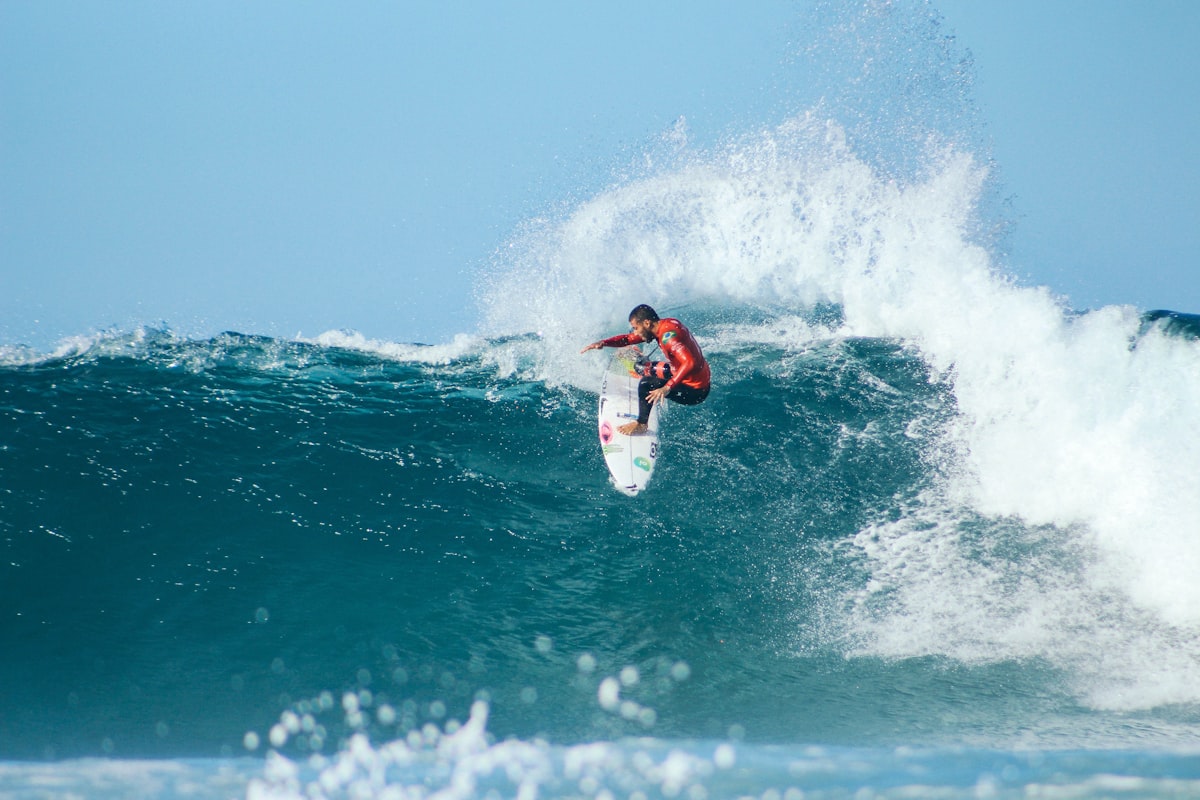
Bottom turn to top turn/snap: Drive a deep bottom turn with full compression, then project vertically up the wave face. As you reach the lip, pivot sharply by rotating your shoulders and unweighting your back foot. The power of the snap comes directly from the quality of the bottom turn that preceded it.
Bottom turn to cutback: Use a shallower, wider-arcing bottom turn that takes you out toward the shoulder. When you feel yourself outrunning the pocket, redirect back toward the curl with a sweeping cutback. The key is maintaining speed through a rounder bottom turn rather than a sharp, vertical one.
Bottom turn to barrel: On hollow waves, your bottom turn needs to be quick and controlled. The goal is to set your line and get into the pocket — not to generate maximum speed. A subtle, efficient bottom turn that puts you in position is far better than a powerful one that sends you past the barrel section.
Bottom turn to aerial: Project your bottom turn at a steep angle aimed at a ramp-like section of lip. Maintain speed through the turn and extend explosively as you hit the lip. The bottom turn for an aerial is all about angle and speed projection.
The Bottom Line
The bottom turn isn't glamorous. You won't see dedicated bottom turn sections in surf videos, and no one has ever won a contest on bottom turns alone. But every surfer who has made it to a high level will tell you the same thing: the bottom turn is where power surfing begins.
If you're stuck at an intermediate level — if your turns feel weak, your speed dies after every maneuver, or you can't seem to progress to more advanced moves — the answer is almost certainly in your bottom turn. Go back to basics. Spend dedicated sessions working on nothing but the drop, the compression, the rail engagement, and the projection.
A deep, committed, well-timed bottom turn changes everything that follows. It's the difference between fighting the wave and flowing with it, between hoping for speed and generating it, between surfing at the wave and surfing with power.
Master the bottom turn, and the rest of your surfing will follow.
Read it. Then take it to the water.