How to Do a Cutback

Neptune
April 1, 2026
Why the Cutback Is the Move That Separates Good Surfers From Great Ones
You have speed down the line, then the wave flattens and the pocket is behind you.
A good surfer carves back to the curl. An average one rides the shoulder until it dies.
That redirect is the cutback, and it is arguably the most important functional maneuver in surfing after the bottom turn.
Where the bottom turn sets up everything that follows, the cutback is what keeps your ride alive. It reconnects you with the power source of the wave. It maintains your speed. It lets you link maneuver after maneuver instead of running out of wave face and fading into the flats.
Watch any heat in a professional contest and count how many cutbacks you see versus how many aerials or barrel rides. Cutbacks outnumber everything else by a wide margin — because they're the connective tissue of high-performance surfing. Every time a surfer gets too far ahead of the curl, they need to come back. The quality of that return trip determines whether the next section is surfable or not.
Despite all of this, most intermediate surfers never deliberately practice cutbacks. They focus on snaps, floaters, and maybe aerials — the flashy stuff. Meanwhile, their cutbacks remain weak, skiddy, half-committed turns that bleed speed instead of building it. The result is a surfer who looks fast on one section and then stalls out on the next.
This guide will fix that. We'll break down exactly what a cutback is, the physics behind it, how to execute both the standard cutback and the roundhouse variation, and how to practice until it becomes one of the strongest tools in your surfing.
What Exactly Is a Cutback?
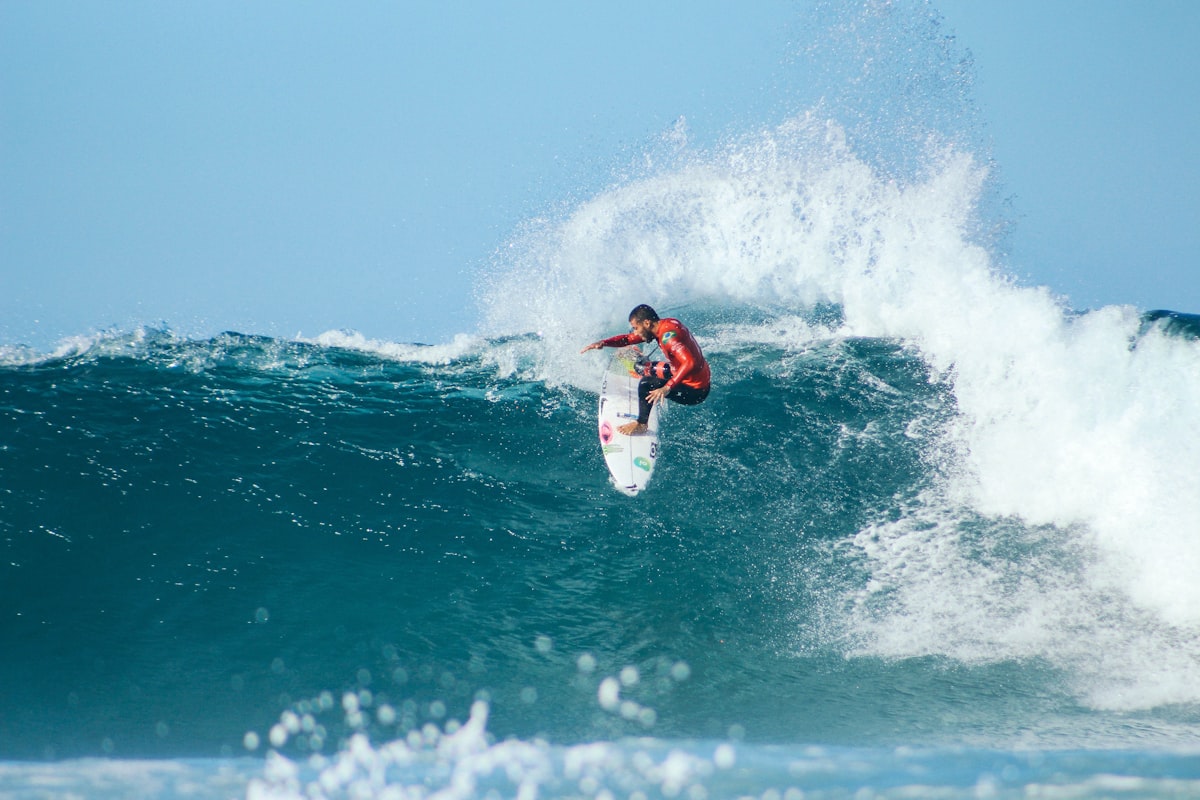
A cutback is a turn that redirects you from the shoulder (the unbroken, less powerful section of the wave) back toward the pocket or curl (the steepest, most powerful section near where the wave is breaking).
In simple terms: you've outrun the wave's power source, so you turn around and go back to it.

There are several variations, but the two most important are:
The Standard Cutback
A sweeping, arcing turn — usually around 120 to 180 degrees — that takes you from the shoulder back toward the breaking section of the wave. You carve on your rail, redirect your momentum, and then straighten out to continue riding in the pocket. This is the bread-and-butter cutback that you'll use dozens of times in every session.
The Roundhouse Cutback
The standard cutback's more complete sibling. Instead of straightening out after redirecting toward the curl, you continue the turn all the way back around — a full 270 degrees or more — and finish by hitting the whitewash (the broken foam) with a rebound off the lip or foam ball. This full-circle turn is one of the most satisfying maneuvers in surfing when executed with power and flow.
Other variations include the layback cutback (where you lean back and almost touch the water behind you during the turn) and the snap-back (a sharper, quicker version done in the pocket rather than out on the shoulder). But master the standard and roundhouse versions first — everything else is built on those foundations.
The Physics of Redirecting on a Wave
Understanding why the cutback works will make you better at executing it.
When you ride down the line after a bottom turn, you're moving roughly parallel to the beach. If the wave is walling up and running fast, you can maintain this trajectory. But most waves have sections that slow down, flatten, or close out. When you hit one of these slower sections, your speed carries you ahead of the breaking part of the wave — the power zone.
The power zone is the steep section just ahead of the curl. This is where gravity is steepest, where the wave face gives you the most energy, and where your rail has the most wall to push against. Move too far from the power zone and you're surfing on flat water with no energy source.
The cutback uses the speed you've built to carve an arc back toward this zone. The key physics principles are:
Rail engagement creates turning force. When you tilt your board onto its rail (the curved edge), the bottom of the board acts like the keel of a boat — it creates a curved path through the water. The more you commit to the rail, the tighter the arc.
Speed is your currency. A cutback spends speed to change direction. If you don't have enough speed when you initiate the turn, you'll bog down halfway through and lose momentum. This is why the bottom turn matters so much — it builds the speed that funds your cutback.
Compression and extension drive power. Just like in a bottom turn, your legs act as the engine. You compress (bend your knees) to load energy, and extend (push through your legs) to release it into the turn. This pumping action is what separates a powerful, driving cutback from a weak, sliding one.
How to Execute a Standard Cutback
Let's break this down into phases.
Phase 1: Read the Wave and Decide Early
The cutback begins before you start turning. As you ride down the line, you need to read what's happening ahead. Is the wave starting to flatten? Is the shoulder running away from the pocket? Are you getting too far from the curl?
The biggest mistake intermediate surfers make is waiting too long to initiate the cutback. By the time they realize they've outrun the power zone, they're on the flat shoulder with barely enough speed to turn. Start your cutback while you still have speed and while the pocket is close enough to reach.
The rule of thumb: if you look back over your shoulder and the curl is more than one board-length behind you, it's time to cut back.
Phase 2: Set Your Line and Generate Speed
Before you turn, you want maximum speed. If you've just come off a bottom turn, you should already have it. If not, pump a few times on the wave face to build velocity. You need enough momentum to carry through the entire arc of the turn.
As you prepare to turn, shift your weight slightly forward on the board and aim for the upper third of the wave face. Starting higher gives you more wall to work with during the turn.
Phase 3: Initiate the Turn
This is where commitment matters most. A half-hearted cutback is worse than no cutback at all — it bleeds speed without getting you back to the pocket.
Frontside cutback (facing the wave):
- Look over your back shoulder toward where you want to go — back toward the curl. Your body follows your eyes.
- Rotate your shoulders and head in the direction of the turn. This opens your chest toward the wave.
- Shift your weight to your heels and engage your heel-side rail. Press through your back foot to pivot the tail.
- Bend your knees and compress your center of gravity. Low is stable. Low is powerful.
- Let your arms lead — your front arm reaches across your body toward the curl, pulling your torso and hips into the rotation.
Backside cutback (back to the wave):
- Look over your front shoulder, back toward the curl.
- Rotate your shoulders so your chest opens toward the beach.
- Shift weight to your toes and engage your toe-side rail.
- Your back hand can drop toward the wave face for balance — this is natural on backside turns.
- Drive through your front foot while your back foot guides the rail.
Working on your surf technique? Partner with Neptune on iPhone and Apple Watch.
Get the free app
Phase 4: Drive Through the Arc
Once you've initiated the turn, commit to it completely. The most common error is straightening out too early — turning 90 degrees instead of 150 or 180. This leaves you in no-man's land: not on the shoulder, not in the pocket.
Keep your weight on your rail. Keep your knees bent. Keep looking at where you want to go. The board will follow your eyes and your weight.
As you come through the arc, you'll feel the board start to accelerate again as you re-enter the steeper part of the wave. This is the payoff — the wave's energy is feeding you speed again.
Phase 5: Reconnect and Set Up the Next Move
As you complete the turn and aim back down the line, center your weight over the board and prepare for what's next. If the wave is still running, set up another bottom turn. If a section is about to break in front of you, set up a snap or floater.
The mark of a great cutback is that it leaves you in a better position than you started — closer to the pocket, with speed, and with options.
How to Execute a Roundhouse Cutback
The roundhouse takes the standard cutback and extends it into a full loop that finishes with a rebound off the whitewash. It's more difficult, more physical, and far more impressive when done well.
The Setup
Everything about the setup is the same as a standard cutback — read the wave, build speed, start from the upper third of the face. The difference is that you need more speed going in, because the roundhouse covers more distance and includes the rebound at the end.
The Extended Arc
Instead of straightening out when you've redirected toward the curl, keep turning. Your goal is to carve all the way back until you meet the foam ball — the broken whitewash rolling down the face of the wave.
This requires sustained rail engagement through a much longer arc. Your back knee drives inward (frontside) or outward (backside), your weight stays committed to the rail, and your eyes stay locked on the target — the foam.
The Rebound
This is the signature moment of the roundhouse. As you reach the whitewash, you redirect off it — either hitting the foam with your fins and tail (a more aggressive finish) or using the foam as a turning point to bounce back and continue down the line.
The key to a clean rebound is timing. Hit the foam too early and you'll get swallowed by it. Hit it too late and you'll be past it with nowhere to redirect. Aim to meet the foam ball just as it's at its steepest and most compact.
When you make contact, shift your weight forward, pivot off the foam, and use the energy of the breaking wave to accelerate back out toward the shoulder. Done right, a roundhouse cutback rebound can actually give you more speed than you had going in.
Common Cutback Mistakes and How to Fix Them
Mistake 1: Not Enough Speed at Entry
What it looks like: You start the turn and immediately stall out, sliding sideways or losing all momentum halfway through the arc.
The fix: Build more speed before initiating. Pump on the face, take a later line off the bottom turn, or initiate the cutback earlier while you still have momentum from your last turn.
Mistake 2: Looking Down at the Board
What it looks like: Your head is down, your turns are flat and aimless, and you can't figure out where the pocket is.
The fix: Eyes up, always. Look at where you want to go — the curl, the foam ball, the steepest part of the wave. Your body follows your head. Your board follows your body. If your eyes are on your feet, your turn has no direction.
Mistake 3: Straight-Legged Turns
What it looks like: You turn with stiff legs, the board chatters and skips instead of carving smoothly, and you have no power in the turn.
The fix: Bend your knees. A lot. Your back knee should drive toward the deck of the board on frontside turns. Think of your legs as coiled springs — compress them entering the turn and extend them through the arc to drive power into the rail.
Mistake 4: Turning on the Flat
What it looks like: You initiate the cutback when you're already on the flat shoulder, too far from the wave face. There's no wall to push against, so the board slides rather than carves.
The fix: Start your cutback earlier, while you're still on the wave face. You need the wall of the wave for your rail to engage against. Flat water gives you nothing to work with.
Mistake 5: Breaking at the Waist
What it looks like: Instead of rotating your whole body as a unit, you hinge at the waist — your upper body turns but your hips and lower body don't follow.
The fix: Think of the turn as a full-body rotation. Your head leads, your shoulders follow, your hips follow your shoulders, and your feet follow your hips. Everything moves together in a kinetic chain. If you break the chain at any point, you lose power.
Practice Drills for Better Cutbacks
Drill 1: The Shoulder Check
On every wave you ride, practice looking over your shoulder to locate the curl. Make it a habit. Even if you don't need a cutback, train your awareness of where the power zone is at all times. Surfers who know where the pocket is make better decisions about when to cut back.
Drill 2: The Committed Arc
Pick a session where cutbacks are your only focus. On every wave, ride to the shoulder and execute one full, committed cutback. Don't try snaps. Don't try floaters. Just cutbacks. Rate each one: Did you make it back to the pocket? Did you maintain speed? Did you end in a better position?
Drill 3: The Roundhouse Rebound
Once your standard cutback is solid, dedicate sessions to the roundhouse. The rebound off the foam is the hardest part, so focus on timing — aim to meet the foam ball at its steepest point. Even if you fail, the attempts will teach you the timing and body position you need.
Drill 4: The Link
Practice linking a bottom turn into a cutback into another bottom turn. This three-turn sequence is the backbone of high-performance surfing. If you can execute it smoothly, with speed and flow, everything else will follow.
Drill 5: Video Review
Have a friend film you from the beach or use a camera mount. Watch your cutbacks in slow motion. Are your knees bent? Are you looking where you want to go? Is your rail fully engaged or are you sliding on the flat bottom of the board? Video doesn't lie, and five minutes of footage will teach you more than fifty waves of guessing.

When to Use a Cutback vs. Other Maneuvers
Not every moment on a wave calls for a cutback. Understanding when to use one — and when not to — is part of reading the wave well.
Use a cutback when:
- You've outrun the pocket and the wave is still running behind you
- The section ahead is flat or mushy and you need to reposition
- You want to stall slightly to let a section set up ahead of you
- You want to maintain your line in the power zone on a long, walling wave
Don't use a cutback when:
- A section is about to throw in front of you (go for a barrel or a snap instead)
- The wave is closing out and there's no pocket to return to (kick out or ride the closeout)
- You don't have enough speed to complete the turn (pump first)
- The wave is short and fast — sometimes the best move is to just race it
The best surfers read the wave two or three sections ahead and choose their maneuvers accordingly. A cutback is always available as your default when nothing more critical presents itself — and that's exactly what makes it so important. It's the move that keeps you in the game.
The Cutback Is Your Best Friend in the Water
Learning to surf is a sequence of unlocking moves that open up new possibilities. The pop-up gets you standing. The bottom turn gets you moving. The cutback keeps you connected to the source of power that makes everything else possible.
If your surfing feels disconnected — fast on one section, stalling on the next, never quite flowing — the cutback is almost certainly the missing link. It's the maneuver that transforms a series of isolated moments into a single, flowing ride from takeoff to kickout.
Commit to it. Practice it deliberately. Film it. Analyze it. And watch your surfing transform as every ride becomes longer, more powerful, and more connected than the last.
Read it. Then take it to the water.