How to Master the Late Drop

Neptune
May 4, 2026
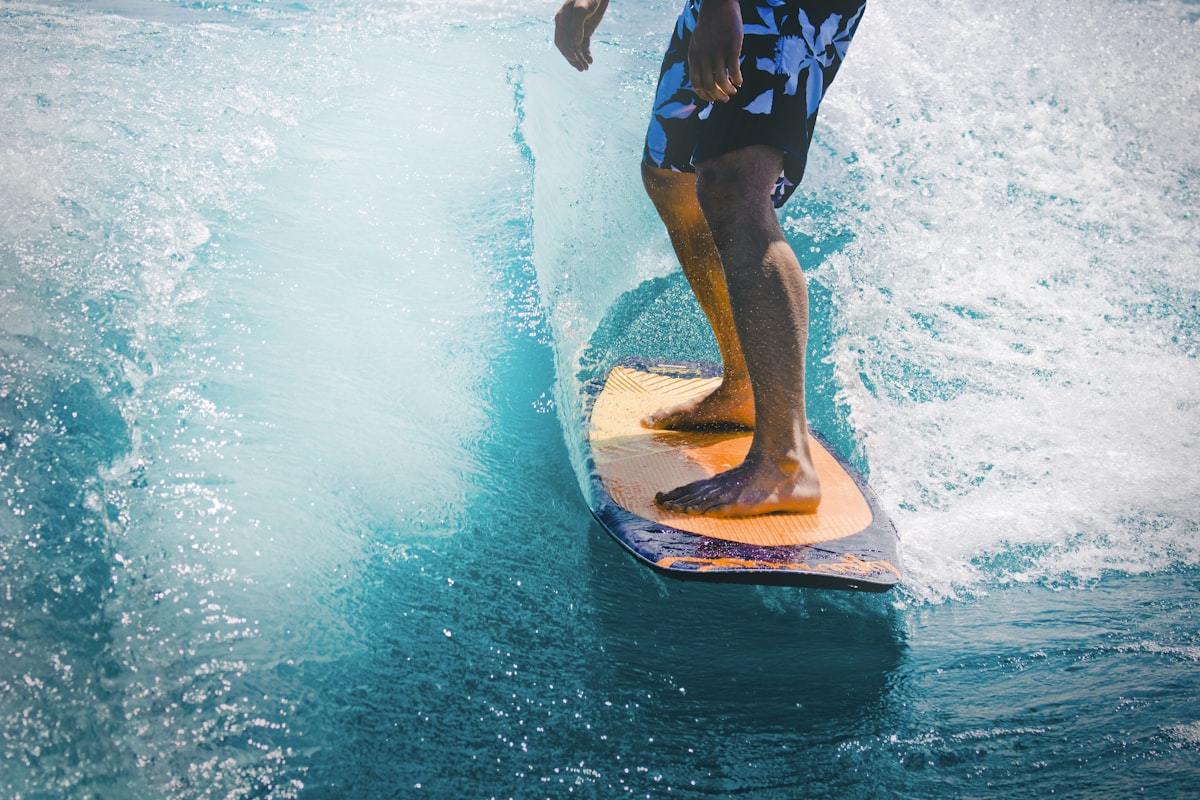
The Defining Moment of Every Wave
The wave stands up. You commit or you pull back.
Surfers who take off late sit deeper and start the ride with the speed every maneuver needs.
The good news: late takeoffs are not about courage or talent. They're a technical skill built on three pillars — paddle commitment, pop-up speed, and the right body position at the right moment. Get those three things right and the late drop becomes routine. Get them wrong and even small waves will buck you.
This guide breaks down each pillar in detail, explains the most common reasons surfers pull back, and gives you a progression for systematically building the skill from waist-high mush to overhead and beyond.
What "Late" Actually Means
A "late" takeoff is one where you drop in after the wave has already started to break, or just as the lip is beginning to throw. Your board is angled steeply down the face — sometimes near vertical — and you have a small window to get to your feet, set your line, and beat the section that's collapsing behind you.
This is different from a normal takeoff, where you start paddling early, the wave lifts you gently, and you pop up on a moderate slope with plenty of time. A normal takeoff feels like an escalator. A late takeoff feels like a freefall.
Why bother with the harder version? Because the deeper you sit on a peak, the better the wave you catch. Sitting deep means waiting where the wave first breaks — the apex of energy. Surfers who can only ride from the shoulder are forever giving the best waves to whoever sat in their inside position. Once you can take off late, you stop competing for the leftovers and start owning the peak.
Pillar One: Paddle Commitment
Most pulled-back takeoffs are not failures of pop-up technique or balance. They're failures of paddling. You can't drop into a wave you didn't paddle hard enough to catch.
Paddle Earlier Than Feels Necessary
When a wave approaches, you have a window — usually 4 to 8 seconds — to get up to wave speed before it picks you up. If you start paddling when the wave is already on top of you, you're trying to accelerate from zero against gravity and water, and the wave will lift the back of your board faster than the front. The result is the dreaded nose-pearl or the lip catching you and tossing you over the falls.
Watch experienced surfers and you'll notice they start paddling earlier than seems necessary. They're not in a hurry — they're getting to wave speed before the wave needs them to. By the time the wave stands up, they're already moving forward at 2-3 mph, and the wave just adds energy to existing momentum.
The Last Three Strokes
The last three paddle strokes before takeoff are the most important strokes you'll take all session. They need to be:
- Long. Reach forward as far as you can, planting your hand near full arm extension.
- Deep. Pull water from below the rail, not just from the surface. Surface paddling moves a lot of foam and not much board.
- Hard. Maximum effort. Late drops require burst paddle power, not cruise paddle.
Many surfers shorten and quicken their stroke when they get nervous about a steep wave. This is exactly backwards. The waves that scare you are the ones that demand the most commitment from your paddle.
Don't Look Down the Line — Look Forward
Right before the takeoff, your eyes should be looking at the trough — the flat water at the bottom of the wave — not over your shoulder at the wave behind you. Looking back is a tell that you're hesitating; you're watching to see if the wave is going to "let" you go. The wave doesn't have an opinion. The wave is just water and gravity. Where you look is where your body goes, and looking forward orients your weight forward, which is exactly where you need it for a late drop.
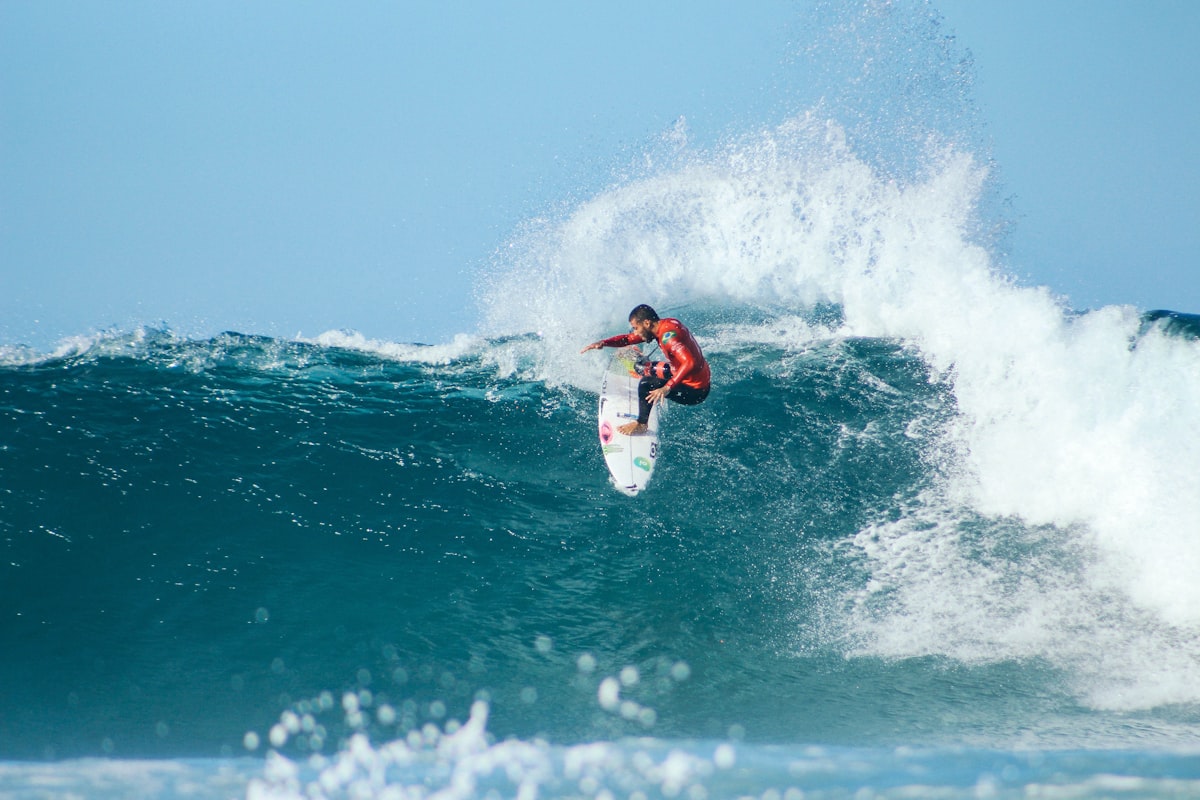
Pillar Two: The Pop-Up Speed Problem
The standard pop-up — chest up, knees forward, both feet land at once — works perfectly on mellow waves. On a late drop, it's too slow. You don't have a half-second to bring your back leg forward; you have less than a quarter-second to be standing.
The Single-Motion Pop-Up
Late drops require a true single-motion pop-up, where your hands push, your hips rise, and your feet arrive in one continuous explosive movement. There is no intermediate "knee on the board" step. There is no chest-up-and-look. You go from prone to standing as a single explosion.
The pop-up that works on a late drop has these characteristics:
- Hands stay flat under the chest. Hands too far forward will spike the nose; hands too far back will leave you trapped.
- Toes plant first. Drive off the balls of your feet, not the tops, so you can land in your stance with your weight already over your front foot.
- No chicken wings. Elbows stay tight to your body. Elbow flares slow you down and waste energy.
- Hips drive forward, not just up. A pop-up that goes purely vertical leaves your weight too far back. Your hips need to travel toward the nose as you rise.
If your pop-up takes more than 0.5 seconds, you don't have one — you have a series of movements. Practice the single-motion pop-up on the beach until it's automatic. Twenty reps a day for two weeks will rewire it.
Where Your Feet Land Matters More Than How Fast
On a late drop, foot position is everything. Your back foot needs to land on or near the tail traction pad, your front foot near the front fin area, and both feet roughly perpendicular to the stringer. If you land in a wide stance with feet too far forward, you'll bog down halfway through the drop. If you land too narrow or too far back, you'll spin out.
A useful drill: at home, lie on your board on the ground with the tail against a wall. Mark with chalk or tape where your front and back feet should land. Pop up 20 times, paying attention only to whether your feet land on the marks. Then close your eyes and do another 20. The goal is for foot placement to become entirely proprioceptive — you don't need to look down to know where your feet are.
Pillar Three: Body Position at the Edge
Working on your surf technique? Partner with Neptune on iPhone and Apple Watch.
Get the free appEven with a perfect paddle and a fast pop-up, your body position at the moment of takeoff determines whether you make the drop or eat it.
Weight Forward at the Top
The number-one mistake on late drops is being weight-back when the wave first picks you up. Surfers do this instinctively because being weight-back feels like safety — it keeps the nose from pearling. But on a steep wave, weight-back means the lip catches the tail and pitches you forward, or worse, pitches you and the board over the falls.
The correct position is weight-forward at the top of the drop. As the wave begins to lift you, push your chest down toward the deck and shift your hips forward. Your nose will track down into the trough, your tail will release, and you'll convert the wave's lifting energy into forward speed instead of getting bucked.
Weight Back at the Bottom
Once you've cleared the lip and you're halfway down the face, the dynamic flips. Now you need to load weight onto your back foot to set your bottom turn and prevent the nose from burying as you transition from the steep face to the flatter trough. The shift happens almost automatically if your pop-up was good — your feet are already in the right spots, so you just transfer pressure from front to back as the slope changes.
This forward-then-back weight shift is what experienced surfers mean when they talk about "riding the rocker" of the board. You're using the curve of the board to navigate the curve of the wave.
Eyes Set Your Line
As soon as you're standing, your eyes go down the line — to the spot on the wave you want to reach, not to the water in front of you. Looking at the water in front of you is like driving a car while staring at the hood. Your line will be reactive instead of intentional. Looking down the line lets you read the wave's shape and position your bottom turn for maximum speed.
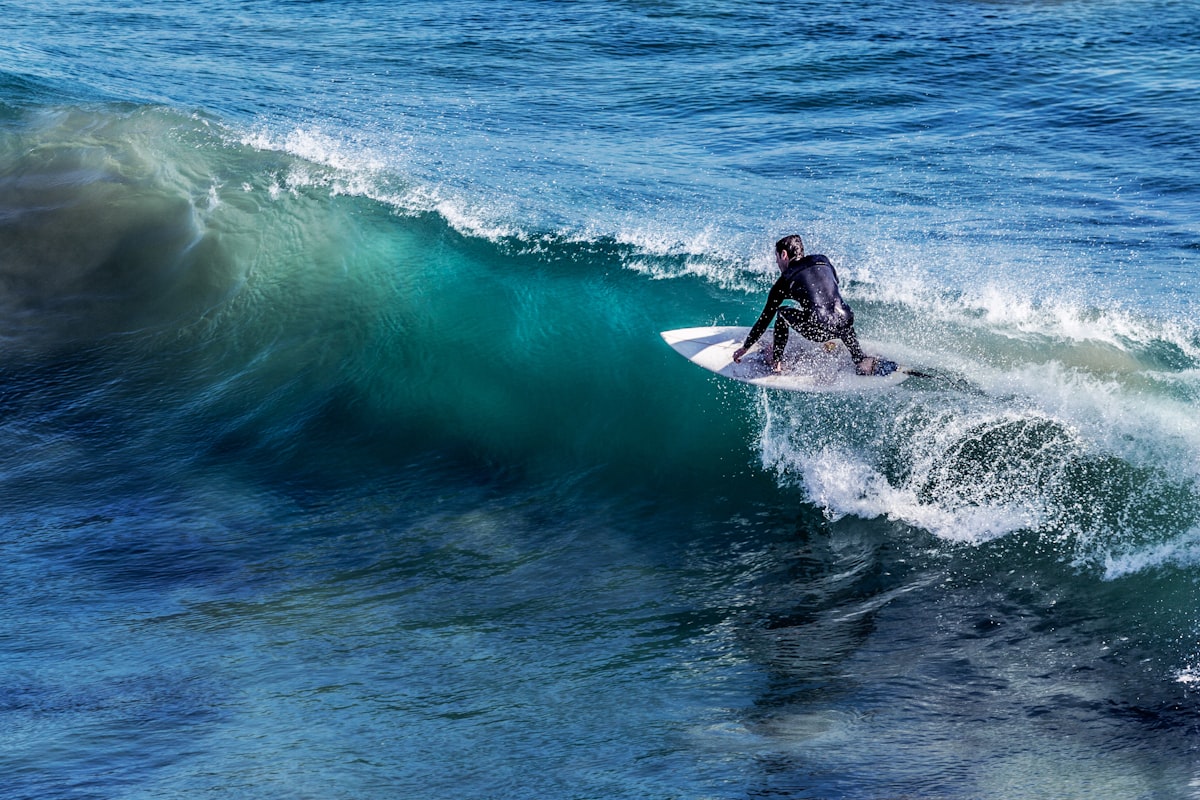
The Real Reasons Surfers Pull Back
If late drops were purely a physical skill, every surfer with two years of experience would have them. They don't, because there's a psychological component that the technique pillars alone can't fix.
Fear of Wiping Out
Wiping out on a late drop looks dramatic. The lip throws you, the board flies, the whitewater holds you down. But the actual cost — three to six seconds underwater, maybe a board ding — is almost always less than the cost of pulling back, which is missing waves and reinforcing a habit that limits every future session.
The fix is not to pretend wiping out doesn't happen. The fix is to make peace with wiping out. Spend a session deliberately wiping out on takeoffs. Try waves you know you'll miss. Get tossed, get held down, surface, paddle back. After 5-10 wipeouts, your body learns that the worst case isn't actually that bad, and the fear evaporates.
Fear of Hurting the Wave
This sounds odd, but many surfers pull back because they're worried about blowing the wave for someone else, or because they suspect they don't deserve it. This is the wrong frame. If you're sitting in the priority position and the wave is breaking on you, that wave is yours. Pulling back doesn't pass it to someone — it usually means nobody catches it. Commit.
Pattern Recognition Failure
Some surfers pull back because they genuinely can't tell whether a wave is makeable. They've never seen enough late drops to know what success looks like, so every steep wave registers as "too steep."
The fix is video review. Watch surf videos in slow motion and study the moment of takeoff on critical waves. Note the angle of the board, the position of the lip, where the surfer's eyes go. After you've watched 50 successful late drops in slow motion, your brain develops a template — when you see that pattern in the lineup, you recognize it as makeable instead of impossible.
A Progression for Building the Skill
You can't go from never having taken off late to dropping into double-overhead reefbreaks in a week. Build it in stages.
Stage One: Steep But Forgiving
Start at a beach break with a forgiving inside section. Look for waves that are steeper than your normal takeoffs but not closed-out — waves where the worst-case wipeout is being washed in white water. Practice paddling later than you usually would. The goal isn't to make every drop; it's to build comfort with the steepness and learn what your pop-up needs to look like when the takeoff is critical.
Stage Two: Sit Deeper
Once steep takeoffs at your normal position feel routine, move your lineup position 5 meters deeper. Sit closer to the peak. You'll get fewer waves at first because surfers in the inside position will paddle around you on the easier ones. But the waves you do get will start later, steeper, and with more energy. This is where the late-drop skill gets refined under real conditions.
Stage Three: Different Wave Types
Once beach break late drops are reliable, take the skill to a reef break or a point break. The dynamics change: reef breaks are usually steeper but more predictable, and points have a takeoff zone that's narrower and more critical. Each wave type teaches a different version of the same skill, and the surfers with the most adaptable late-drop technique are the ones who've practiced all three.
Stage Four: Increasing Size
Only after late takeoffs feel automatic in head-high surf should you start practicing them in overhead and bigger waves. The physics scale: an overhead wave's pop-up window is shorter, the freefall is longer, and the consequences of a botched takeoff are higher. But the technique is the same — the only thing that changes is your tolerance for the size, and that comes from incremental exposure.

Equipment and the Late Drop
Your board choice influences how late you can go.
Volume and Paddle Speed
A board with more volume paddles faster, which means you can be more committed about late paddles — the board accelerates to wave speed sooner. Surfers who fight a too-small board for paddle speed will always struggle with late drops because their last three strokes can't generate enough velocity to match the wave. If late takeoffs are a goal, don't ride a board that's underfoot for your paddle fitness.
Tail Shape and Release
A pulled-in tail (rounded pin, swallow) holds in better on a steep face but can be slower to release, which makes late drops feel sticky. A wider tail (squash, square) releases easily and lets you rotate the board down the face more quickly, but it can break free if you weight-shift wrong. Most late-drop specialists ride boards with a moderate tail width — wide enough to release on the drop, narrow enough to hold on the bottom turn.
Rocker
More nose rocker prevents the nose from catching the trough on a steep drop. A flatter board will pearl. If you find yourself burying the nose on late takeoffs no matter what you do, the issue may be rocker rather than technique.
Fin Setup
Stiffer fins (larger base, more rake) provide more drive but feel locked in. Looser fins (smaller base, less rake) release more easily, which can help on a critical drop where you need to pivot the board mid-air. Most all-around boards split the difference. If you're struggling with late drops on a familiar board, try a slightly looser fin setup before changing boards.
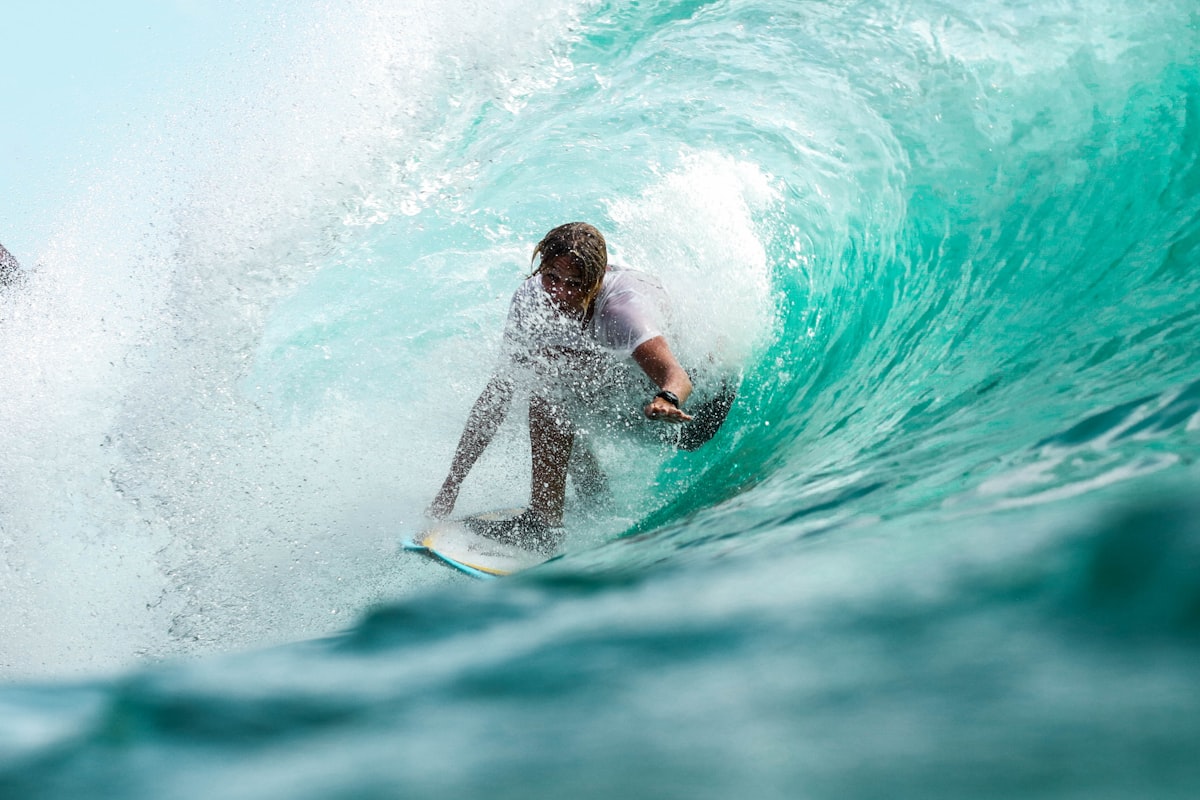
Drills You Can Do This Week
Three high-leverage drills, in order of difficulty:
1. The 20-Pop-Up Drill (land). Twenty single-motion pop-ups every morning for two weeks. Time them. Goal: under 0.5 seconds, feet landing on marked spots, no chicken-wing elbows. This is the most boring drill in surfing and the one that produces the biggest technique gains.
2. The Late-Paddle Drill (water). During a session of normal-sized waves, deliberately wait one extra second longer than you usually would before starting your paddle. You'll catch fewer waves the first time, but you'll start to feel where your real "last possible moment" is — and almost always, it's later than you thought.
3. The Eyes-Down-the-Line Drill (water). For one full session, the moment you're standing, your eyes go to a fixed point down the line — not the wave in front of you, not the water below your feet. Notice how your body follows your eyes and how much earlier you can see lines and sections.
What Changes When You Have It
When the late drop becomes automatic, your surfing transforms in ways that go beyond the takeoff itself. You start sitting deeper, which means you stop competing for shoulders. You start every wave with more speed, which makes every maneuver downstream easier. You stop fearing the steep waves at your home break, which means more session time spent surfing and less spent waiting.
But the biggest change is internal. Pulling back on waves is corrosive — every pulled-back takeoff is a small message to yourself that the ocean is bigger than you. Committing on a steep drop is the opposite. It's a small but accumulating proof that you can read the moment, do the technique, and trust yourself when it counts.
That's why the late drop is the defining moment of every wave. Not because the takeoff is the hardest part of the ride — the bottom turn and the maneuvers are usually more technical. But because the takeoff is where you decide. Everything else is just executing the decision you already made.
Get the paddle right. Get the pop-up right. Look forward. Commit. The drop takes care of itself.
Read it. Then take it to the water.