How to Surf Onshore and Choppy Conditions

Neptune
May 19, 2026
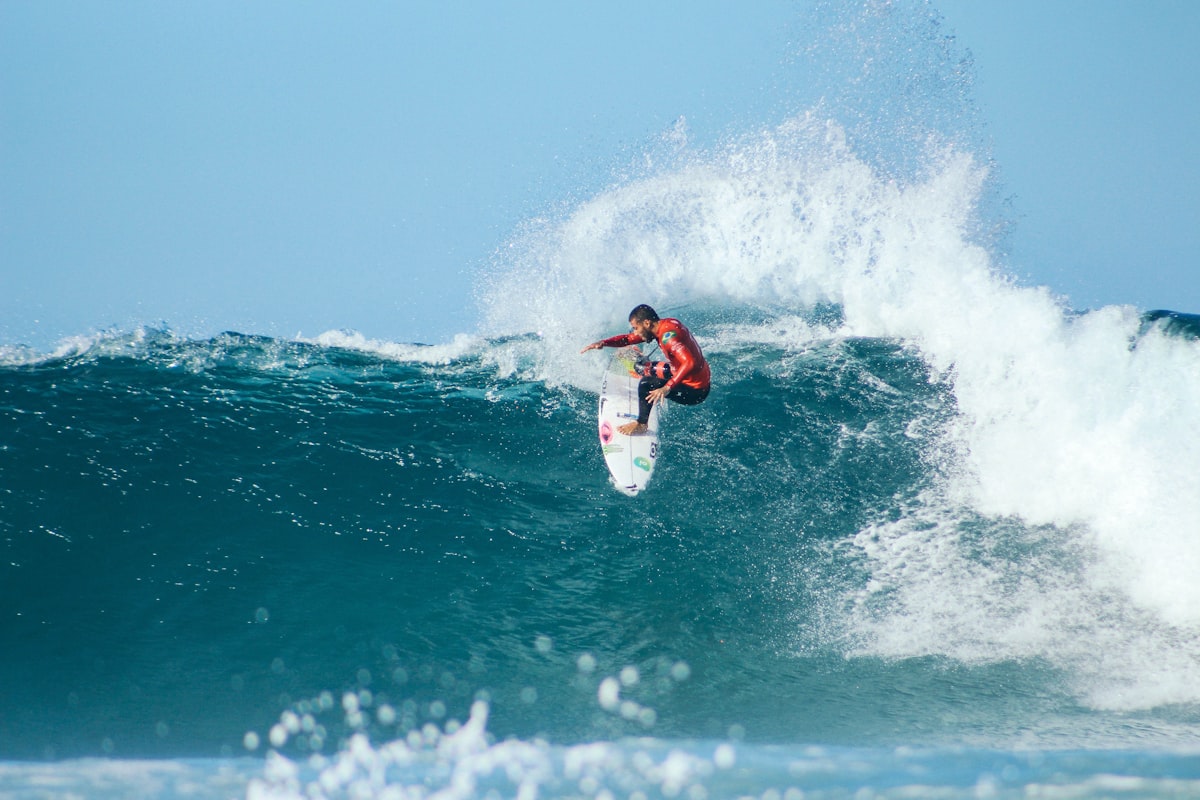
Why Most of Your Sessions Will Be Imperfect
Magazine surf is long-period glass under offshore wind. That is a fraction of real sessions.
Learn to make onshore and chop count, or you surf eight times a year.
This guide is about the second option. Onshore and choppy conditions are not a punishment — they are the everyday reality of the ocean, and they reward a different set of skills than glassy days do. Learn those skills and you will surf more, improve faster, and arrive at the rare clean session already sharp.
What "Onshore" and "Choppy" Actually Mean
A bit of vocabulary first, because surfers tend to use these terms loosely.
Onshore wind is wind blowing from the ocean toward the land. It pushes the back of the wave forward, knocks the lip down before it can throw cleanly, and stirs the surface into texture. Light onshore (under 8 mph) is workable. Moderate onshore (10–15 mph) creates real chop. Above 18 mph, conditions deteriorate quickly.
Choppy is a description of the surface, not the wind. Chop is small, irregular wind-driven ripples that sit on top of the underlying swell. You can have chop without onshore wind — a strong sideshore can produce it, or leftover texture can persist after the wind dies. The hallmark of chop is that the wave face is no longer smooth: it looks like crinkled foil.
Windswell is something different again. It is swell generated by local wind close to your coast, usually with a short period (5–8 seconds). Even after the wind drops, windswell retains the disorganized, lumpy character of its birth.
Knowing which you are dealing with matters because each calls for a different approach. A clean head-high windswell with no wind is a fundamentally different problem than a choppy three-foot day with a 15 mph onshore.
Read the Wind Before You Get in the Water
Most surfers walk to the beach, see whitecaps, and either paddle out anyway or drive home. Both are usually wrong. A few extra minutes of observation will tell you whether the day is actually surfable, and where.
Look at the Whitecaps
Whitecaps form when wind exceeds roughly 13 mph. If you see a few isolated whitecaps in the lineup, the wind is on the edge of workable. If the entire ocean is striped with them, conditions will be difficult. Use whitecaps as an honest second opinion to whatever the forecast told you — wind apps update slowly and miss local effects.
Find the Wind Shadow
Coastlines are not flat. Headlands, jetties, cliffs, and even rows of beachfront houses block wind in their lee. Walk the beach for a few minutes and watch the water. You will often find a stretch — sometimes only 50 yards wide — where the texture is noticeably calmer because something upwind is breaking the flow. That stretch is where you should paddle out, even if the wave is slightly worse there than at the main peak. Clean shape beats good shape that is being destroyed.
Time the Lulls
Wind rarely blows at a constant strength. It pulses. Sit on the sand for five minutes and watch one section of water — you will see periods where the surface goes briefly smoother, then ruffs back up. If those lulls last 30+ seconds, you have working windows for catching waves. If the wind never seems to slacken, expect to fight the whole session.
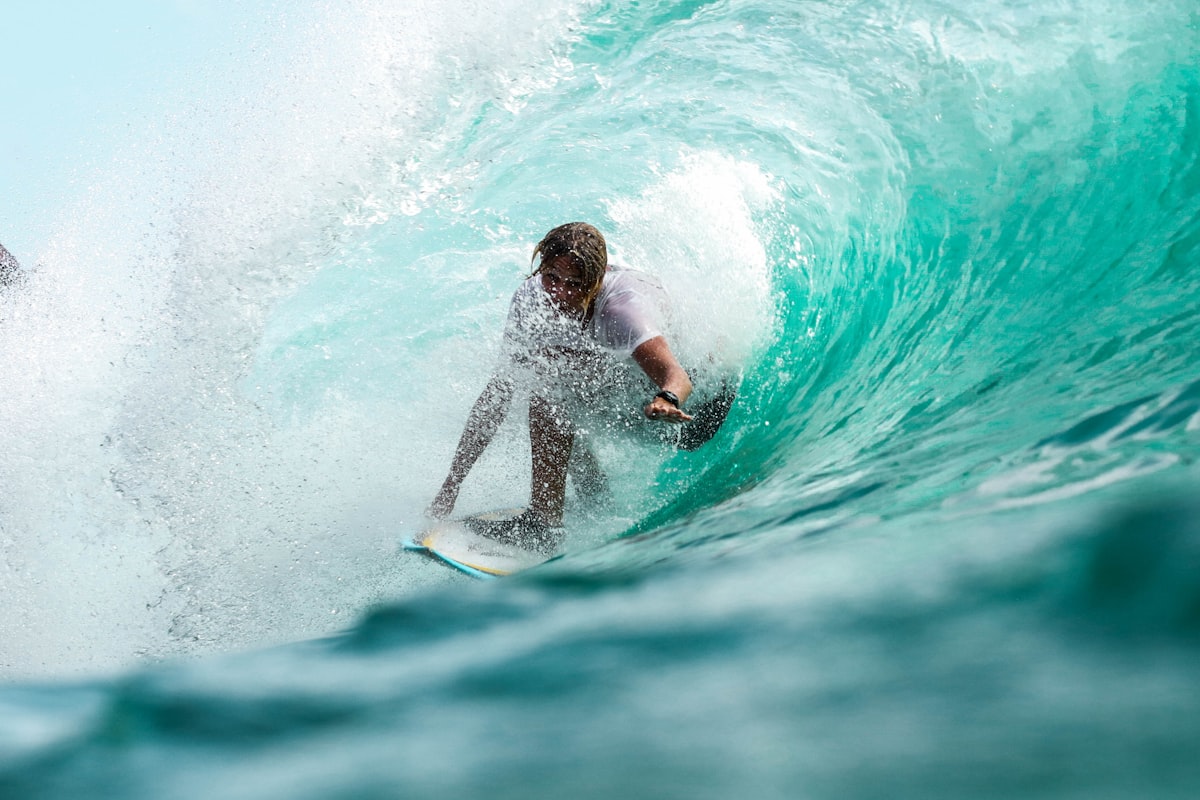
Choosing the Right Board for Wind-Affected Surf
The board that feels magic on a glassy day is often the wrong tool when the wind comes up. Choppy water punishes thin, finicky boards and rewards boards with more foam, more glide, and a stable platform.
Go up in volume. Add 10–20% to your usual liter count. The extra foam helps you push through chop while paddling and gets you into waves earlier — critical when wind is making takeoffs unstable. If you normally surf a 30-liter shortboard, look at a 35-liter version of the same shape, or step onto a 40+ liter mid-length.
Choose a flatter rocker. Curvy boards turn beautifully on clean walls but stall and bog in mushy chop. A flatter board carries speed through dead sections, which is most of what an onshore wave gives you.
Add fin area. A larger thruster or quad setup gives you something to drive against when the wave's energy is diffuse. Small, loose fins feel washy in chop.
Consider a softtop. A 7'6" softtop is one of the most underrated weapons for poor conditions. Extra paddle power gets you in, soft rails forgive sketchy weight shifts, and volume keeps you afloat between sets. Ego aside, you will catch three times as many waves.
If you have a quiver, this is the day to ride your fish, mid-length, or groveler. Save the high-performance shortboard for the day the wind drops.
Paddling and Positioning in Chop
The paddle changes when the surface is rough. So does where you sit, what you watch for, and how you commit.
Working on choppy waves? Partner with Neptune on iPhone and Apple Watch.
Get the free appKeep Your Head Lower and Your Strokes Smoother
Big, splashy strokes that work fine on flat water turn into a fight in chop. Lower your chest closer to the board, plant each hand a little deeper, and pull more from your back than from your shoulders. This drops your center of gravity and reduces how much each oncoming bump rocks you off your line.
When a chop wall hits the nose of your board, do not muscle through it. Lift your chest slightly to lighten the nose, let the bump pass under, and resume rhythm. Wasting energy plowing into every bump is how you arrive at the lineup already gassed.
Sit Slightly Deeper Than Usual
In choppy water, waves often look like they are going to break, then back off. Or they look like they are not going to do anything, then heave at the last second. The visual cues you rely on in clean conditions are unreliable. To compensate, sit a few feet deeper than you normally would and commit a beat earlier. You will get more wind-affected wobbly takeoffs, but you will also catch significantly more waves than the surfer hedging on the shoulder.
Watch the Approach, Not the Lineup
In clean conditions you can pick a wave at the horizon and know roughly what it will become. In chop, that prediction breaks down. The wave you target may be eaten by a passing ripple, or it may suddenly stand up when it meets a backwash. Keep your eyes on the wave for its entire approach, and be willing to switch at the last second if a better one appears.
How to Take Off When the Face Is Rough
The takeoff is where most onshore sessions are lost. The wave looks ridable from a distance, but as you turn and paddle, the face crumbles under you or the lip slaps your back. Two adjustments fix most of this.
Commit Harder and Earlier
Wind on the back of the wave is constantly trying to push it past breaking. By the time you feel the wave under you, it is already fading. The fix is to paddle into waves earlier than you would on a clean day — when the wave is still steeper but more stable, not as it starts to soften.
This requires more aggressive paddling. Three strong strokes are better than five tentative ones. Once you commit, do not look back to see if it is going to break — assume it will, and pop up.
Pop Up Flatter and Lower
Choppy faces want to bounce you. A high, classic pop-up where you snap to your full stance is asking to get knocked over the front. Instead, stay low. Get your front foot under you, but keep your knees bent deep, your chest near the board, and your weight distributed evenly between both feet. From a low stance you can absorb the next bump and make the small corrections that keep you on the wave. From a tall stance, any unexpected bobble sends you flying.
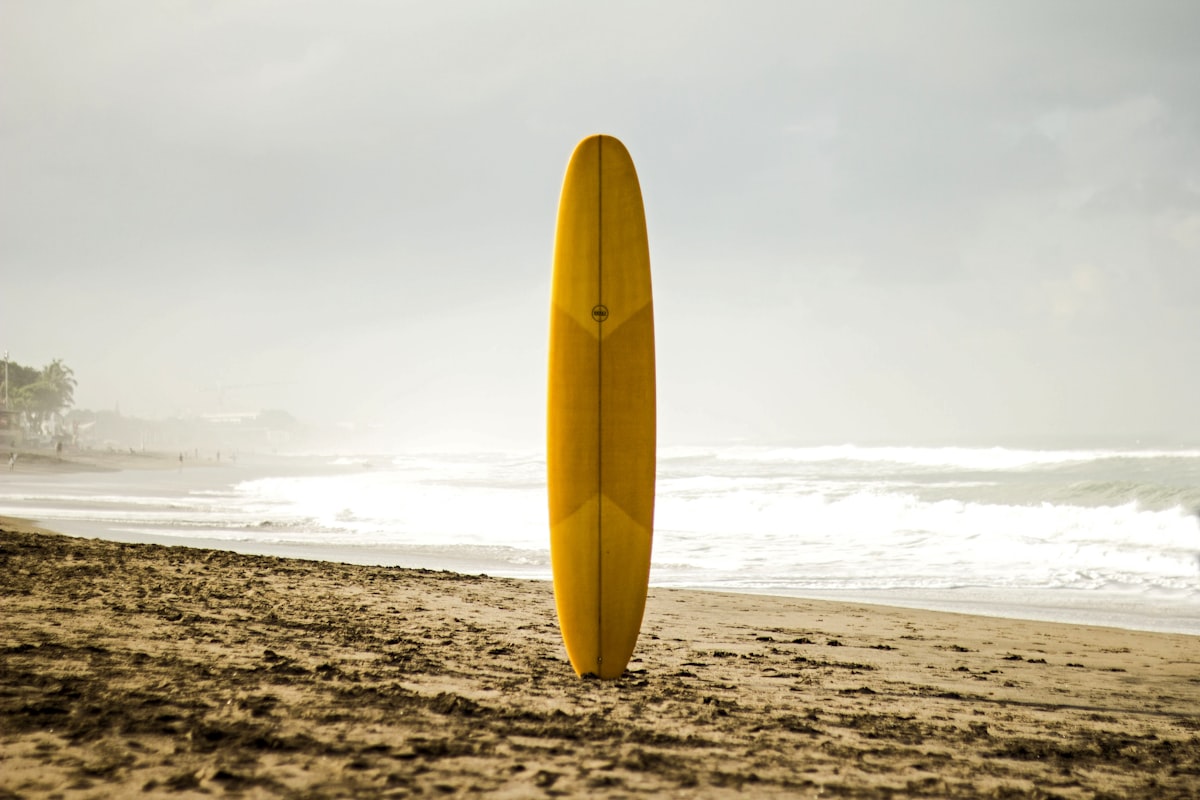
Riding the Wave: Speed, Lines, and Reading the Mush
Once you are up and moving, the next problem is what to do. Onshore waves rarely give you long, drawn-out walls to draw lines on. They give you broken-up sections, brief pockets, and a lot of soft water. Riding them well is its own skill.
Surf for Speed, Not for Maneuvers
The single biggest mistake on choppy days is trying to surf the way you would on a clean day. You see the lip wobble overhead and try to hit it, and the section dies before you arrive. The smarter approach is to treat speed as the goal and turns as a byproduct. Drive down the line, pump through dead sections, and only attack the lip when you arrive at one that is actually standing up.
This is why mid-lengths and fish shapes shine in chop: they are speed-generation machines that do not need a pristine wall to feel good.
Stay Mid-Face
Higher on the wave, you sit in choppier, more disorganized water. Lower on the wave, the face is smoother but you are further from the energy. The sweet spot is roughly mid-face, where you have enough wave under you to keep moving but you are not bouncing off every wind ripple.
Connect Sections by Trimming, Not Turning
A clean wave invites big arcing turns that reset your speed. A choppy wave punishes them — every aggressive turn bleeds the speed you just worked to gain. Instead, focus on trim lines: subtle weight shifts, narrow stance adjustments, and angle changes that keep the board moving without scrubbing speed. Save the carves for one good section per wave, not five mediocre ones.
Use Backwash and Chop as a Tool
Choppy water is not just noise. The backwash bouncing off the inside, the cross-chop that ripples through the face, even individual whitecaps — these can be used as launch pads or speed bumps. Advanced surfers in onshore conditions are constantly using these features to pop airs, project off boils, and ricochet through sections that would otherwise close out. You do not need to be doing aerials to apply the principle. Even just learning to hold your line through a backwash bump rather than wiping out on it is real progress.
The Mental Game on Imperfect Days
Half of surfing in bad conditions is keeping your head right. The same surfer who flows through a glassy session can come unraveled when the wind turns and the waves get lumpy. A few mindset shifts help.
Lower your expectations on a wave-by-wave basis, raise them on the session. Each individual wave will likely be smaller, shorter, and weirder than your clean-day average. Accept this. But because the conditions filter out fair-weather surfers, the lineup is often less crowded, you will get more waves, and the cumulative training effect on a 20-wave choppy session can exceed a six-wave perfect session.
Treat it as practice, not performance. Decide before paddling out what specific thing you want to work on. Maybe it is committing earlier on takeoffs. Maybe it is finding clean trim lines in messy water. Maybe it is paddling efficiency. Whatever it is, narrow your focus. You will leave the session with a clear sense of having gained something, instead of comparing it unfavorably to the clean session in your memory.
Surf longer. On a clean day, your best waves come in the first 45 minutes. On a choppy day, the wind sometimes drops, the swell sometimes cleans up, and your best wave can come in the 90th minute when most people have gone in. Patience is rewarded.
When to Just Skip It
All that said, there are conditions where the right call is to stay on the sand. Some honest red flags:
- Wind over 20 mph onshore. At this point you are working too hard for too little, and the waves you do catch will be unrecognizable as surf.
- Short-period windswell under 3 feet. Tiny, gutless, and packed with chop — you will spend the session bobbing around getting cold.
- Mixed swell directions colliding. When two swell trains hit your beach from different angles, the resulting interference pattern makes waves nearly unrideable. Sometimes one direction dominates by afternoon — wait it out.
- You are tired or unfit. Choppy conditions demand more paddling and more focus than clean ones. Going out exhausted leads to bad decisions and injuries.
The point of all this is not that every day is surfable. It is that more days are surfable than you think, and the surfer who has practiced reading and riding marginal conditions is the one who catches the goods when the wind finally drops.
The Hidden Benefit: It Makes You Better
Here is the part most surfers miss. The skills you build in onshore, choppy water — earlier commitment, lower stances, speed management, reading shifty waves — are the same skills that pay off on perfect days. The surfer who has logged 50 sessions in mush has trained adaptability that the clean-day specialist simply has not.
Spend a season treating bad conditions as training instead of an inconvenience. You will paddle out more often, log more waves, and arrive at the next pristine sunrise with a different surfer's instincts already wired in.
Wrap Up
Onshore wind and choppy water are not the opposite of surfing — they are a different mode of it. They reward observation, equipment choice, smart paddling, and adaptive technique in ways glass never does. Most of your sessions for the rest of your life will be imperfect. Learn to surf those well and you will, over the long run, get much better than the surfer holding out for the four perfect days a year.
The next time you see whitecaps on the cam, do not write the day off. Pick the right board, find the wind shadow, set one intention, and paddle out. The best surfers on your local beach are the ones who never stop surfing.
Read it. Then take it to the water.