Wave Refraction Explained

Neptune
May 13, 2026
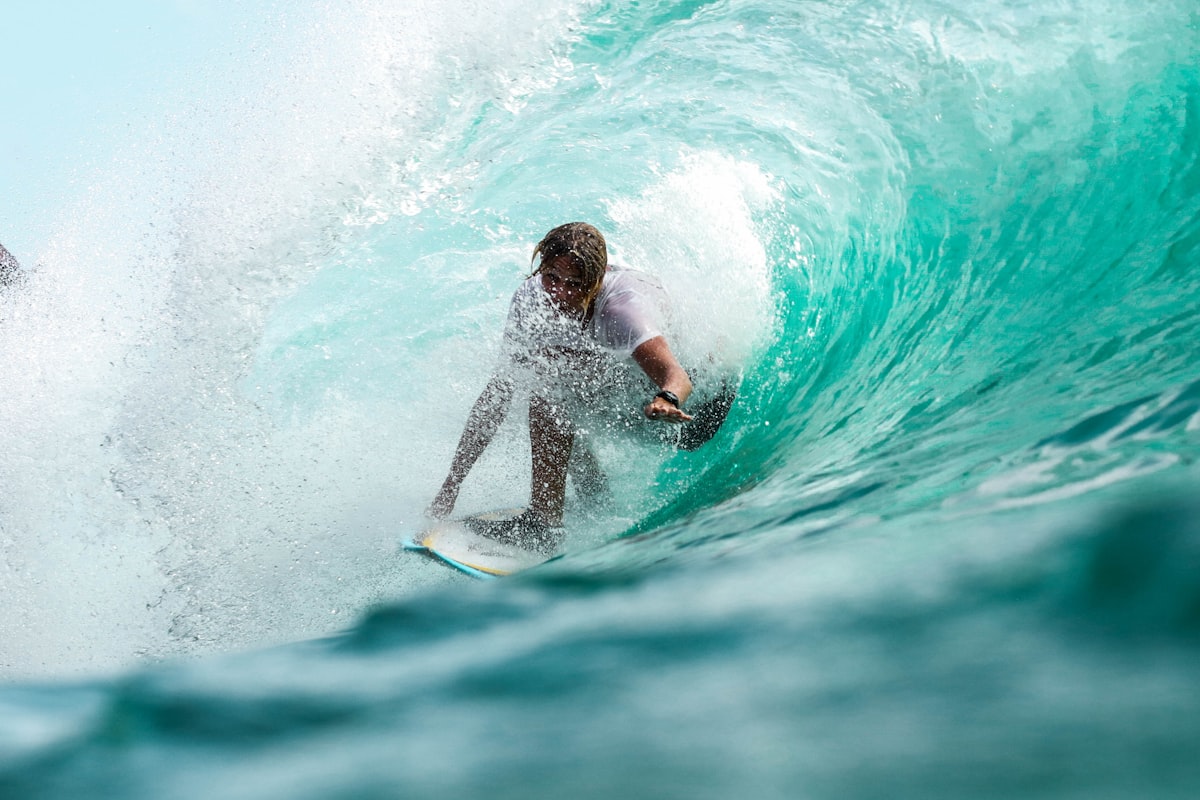
Why Two Spots, One Swell, Two Different Waves
Same buoy, same period, two beaches. One is mush. One is overhead and peeling.
That difference is refraction — waves bending as they cross shallow water.
This guide walks through what refraction actually is, the shapes the seafloor creates above the surface, and how to use that knowledge to pick better spots, better waves, and better days.
What Refraction Is, in One Sentence
When a wave moves into shallow water, the part of the wave in the shallow water slows down while the part still in deep water keeps moving at full speed — and the wave bends toward the shallow side.
That's the entire mechanism. Everything else is consequence.
A swell traveling across the open ocean is essentially a wide, flat band of energy moving in a straight line. The water beneath it is thousands of feet deep, the wave is barely interacting with the bottom, and it travels at a speed determined by its period (the time between wave crests). The longer the period, the deeper the wave "feels" and the faster it moves.
The moment that wave starts moving over a shoaling bottom — somewhere around half the swell wavelength deep — the water beneath it begins to drag. The wave slows. And because the seafloor is never perfectly flat, different parts of the same wave start moving at different speeds. The wave bends.
Where it bends toward, it focuses energy. Where it bends away from, it loses energy. A surf spot is, in physical terms, a place where local bathymetry focuses wave energy in a way that produces a peeling wall.

The Three Shapes Refraction Makes
Almost every surf break in the world is one of three basic refractive geometries, or a combination of them. Once you can see these shapes, you can read any coastline.
1. Convergence: The Point Break
A point break is a headland or piece of land that juts out into the ocean. As swell wraps around the point, the part of the wave closest to the headland hits shallower water first and slows down. The part of the wave farther from the headland keeps moving. The result: the wave wraps around the point, bending its energy toward the inside of the bay.
This is why point breaks peel. The wave isn't breaking all at once — it's peeling steadily along the line because the refraction is delivering it to the shore at an angle. A long, predictable, mechanical wall is the signature of strong convergence.
Point breaks also famously filter swell direction. Because the wave has to bend a long way to wrap into the bay, only swells from certain directions arrive with their energy intact. A west-facing point will fire on west swell and ignore a north swell of the same size. A surfer who memorizes which swell directions wake up which points has half the battle of trip planning solved.
2. Focusing: The Reef and Sandbar
A reef or sandbar is a localized patch of shallow water surrounded by deeper water. As a swell hits the deeper water on either side, those parts of the wave keep moving fast. The center of the wave, passing over the shallow patch, slows down. The two faster shoulders bend inward toward the shallow center, converging energy on a single point.
This is the physics behind every classic A-frame and every reef peak. The wave doesn't just break in shallow water — it concentrates energy on the way in, which is why reef waves can be dramatically larger and steeper than the open ocean swell that fed them.
You can see this directly on bathymetric charts. A bowl on the chart, with deeper water around it, will produce a peak above it. The deeper the surrounding water, the more energy gets funneled, and the more powerful the wave at the surface.

3. Divergence: The Dead Zone
The opposite of focusing is divergence — a place where refraction spreads wave energy outward and dilutes it. This happens over deep trenches, channels, or anywhere the seafloor drops away.
Divergence is why channels exist next to many surf spots. The deep water beside a reef accelerates that part of the wave, bends energy away from the channel, and creates a path with reduced wave activity — convenient for paddling out, deadly for catching waves. If you've ever wondered why a particular stretch of beach refuses to produce surfable waves while the spots on either side fire, you're probably looking at a divergence zone.
Working on reading waves and forecasts? Partner with Neptune on iPhone and Apple Watch.
Get the free appFor surfers, divergence is mostly an obstacle. But understanding it is what allows you to find paddle-out lanes, identify the safest place to wait between sets, and avoid the dead patches that look like they should work but never do.
How Swell Period Changes Everything
Two swells with identical heights but different periods will refract completely differently. This is the part most newer surfers miss when they read a forecast.
The deeper a wave "feels" the bottom, the more it can bend. Long-period swells (14+ seconds) feel the bottom in much deeper water than short-period swells (8 seconds or less). A 16-second swell starts refracting hundreds of yards offshore. An 8-second swell barely refracts until it's in the shorebreak.
The practical consequences:
- Point breaks need period. Wrapping energy around a headland is a refraction-heavy process. Short-period swell doesn't bend enough to fill the bay. This is why the same point that's flat on an 8-second wind swell can be firing on a 16-second groundswell of the same height.
- Beach breaks prefer shorter period. Sand bars are small, localized features. A short-period swell punches through them and breaks crisply on the bar. A long-period swell often refracts past the bar entirely and ends up dumping in the shorebreak.
- Hidden reefs reveal themselves on long-period days. Spots that are unsurfable in normal conditions can light up when a long-period swell finally has the depth-sensitivity to feel the seafloor far enough offshore to bend onto the reef properly.
If you only learn one forecasting concept this year, learn this one: period determines which spots work, not just how big the waves are. Two surfers comparing wave heights without comparing periods are speaking different languages.
How to Use This Knowledge Tomorrow
Refraction theory is interesting, but the payoff is on the beach. Here are the practical applications, in order of usefulness.
Read the Beach Before You Read the Forecast
Before you even check the swell, spend ten minutes at your local spot looking at the geometry of the coastline. Is it a point? Which way does it face? Is there a headland to the north or south that will block certain swell directions and amplify others? Is the seafloor visibly reef, sand, or rock? Where are the deep channels?
You're building a mental map of how this stretch of coast refracts. Do that for three or four spots near you and you'll never again need an app to tell you which one to drive to.
Pick Spots That Match the Swell
A west swell with a 14-second period is going to behave very differently than a north swell with a 9-second period. Once you understand refraction, you can predict which spots will work without ever opening a forecast.
- Long-period west swell → west-facing points wake up; some hidden reefs become surfable.
- Short-period south wind swell → beach breaks with established sand bars; points likely too inconsistent.
- Long-period south groundswell → south-facing points and any reefs oriented to wrap that swell.
The forecast tells you what's coming. Your understanding of refraction tells you where it will land.
Predict Wave Quality, Not Just Size
A buoy reading of six feet at 14 seconds doesn't tell you what size the waves will be at your spot. Refraction can amplify that swell to ten-foot faces on a focusing reef, or dilute it to three-foot mush on a divergent stretch of beach.
Knowledgeable surfers have a multiplier in their head for every spot they surf. "This break is a 1.2x on west swell." "This spot is a 0.6x on anything north of due west." You learn those numbers by surfing the same spot in many different swells and paying attention. A simple log of buoy reading vs. actual face size over a season will teach you more about your local bathymetry than any chart.
Spot the Sets Earlier
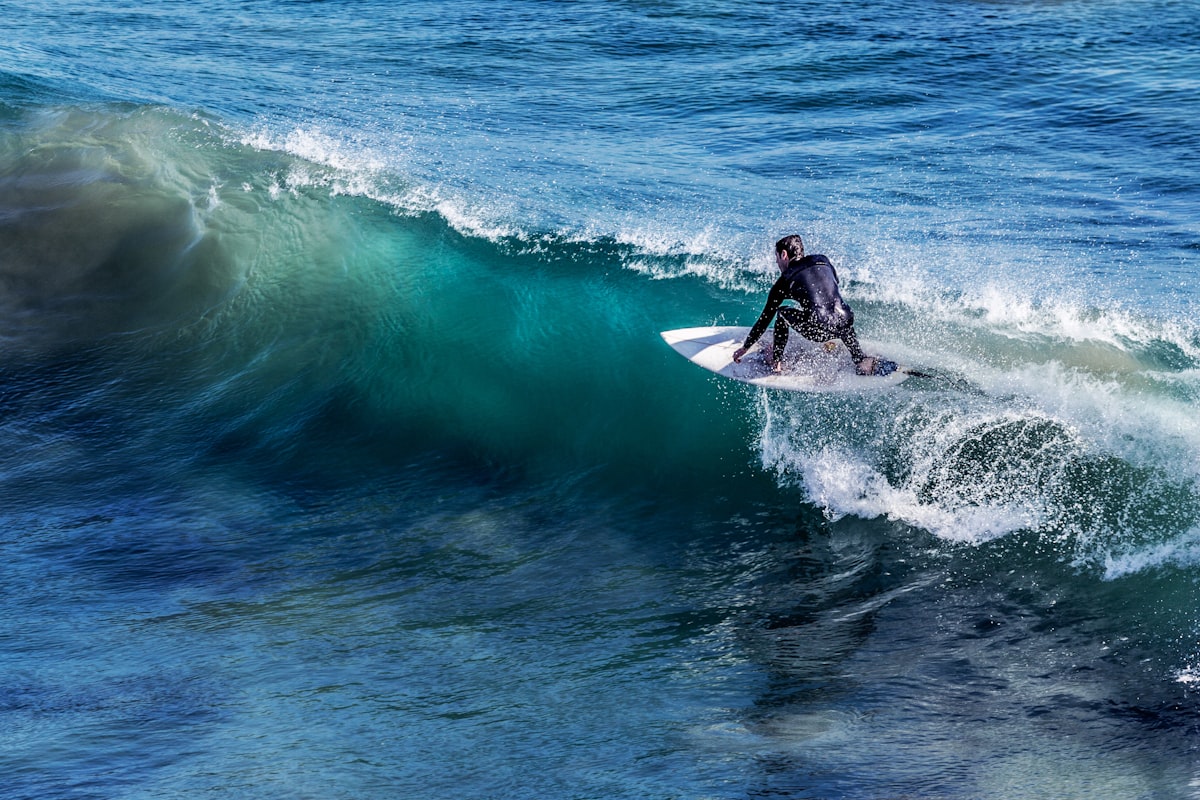
Once you understand that wave energy is being focused by underwater features, you'll start to notice that sets often arrive earlier and from a slightly different angle than they appear to be coming from offshore. That's because the wave you see on the horizon has not yet finished refracting. By the time it reaches the lineup, it has bent toward the shallow part of the reef.
Experienced surfers position themselves not where the wave looks like it's heading, but where they know refraction will deliver it. That's why a local can sit calmly in one spot while visitors paddle frantically toward what looks like the peak — and then watches the wave bend right into them while everyone else gets caught on the wrong side.
Understand Why Your Wave Closed Out
Refraction also explains a lot of bad waves. If a wave refracts evenly along a stretch of sand, it will arrive parallel to the beach and break top-to-bottom along its whole length — a closeout. If a wave refracts unevenly, it will arrive at an angle and peel.
When you paddle out and find that every wave is closing out, the answer isn't always swell direction or wind. Sometimes the sand bar has shifted into a flat, even line, and there's no refraction differential to make the wave peel. The fix isn't waiting it out — it's moving down the beach to a place where the bottom is uneven enough to produce a real peeling section.
Reading Bathymetry Like a Surfer
If you want to take this seriously, the next step is learning to read bathymetric charts — the underwater equivalent of topographic maps. NOAA publishes them for free. Most coastlines have detailed depth data going back decades. Find a chart of your local stretch of coast and look for:
- Submerged ridges and reefs — long, narrow shallow areas that will focus energy in a line.
- Submerged canyons — these accelerate and bend swells, often producing unusually large waves at specific spots downwave of the canyon mouth.
- Convex headlands — anywhere the contour lines bunch and curve, you have refraction-amplified energy on the outside and reduced energy on the inside.
- Channel mouths — rivers and tidal channels carve deep paths that act as divergence zones, often flanked by sandbars that focus energy on either side.
Match the chart against satellite imagery and you can predict, with surprising accuracy, where new and overlooked surf spots exist on a given coastline. Some of the most famous waves discovered in the last twenty years were found exactly this way.

The Bigger Picture
Refraction is not a quirk of certain spots. It is the universal process that turns wind energy in the middle of the ocean into a surfable shape on a particular beach on a particular day. Every wave you have ever ridden — every wedge, every peak, every wrapping point wall — exists because of bathymetry shaping deep-water swell into a local form.
Once you can see refraction, you stop thinking of surf spots as random places where waves happen and start thinking of them as finely tuned instruments that respond to specific swell directions, periods, and tides. Some spots are violins. Some are drums. Some are kazoos. They all do something — but only the swells that match their geometry will produce music.
The investment in understanding this pays off slowly and then all at once. Most surfers spend years going to the same crowded spot whenever the forecast looks decent. Surfers who understand refraction look at the same forecast and drive somewhere else — somewhere uncrowded, dialed in to exactly that swell, throwing waves no one else has thought to chase. That is the leverage. That is what the seafloor is telling you, if you know how to listen.
Read it. Then take it to the water.