Tow-In Surfing: The Complete Guide to Big Wave Surfing's Most Extreme Discipline

Neptune
June 1, 2026
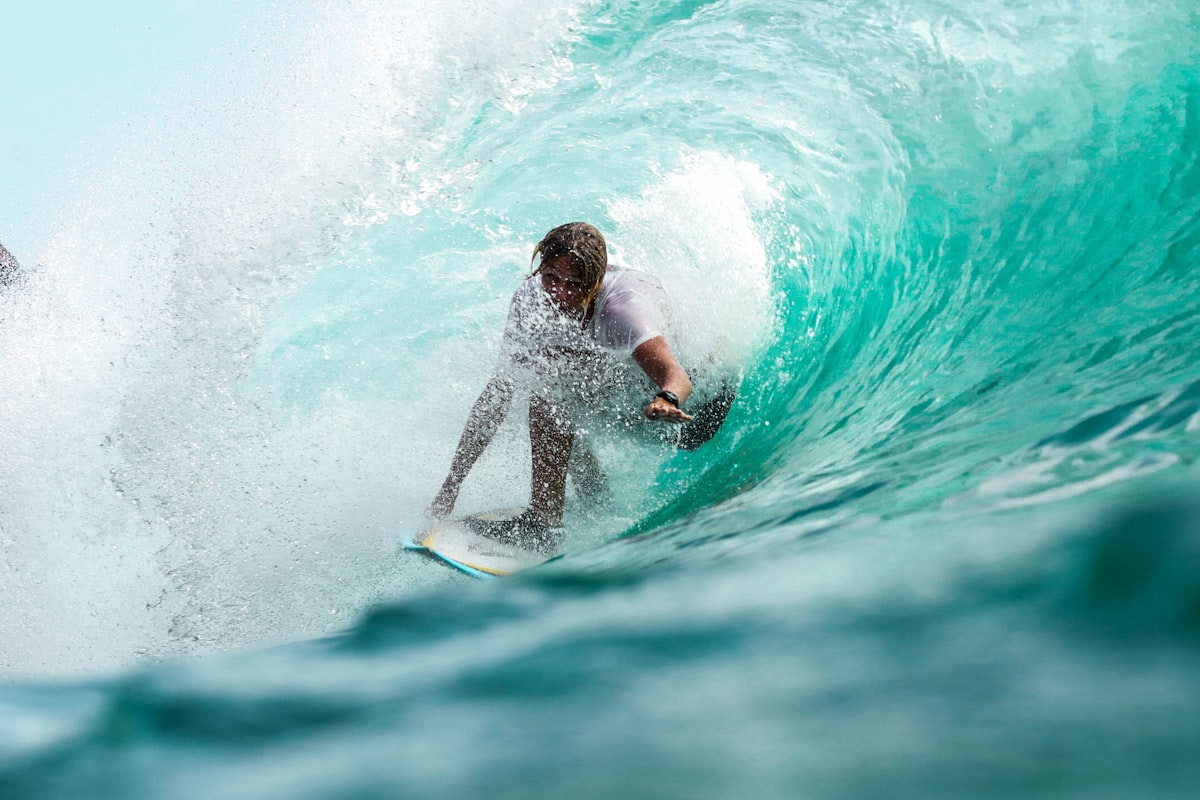
What Is Tow-In Surfing?
Tow-in surfing is the discipline of riding waves that are simply too big, too fast, or too far offshore to paddle into. Instead of paddling, the surfer holds a ski rope behind a jet ski (PWC), gets slung onto the wave at the perfect moment, releases the rope, and rides the giant down the face.
It sounds simple. It isn't. Tow-in surfing is the most logistically complex, equipment-dependent, and consequence-heavy form of wave riding that exists. A bad decision at sixty feet has finality that two-foot beach break wipeouts simply don't carry.
This guide breaks down where tow-in surfing came from, why it was invented, the gear involved, how a tow session actually unfolds, and what the future of the sport looks like as paddle-in surfers continue to push the size ceiling on their own.
Why Tow-In Surfing Exists
Before the early 1990s, the upper limit of paddle-in surfing was roughly twenty-five feet, with rare exceptions. Beyond that size, two physical limits kicked in:
- The wave moves too fast to catch. Ocean waves obey the deep-water dispersion relation — bigger swells travel faster. A solid open-ocean swell can move at thirty-plus miles per hour. Human paddling tops out around five.
- The takeoff zone is unstable. Massive waves often break in deep water far from any sandbar reference. There's no clean lineup, no consistent peak, and no realistic way to position by paddle alone.
In the late 1980s, a group of Hawaiian watermen — Laird Hamilton, Buzzy Kerbox, and Darrick Doerner among them — recognized this ceiling and decided to engineer around it. Their early experiments used Zodiac inflatable boats to whip surfers into outer-reef bombs off the North Shore of Oahu. By 1992 they had migrated to personal watercraft (jet skis), and the modern era of big wave surfing was born at a Maui spot called Pe'ahi — known to the world as Jaws.
What was once a thirty-foot ceiling became a sixty-foot ceiling, then an eighty-foot ceiling. By 2020, tow surfers at Nazaré in Portugal were riding waves measured at over one hundred feet on the face. None of it would have been possible without the rope.
The Gear: Built for Speed, Survival, and Recovery
Tow-in surfing demands radically different equipment than paddle surfing. Every piece serves the dual purpose of maximizing performance at extreme speed and increasing survival odds when things go wrong.
Tow Boards
A tow board is small, dense, and heavy by surfboard standards. Typical dimensions are 5'10" to 6'6" with very low volume — sometimes negative volume on the deck. The shape is closer to a snowboard than a traditional surfboard.
Key features:
- Weighted construction. Lead or metal inserts add mass to drive the board through bumps and chop on the wave face. Without weight, a board at forty-plus mph would skip and chatter uncontrollably.
- Foot straps. Two foot straps (front and back) lock the surfer to the board. At the speeds involved, even minor adjustments without straps would launch a rider into the air.
- Sharp rails and minimal rocker. The board needs to hold a high-speed line. Soft rails or excessive rocker would create drag and instability.
- Thruster or quad fin setup. Deeper, stiffer fins than a standard board, designed to grip vertical wave faces.
The Jet Ski (PWC)
The personal watercraft is half the surf craft. Tow teams typically use heavy-duty four-stroke skis — Yamaha WaveRunner FX SVHO, Kawasaki Ultra 310LX, and Sea-Doo RXT-X 300 are the workhorses of the sport. They're modified with:
- Rescue sleds mounted to the rear for hauling downed surfers out of the impact zone.
- Larger fuel tanks because a four-hour Nazaré session can burn through standard tanks.
- Reinforced hulls to handle repeated drops down ten-foot wash sections.
Tow Rope
The rope itself is roughly twenty-five to thirty feet of polyethylene line with a hard rubber grip. It's stiff enough not to tangle and floats so it can be retrieved quickly. The surfer typically releases at a precise moment as the wave begins to lift the board — too early and you don't catch it; too late and the rope becomes a hazard.
Impact Vest and Inflation System
This is the difference between a long career and a short one. Modern tow surfers wear a CO2-inflatable impact vest (Patagonia, Billabong, and ISI all make versions) that can be triggered manually after a wipeout. Inflation forces the rider rapidly toward the surface — critical when you've been pushed forty feet down and disoriented.
Some setups now include automatic-trigger systems and redundant cartridges in case of multiple wave hold-downs.
Helmet, Wetsuit, and Leash Decisions
Helmets are now standard at Nazaré and Mavericks — the impact of hitting the water at high speed can knock a rider unconscious. Wetsuits are picked for the location: 3/2mm at Jaws, 5/4mm or thicker at Mavericks and Nazaré.
Leashes are a debated topic. Many tow surfers ride leashless to avoid the leash pulling them in dangerous directions during a wipeout. Others use a quick-release waist leash. The decision is personal and consequential.
How a Tow Session Actually Unfolds
A productive tow session is a choreographed operation between two athletes — the surfer and the driver — and an entire support infrastructure on shore.
Before Dawn: The Forecast Window
Tow sessions are forecast events. They don't happen by chance. The team monitors swell models (typically GFS and WaveWatch III), buoy data, and wind charts for days in advance. The window is narrow: a swell needs to arrive at the right size, with the right period, from the right direction, on a day with cooperating winds.
For Jaws, that means a Pacific Northwest swell hitting Maui with a sixteen-second-plus period, with light easterly trades. For Nazaré, it's a North Atlantic system with massive long-period energy and offshore northeast winds. The team often arrives on site days early to acclimatize and stage equipment.
The Pre-Dawn Briefing
Before launching, the surfer and driver agree on:
Working on jaws maui? Get personalized tips from Neptune's AI coach.
Try Free- Communication signals. Hand signals are critical — engines are loud and radios fail.
- The lineup of the day. Where the peak is breaking, what the channel looks like, and where rescues will stage.
- Bail-out points. If the surfer goes down, what's the first move? Where's the rescue sled going to pick up?
- Wave selection criteria. What size, what shape, what position they're hunting.
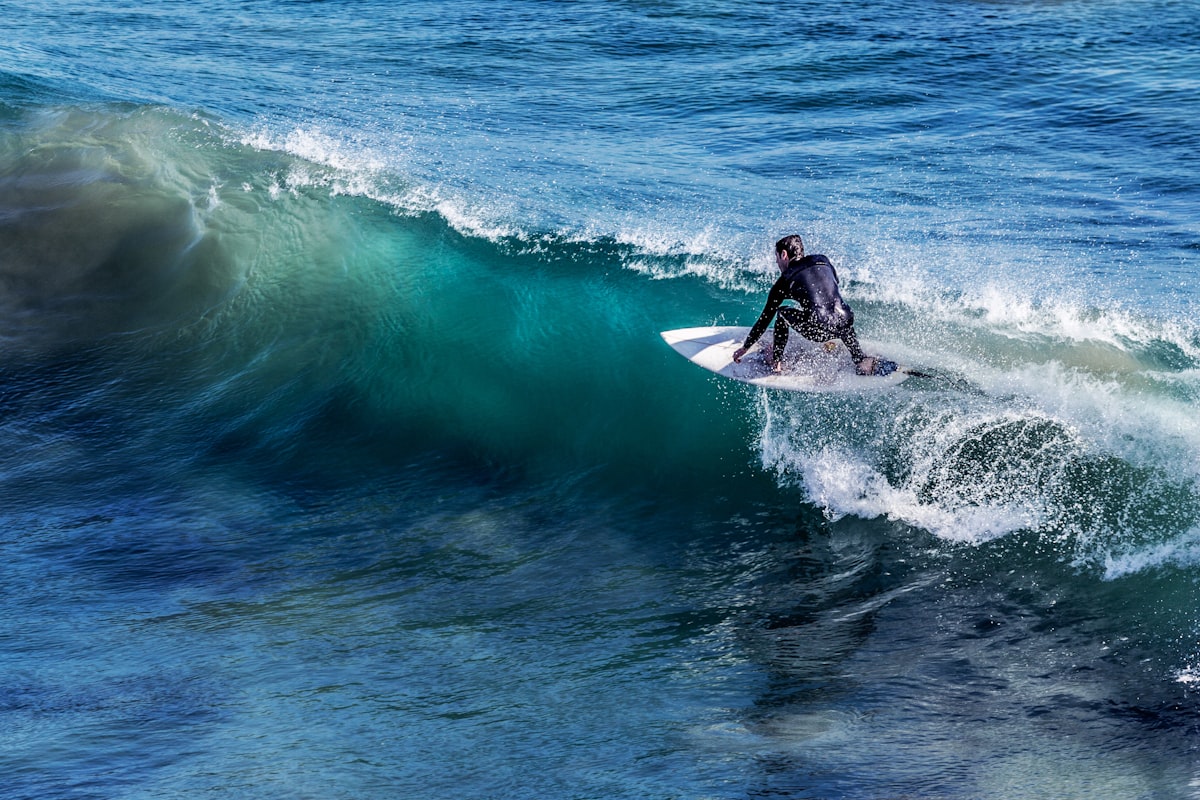
The Pickup and Whip
Once a wave is identified by the driver, the choreography is:
- The driver positions the ski outside the impact zone with the surfer holding the rope.
- As the wave approaches, the driver accelerates parallel to the wave face, building the surfer's speed.
- At the critical moment, the driver cuts away toward the channel, "whipping" the surfer into the wave.
- The surfer releases the rope as the wave lifts the board, and now they're on it.
The whip itself is precision work. Too shallow an angle and the surfer can't get over the lip onto the face. Too steep and they overshoot the peak. Good drivers — Kai Lenny, Garrett McNamara, Sebastian Steudtner — have built reputations as much for driving as for surfing.
The Ride
A tow-in ride at full size lasts ten to thirty seconds and covers hundreds of yards of wave face. The surfer manages the speed with rail-to-rail tilting, foot pressure shifts, and minimal directional changes. There's almost no room for error. A blown rail at sixty miles per hour means a wipeout that drops the rider straight onto the wave face with extreme force.
The end of the ride is either a kick-out into the shoulder (where the ski meets them and tows them clear) or a wipeout. Wipeouts are managed, not avoided.
The Rescue Protocol
Every tow session is built around the assumption that wipeouts will happen and rescues will be needed. The standard protocol:
- The driver watches the wipeout, fixes on the surfer's location, and accelerates toward them as soon as the wave has passed.
- The surfer ideally surfaces near where they went down, signals OK, and grabs the rescue sled.
- The ski accelerates out of the impact zone before the next wave of the set hits.
When it works, it's seamless. When it doesn't — two-wave hold-downs, separation in whitewater, ski mechanical failures — it becomes life-threatening fast.
The Iconic Tow-In Waves
A handful of waves on Earth define what tow-in surfing means in practice. Each has its own character, dangers, and history.
Jaws (Pe'ahi), Maui
The birthplace of modern tow surfing. Jaws is a deep-water reef break on Maui's North Shore that produces clean, structured waves up to seventy feet on the right swell. The wave breaks far enough offshore that paddle access is possible (and increasingly common), but it's also where Laird Hamilton, Buzzy Kerbox, and Darrick Doerner refined the tow approach in the 1990s.
Mavericks, California
A cold-water cousin to Jaws, Mavericks breaks over a deep reef off Half Moon Bay south of San Francisco. The water is cold, the lineup is treacherous (Sutro Tower is a known visual reference but doesn't help with rocks), and the wave can grow to sixty feet on a strong winter swell. Jay Moriarity and Jeff Clark were Mavericks pioneers; Mark Foo died there in 1994, making it the first major fatality of the modern big wave era.
Nazaré, Portugal
The current heavyweight champion. Nazaré is a beach break amplified by the Nazaré Canyon, an underwater chasm that funnels open-ocean energy directly toward the village's lighthouse. In 2011, Garrett McNamara rode a seventy-eight-foot wave that put Nazaré on the world map. By the 2020s, official measurements were exceeding one hundred feet. Nazaré is the place where the size ceiling is currently being rewritten.
Cortes Bank, California
A submerged seamount one hundred miles off the San Diego coast. Cortes can produce eighty-foot-plus waves but with no land in sight, no rescue infrastructure, and the nearest hospital hours away by boat or helicopter. It's the most logistically extreme tow spot on Earth.
Belharra, France
A deep-water reef off the French Basque coast that activates only a few times per decade. When it does, it produces some of the longest big waves in Europe.
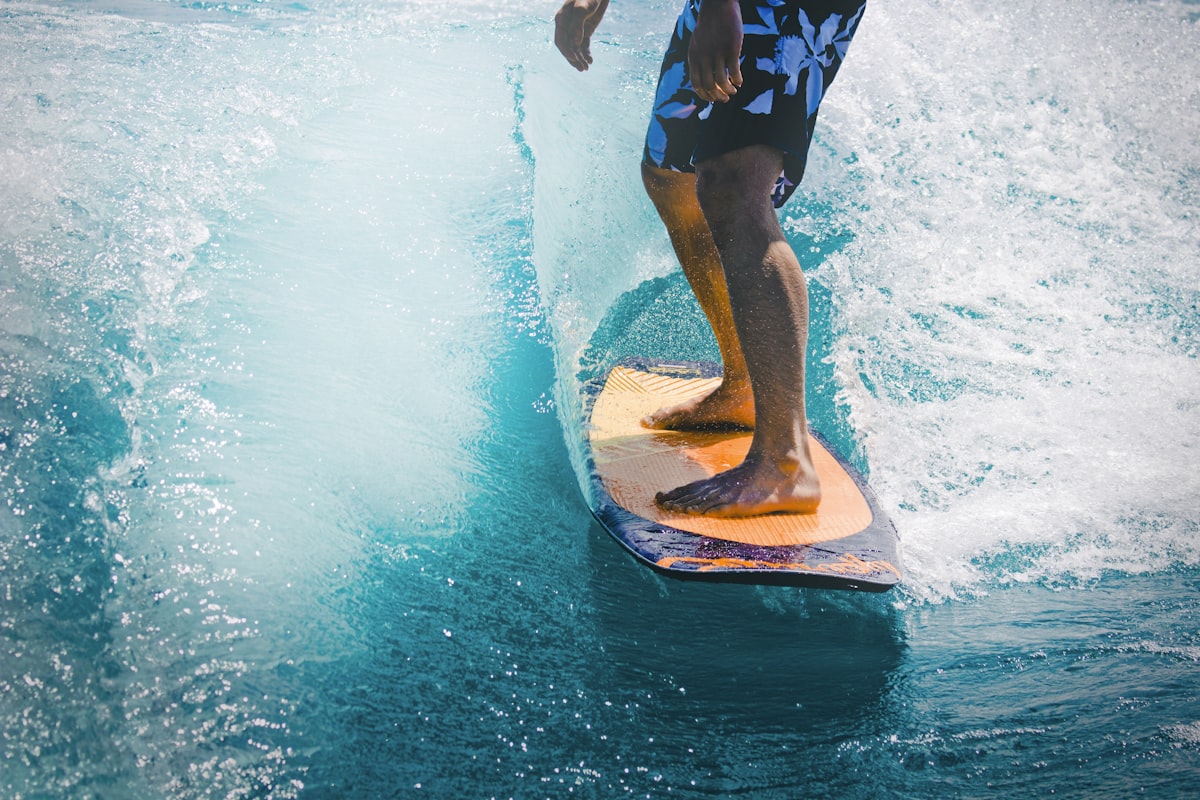
Tow-In vs. Paddle-In: The Modern Debate
Through the 1990s and 2000s, tow-in surfing was uncontested as the technique for the biggest waves. Then, around 2010, a shift began. Paddle-in big wave surfing experienced a renaissance, driven by:
- Improved big-wave gun designs with more volume in the right places.
- Better paddle techniques and conditioning programs.
- Inflatable vests that made paddle wipeouts more survivable.
- A cultural pushback against PWC noise and crowding in big wave lineups.
By 2016, paddle surfers were taking on fifty-plus-foot waves at Jaws and Mavericks under conditions that would have demanded tow-in fifteen years earlier. Big wave competitions like the WSL Big Wave Tour shifted to paddle-only formats.
But there's a ceiling. Above roughly sixty feet, or in conditions where the wave face is too fast for any human paddle, tow-in remains the only option. Nazaré on the biggest days is exclusively a tow wave. The future is likely both: paddle when possible, tow when not.
Physical Preparation for Tow-In Surfing
Even though you're not paddling, tow-in surfing is brutally demanding. The forces involved in a single wipeout — being driven thirty to fifty feet underwater and held down for ten to thirty seconds — require specific preparation.
Breath-Hold Capacity
Most tow surfers train static breath-hold to four minutes or longer, and dynamic (under exertion) holds to two minutes. The standard training method is CO2 and O2 tolerance tables — structured tables of holds with controlled rest intervals.
Underwater Disorientation Training
Pool sessions wearing weight vests, doing somersaults underwater, and then attempting to surface with intent. Real wipeouts disorient the rider; this training builds the ability to find the surface even when scrambled.
Strength and Power
Heavy compound lifts (squats, deadlifts, presses) build the structural strength needed to hold a tow-board line at speed and absorb impact. Pulling exercises — pull-ups, rows — build the shoulder and back strength critical for clinging to a rescue sled or fighting whitewater.
Cold and Stress Inoculation
Cold exposure (ice baths, cold ocean swims) trains the body to keep blood flow to extremities and limit panic response in shocking conditions. Most serious tow surfers maintain a year-round cold protocol.
Risk, Reality, and Respect
It's important to be honest about the risk profile of tow-in surfing. Mark Foo, Sion Milosky, Kirk Passmore, and Alec Cooke all died big wave surfing — not all in tow scenarios, but all in environments tow-in surfing operates within. Brad Gerlach, Greg Long, and Garrett McNamara have all had near-misses that nearly ended their lives.
The sport demands not just skill but humility. The waves don't care how prepared you are. Tow-in is not a discipline anyone should approach casually — it's earned through years of paddle big-wave experience, water rescue certifications, deep mentorship, and progressive size build-up.
The Future of Tow-In Surfing
Three trends are reshaping where tow surfing goes from here:
- Foil tow-in. Surfers are now using hydrofoils towed into smaller waves, riding the foil at high speed across the open ocean. Kai Lenny has been the most visible advocate. It's a separate discipline that's still evolving.
- Electric jet skis. Quieter, cleaner, and less disruptive to lineups. Adoption is slow but accelerating.
- Forecast precision. Machine learning models trained on decades of buoy data are now predicting tow-suitable windows weeks in advance, allowing teams to position assets and arrive ready.
Whatever direction the discipline takes, the core principle remains: tow-in surfing is what happens when the ocean exceeds what any human can do alone. It's a partnership — between two athletes, between technology and nature, and between ambition and risk.
If you're going to be part of it, start small, train obsessively, find mentors who'll tell you the truth, and respect the waves that have ended lives. Then, maybe, you earn the rope.
Want personalized coaching on jaws maui?
Neptune's AI coach can help you improve faster with personalized feedback, session tracking, and real-time conditions.