Gun Surfboards: When Your Everyday Board Stops Working

Neptune
June 14, 2026
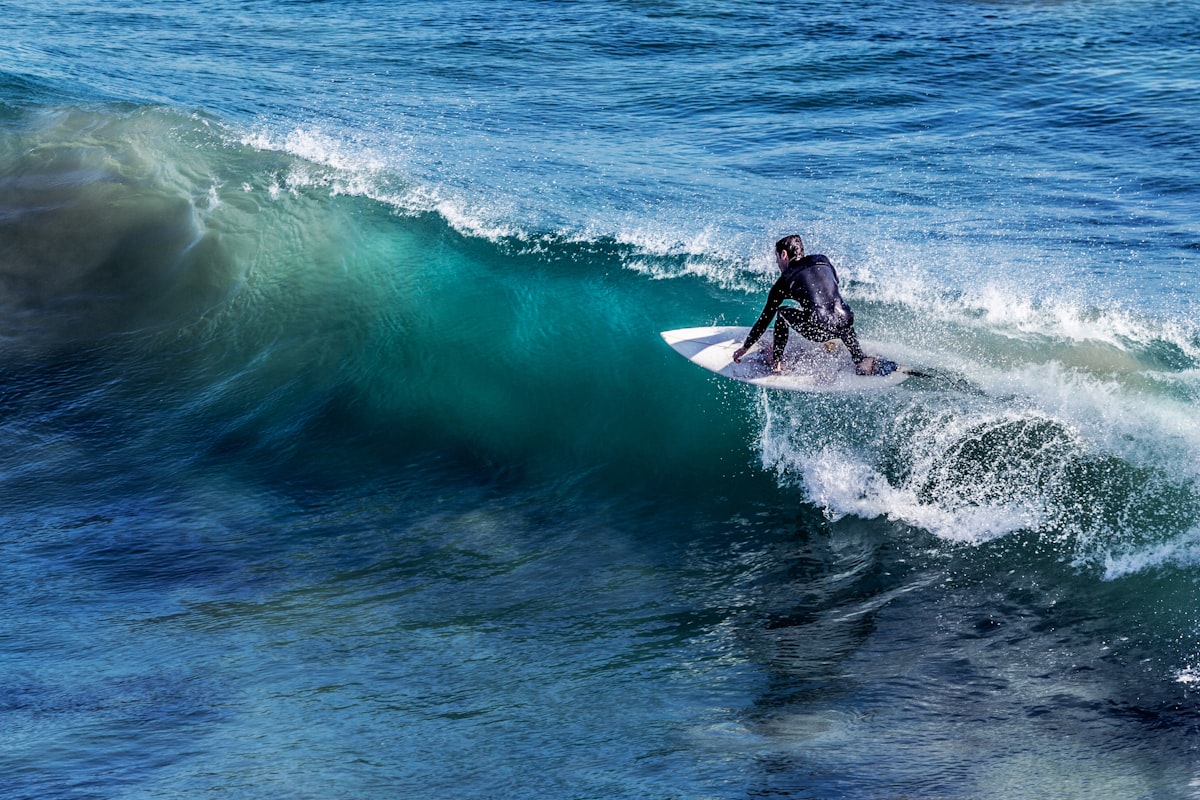
When the Ocean Gets Serious, You Need a Different Board
Double overhead arrives. The board that served you for years feels like a toy.
That is the moment the gun was invented for.
A gun is the most specialized board in big-wave surfing: a long, narrow, knife-like shape built to do one thing supremely well — paddle into large, fast, powerful waves and hold a committed line down a steep face. It is not a board you grab for a fun beach-break session. It's a tool you reach for when conditions demand more length, more paddle speed, and more control than anything else in your quiver can provide.
This guide breaks down what a gun actually is, how its design differs from the boards you already ride, how to size one correctly, and — most importantly — the skills and judgment you need before you should be paddling one out at all.
What Exactly Is a Gun?
The name comes from big-wave pioneer Greg Noll, who in the 1950s described needing an "elephant gun" to hunt the biggest waves on the North Shore of Oahu. The name stuck. A gun is, quite literally, your big-game weapon for big surf.
In practical terms, a gun is defined by its proportions more than any single number:
- It's long — typically anywhere from 7'0" for a "mini-gun" up to 10'0"+ for boards built for waves over 25 feet.
- It's narrow — often under 19" wide, with a slim, streamlined outline that slices through chop and bumps rather than skating across them.
- It's pointed at both ends — a sharp nose and, almost always, a pintail.
- It's all about paddle speed and hold — every design choice is made to help you catch a fast-moving wave early and stay in control once you're on it.
A gun trades the loose, playful, do-everything nature of a shortboard for raw stability and drive at speed. You give up tight turns and forgiveness; you gain the ability to make a drop that would otherwise be impossible.
The Anatomy of a Gun
Understanding why a gun is shaped the way it is makes it far easier to choose one — and to surf it well.
Length and Outline
Length is the gun's signature. A longer board has more rail in the water and a longer paddling waterline, which means more paddle speed. When a big wave is racing toward you at twice the velocity of a small one, you need to be moving fast just to match it. The extra length lets you generate that speed with fewer, more powerful strokes, so you can catch the wave early — before it stands up and pitches.
The outline is streamlined and continuous, with the widest point pulled close to center or slightly forward. There are no abrupt curves to catch and unsettle the board at high speed. The whole shape is built for one clean line.
The Pintail
Almost every gun ends in a pintail — a tail that narrows to a near-point. A narrow tail sinks deeper into the wave face and gives you enormous hold: it bites into the water and refuses to slide out, even at terrifying speed on a steep, bumpy wall. Forgiveness and looseness are sacrificed, but on a big wave you don't want a loose tail. You want one that locks in and tracks true.
Rocker
A gun carries more nose rocker (the upward curve toward the front) than a small-wave board. That lifted nose is what keeps you from "pearling" — burying the tip and getting pitched — on the steep, late drops that big waves demand. The trade-off is that more rocker means more drag and slower paddling, so shapers walk a careful line: enough rocker to survive the drop, not so much that you can't catch the wave in the first place.
Rails and Volume
The rails (edges) of a gun are fuller and more rounded through the middle than a shortboard's thin, knifey rails. Forgiving, rounded rails are more stable at speed and less likely to catch unexpectedly when you're flying down a face at 30 miles per hour. Volume is distributed smoothly along the stringer to keep the board paddling fast and tracking straight, rather than concentrated under the chest the way it is on a small-wave groveler.
Fins
Most modern guns run a thruster (three-fin) setup for a blend of drive and control, though many big-wave shapers favor a single fin or a five-fin (bonzer-influenced) configuration for ultimate hold and tracking. Whatever the count, the fins on a gun are larger and set up to maximize stability and resist sliding out — not to make the board pivot easily.
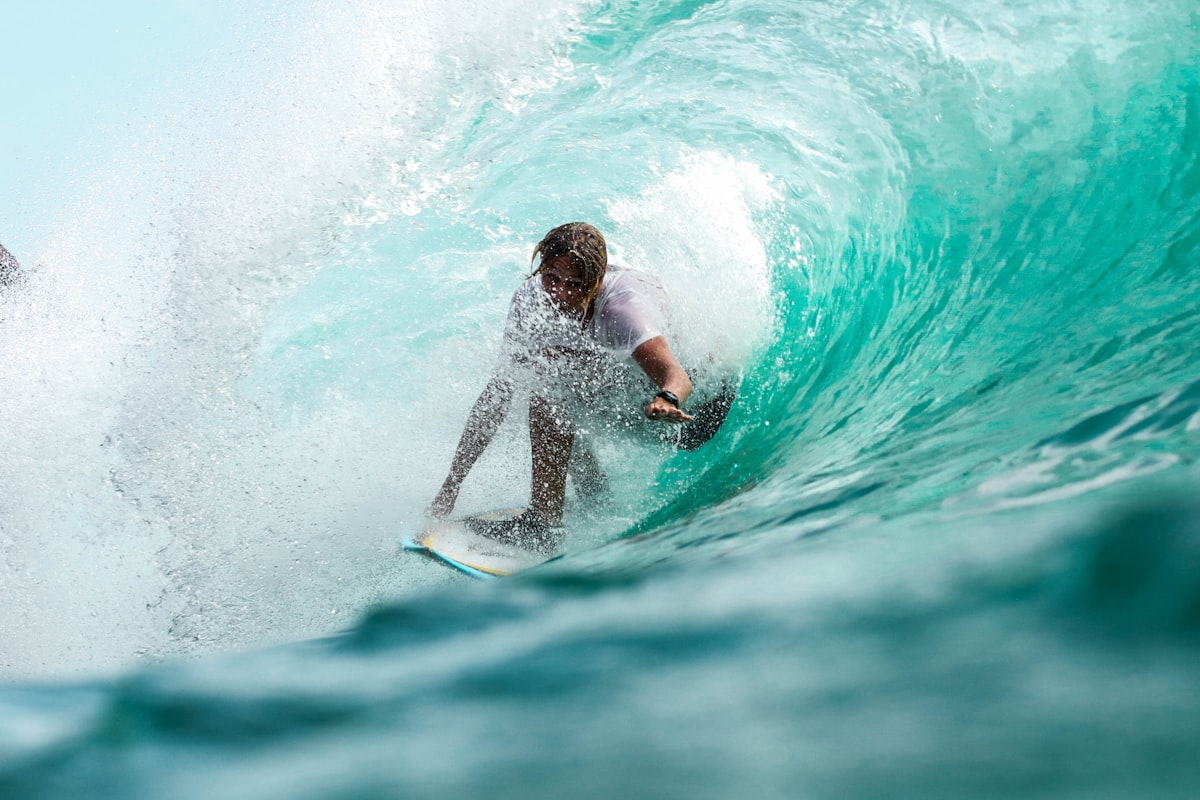
Gun, Step-Up, or Tow Board? Knowing the Spectrum
"Gun" gets used loosely, so it helps to place it on a spectrum of big-wave equipment.
Working on board selection? Partner with Neptune on iPhone and Apple Watch.
Get the free app- Step-up: A board only slightly bigger than your everyday shortboard — maybe 3 to 6 inches longer with a little more foam. It handles solid, overhead, fast waves that your daily driver can't quite manage, but it still turns like a high-performance board. This is the board most surfers reach for first as waves get bigger.
- Mini-gun (or "semi-gun"): Generally 7'0" to 8'6". The bridge between a step-up and a full gun, built for double-overhead surf that's clean and powerful but still paddle-able.
- Gun: 8'6" to 10'0"+. A true big-wave paddle board for waves in the 15-to-25-foot range and beyond, where catching the wave under your own power is the entire challenge.
- Tow board: A short, heavy, foot-strapped board used only when a jet ski tows you into waves too big and fast to paddle into. This is a different discipline entirely — the wave is moving so fast that paddle speed is irrelevant, so the board shrinks back down for control.
If you're reading this guide to figure out your first bigger board, the honest answer is that you almost certainly want a step-up, not a gun. The gun comes later, when the step-up itself starts to feel too small.
How to Size a Gun
Sizing a gun is a conversation between three things: the size of waves you're targeting, your weight and paddle fitness, and your experience level. There's no universal chart, but here are the principles shapers actually use.
Match length to wave size, not to your ego. As a rough guide:
- Overhead to double-overhead, clean and fast: a step-up or mini-gun in the 7'0"–8'0" range.
- Double-overhead to triple-overhead: a 8'0"–9'0" gun.
- Genuine big-wave surf (20 feet and up): 9'0"–10'6", sized to the specific break.
Add foam for paddle power, not float. A gun should feel like it paddles faster than your shortboard, not just floats more. If you're under-gunned, you'll be late on every wave and get caught behind the peak. Most surfers err too small here because a big board feels intimidating to carry out — resist that instinct. Being under-gunned in serious surf is far more dangerous than being slightly over-gunned.
Respect the narrow width. Guns are narrow by design, which makes them tippy and harder to balance on at rest. That's normal. The width is there to let the board knife through chop and hold a rail at speed. You buy stability through length and the pintail, not through width.
When in doubt, talk to a shaper who knows the wave you're targeting. A gun built for a slabbing reef pass is shaped differently than one built for a long, walling point — and a good shaper will tune length, rocker, and tail to the exact conditions you describe.
Reading the Conditions That Call for a Gun
A gun isn't just for "big" waves — it's for waves that are big and fast and steep. Three signals tell you the gun is the right call:
- Wave speed. The single biggest reason to grab a gun is that the wave is simply moving too fast to catch on a shorter board. Long-period groundswell — the kind generated by distant storms — produces waves that march in with enormous speed and energy. The longer the swell period, the faster and more powerful the wave, and the more board you need under you.
- Drop steepness. If the takeoff is near-vertical and you have to commit to a free-fall entry, you need the nose rocker and the early-catch paddle speed a gun provides. A flatter board will pearl; a shorter board won't get you in early enough to set your line.
- Consequence. Big waves usually break over reef or in deep, open-ocean settings where a wipeout carries real weight. The gun's hold and stability aren't just about performance — they're about staying in control in a place where losing control has consequences.
If the swell is big but soft, slow, and crumbly, you may be better served by a longboard or a high-volume mid-length. The gun earns its place specifically when waves combine size with speed and steepness.
The Skills a Gun Demands
A gun rewards a very specific, somewhat narrow skill set — and it punishes the lack of it. Before you take one out, these are the abilities you need to have already built in smaller surf.
Paddle Power and Positioning
Catching a big wave under your own power is mostly about being in exactly the right spot and out-paddling the wave's speed for a few critical strokes. A gun helps, but it can't replace fitness. You need the conditioning to sprint-paddle on command and the wave-reading to be sitting in precisely the right place when the set arrives. This is why so much of big-wave preparation happens in the gym and the pool, not just in the water.
The Late, Committed Drop
On a big, fast wave you rarely get to ease into the takeoff. You commit, you pop up fast, and you ride down a steep face with total conviction — any hesitation, any leaning back, and you'll get bucked. The gun's rocker and hold are designed to make this drop survivable, but only if you're willing to lean forward and go. Half-commitment is the most dangerous choice you can make on a wave this size.
Holding a High, Fast Line
Once you're down the face, the gun wants to run in a long, drawn-out line — not a series of tight, snappy turns. Surfing a gun well means reading the wave far ahead, choosing a line, and trusting the board to hold it at speed. Big, smooth bottom turns and high, fast trim lines are the language of a gun. If your instinct is to throw quick, vertical turns, you'll fight the board the entire way.
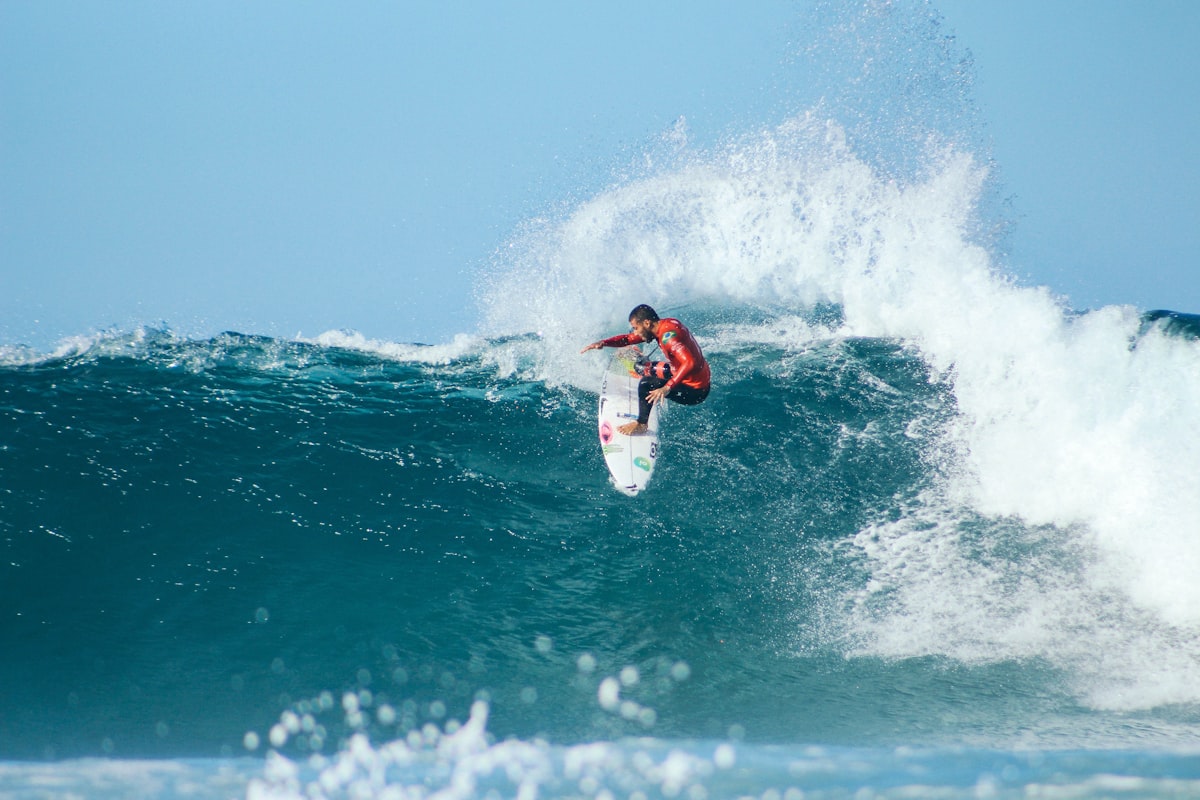
Building Up to It Safely
No one should jump straight from a daily shortboard to a 9'6" gun in 20-foot surf. The progression matters more here than anywhere else in surfing, because the margin for error shrinks as the waves grow.
Step up gradually. Move from your everyday board to a step-up, and surf bigger-but-manageable waves on it until it feels natural. Only when that board starts feeling too small in genuinely large surf should you consider a mini-gun, and then a full gun. Each step should feel slightly challenging, never reckless.
Build the fitness first. Big-wave surfing is a fitness discipline disguised as a board sport. Paddle endurance, sprint power, breath-hold capacity, and the ability to stay calm under a hold-down are non-negotiable. Spend time on swim training, cardio, and breath work long before the swell of your life shows up on the forecast.
Surf with people, never alone. Big waves are a team activity in spirit. Surf with others who know the spot, understand the hazards, and can help if something goes wrong. Learn the channels, the rip currents, the impact zone, and the safest path back to the lineup before you paddle out.
Consider the safety gear. As you progress into serious size, an inflatable safety vest, a properly rated leash, and a clear-headed plan for a two-wave hold-down become part of the kit. Know your exit, know your limits, and be honest about both.
Be willing to sit one out. The most important big-wave skill is judgment — the discipline to recognize when conditions are beyond you and to watch from the channel instead of paddling out. There is no shame in it, and every experienced big-wave surfer has done it. The waves will be there another day.
Caring for and Traveling With a Gun
Because a gun is long, narrow, and often a once-or-twice-a-season board, a little care goes a long way. Store it flat or vertically in a padded bag, out of direct sun and heat, which can delaminate the glass over time. Guns are more fragile than their size suggests — the thin nose and narrow tail are vulnerable to dings, and a compromised big-wave board is a serious liability, so inspect and repair any damage before it goes back in the water.
If you're chartering a boat or flying to a big-wave destination, a gun usually needs its own dedicated board bag and adds meaningfully to your travel load. Many surfers who only occasionally encounter big surf choose to rent or borrow a gun at the destination rather than haul one across the world for a handful of sessions. There's no wrong answer — just plan ahead, because the day the swell arrives is not the day you want to be hunting for the right board.
The Bottom Line
A gun is the most honest board in the quiver. It does exactly one thing — get you into big, fast, serious waves and hold you steady once you're there — and it makes no apology for being useless at everything else. You can't ride it casually, you can't fake your way onto it, and you shouldn't try to.
But for the surfer who has put in the years, built the fitness, and earned the judgment, a properly sized gun unlocks the rarest and most exhilarating experience in the sport: dropping into a wave so large and so fast that no other board could have caught it. That's worth respecting, and it's worth building toward the right way — one step up at a time.
When the swell of your life finally shows up on the forecast, you want to meet it with the right board under your arm and the skills to use it. The gun is that board. Earn it, size it correctly, and treat the ocean with the respect a wave that size deserves.
Read it. Then take it to the water.