Surfboard Tail Shapes Explained

Neptune
May 17, 2026
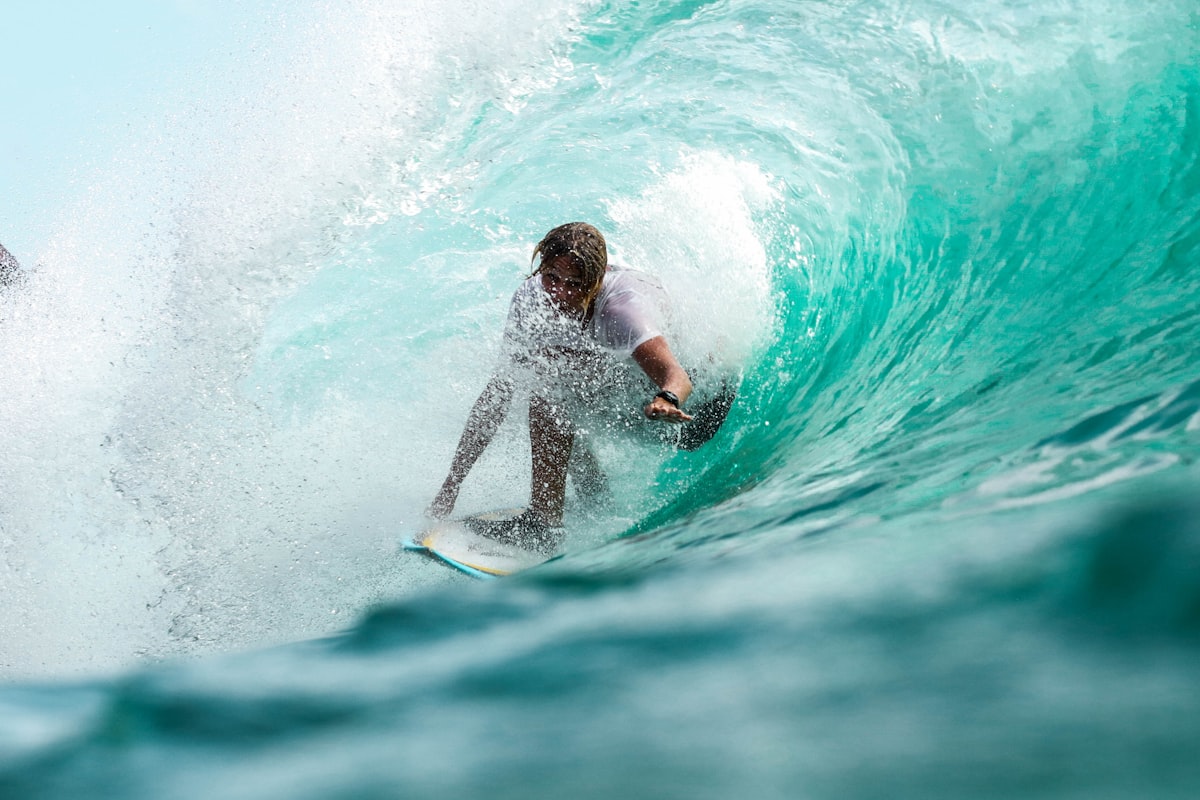
The Last Twelve Inches Do More Than You Think
The tail is not a styling choice. It sits under your back foot when you turn.
It decides how the board pivots, holds, and releases.
What a Tail Actually Does
Before getting into individual shapes, it helps to understand what every tail is balancing. The back of the board has two opposing jobs.
First, it has to plane. Wider, flatter tails create more lift and let you generate speed through weak sections. This matters most in small or slow waves, where you need every square inch of surface area to keep you moving.
Second, it has to hold. Narrower, more curvy tails bury into the wave face and give your rails something to grab during turns. This matters most in steep, fast waves, where a tail that's too wide will skip out from under you when you load it up.
Every tail shape is a different answer to that planing-versus-holding tradeoff. The wider and squarer the tail, the more it leans toward planing and looseness. The narrower and more curved, the more it leans toward hold and projection. Once you see the spectrum that way, the named shapes become much easier to read.
The Squash Tail: The Versatile Default
The squash is the most common tail shape in modern shortboarding, and for good reason. It's a square tail with rounded corners — wide enough to give you the planing area you need in average waves, but with enough curve in the corners to release cleanly out of turns.
How a Squash Tail Rides
The squared-off back gives the squash a clear pivot point. When you push hard off your back foot, the tail releases predictably, which makes it forgiving for snapping off the lip and easy to control through tight, vertical maneuvers. The corners create a small amount of bite, but not so much that the board feels stuck.
If you're learning to do off-the-lips, floaters, or basic carves, a squash tail is the most accommodating shape you can ride. It rewards aggressive surfing without punishing you for sloppy technique.
When to Pick a Squash
Choose a squash tail when:
- You want one shortboard for a wide range of conditions
- Your home break runs from knee-high to a few feet overhead
- You're working on progressive maneuvers and want a forgiving platform
- You don't yet know exactly what kind of surfer you're becoming
The squash is the safe pick, but "safe" isn't an insult here. Most professional surfers ride squash tails in everyday conditions because they work in almost everything. If you're unsure, this is the right answer.

The Swallow Tail: The Small-Wave Specialist
A swallow tail is essentially a wide tail with a notch cut out of the middle, leaving two prongs that look like a swallow's forked feathers. The notch is functional — it gives you the planing area of a wide tail across the outside edges, but adds a bit of bite and release at the inside corners.
How a Swallow Tail Rides
The two prongs act almost like a pair of mini-pin tails. When you turn, one prong holds while the other releases, which gives the board a surprisingly nimble feel for how much planing surface it has. The wide overall shape keeps you moving through flat spots, but the prongs prevent the board from feeling stiff or stuck.
This is the tail shape of choice on fish surfboards and grovelers — the boards designed for waves that are too small or too weak for a regular shortboard to come alive. A 5'6" fish with a deep swallow can fly through mushy waist-high surf that would leave a standard shortboard bogged down between sections.
When to Pick a Swallow
Choose a swallow tail when:
- Your local waves are often small, weak, or mushy
- You want a small-wave board to complement your regular shortboard
- You're riding a fish, twin-fin, or other retro-inspired shape
- You want maximum speed generation in average conditions
The swallow does have limits. In overhead, hollow waves, the wide planing surface that helps in mush can feel skittish, and you'll find yourself wishing for a narrower tail to bite into the face. Treat the swallow as a specialist, not an everyday board for serious surf.
The Pin Tail: The Big-Wave Tool
A pin tail comes to a sharp point at the back of the board. Some pins are exaggerated and needle-like, others are more rounded — sometimes called a "round pin" — but the principle is the same: the tail tapers down so that the back of the board has very little planing area.
How a Pin Tail Rides
A pin sacrifices everything for hold. The narrow back end has almost no surface area to slide out from under you, which means you can drive the board through huge, fast bottom turns without the tail releasing prematurely. The rails meet in a clean point, so they bury into the wave face and give you an enormous amount of control at high speed.
The tradeoff is obvious: pins don't plane well in small or weak waves, and they don't release easily for snappy, vertical maneuvers. You'll feel slow trying to surf a pin in waist-high mush, and you'll struggle to get the tail to break loose for an aggressive off-the-lip.
Working on squash tail? Partner with Neptune on iPhone and Apple Watch.
Get the free appWhen to Pick a Pin
Choose a pin tail when:
- You're riding overhead, fast, hollow waves
- You need maximum drive through long bottom turns
- You're building a step-up board or gun for solid swell
- You value control over looseness
A traditional pin is the standard tail on gun-style boards built for big waves precisely because surfing in critical conditions is about holding your line, not flicking the tail around. If your home break delivers everything from shoulder-high to triple-overhead, a pin-tailed step-up belongs in your quiver for the bigger days.
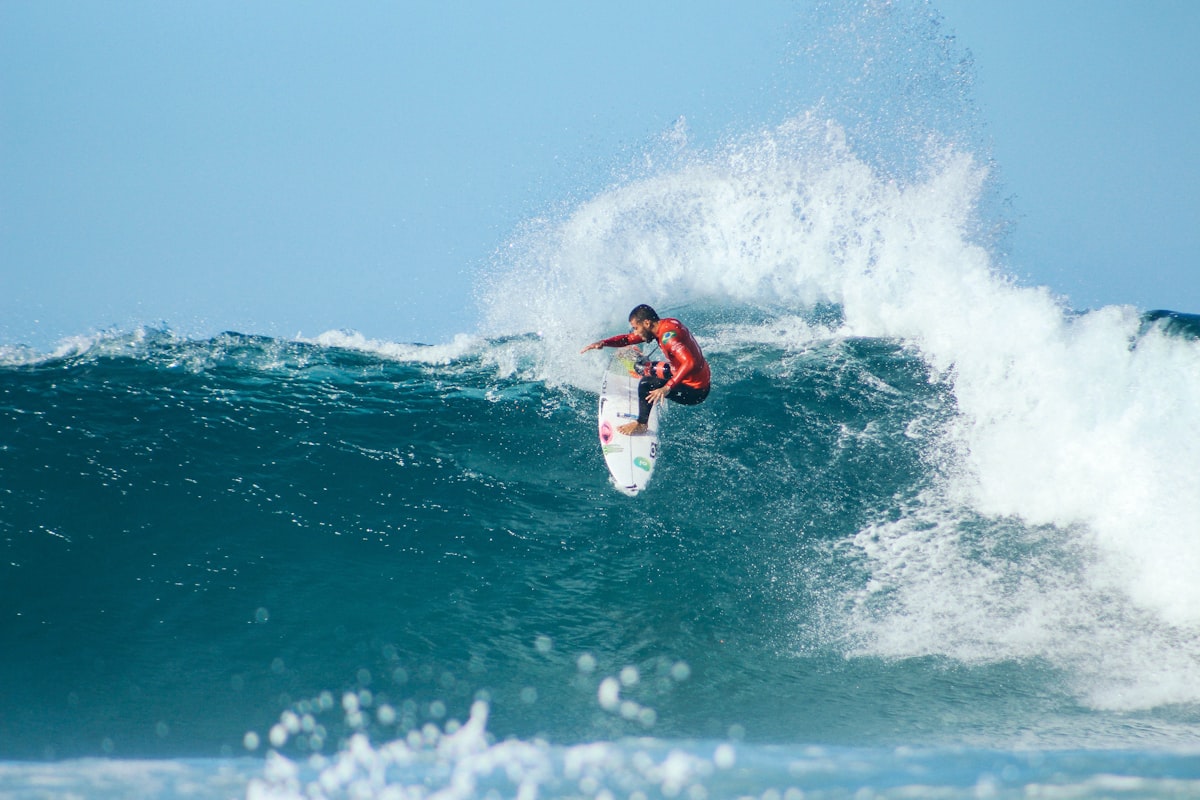
The Round Tail: The Smooth Operator
A round tail looks like the rounded end of a thumb — a continuous curve with no corners, no points, and no notches. Sitting roughly between a squash and a pin in terms of planing area, it's often called the most "drawn-out" tail shape because of how it changes the way the board turns.
How a Round Tail Rides
Without corners or a point, a round tail has no obvious pivot. Instead of releasing at a defined edge, it transitions smoothly from rail to rail through the curve, which makes turns feel longer, more arcing, and more connected. Round tails are the favorite of surfers who value flow and drawn-out lines over snappy, vertical surfing.
The continuous curve also gives the tail enough hold to perform in hollow, powerful waves, while keeping enough surface area to work in everyday conditions. Many surfers consider the round tail the best blend of hold and planing — a step toward the pin without giving up too much usability.
When to Pick a Round
Choose a round tail when:
- You like longer, drawn-out carves over short, vertical snaps
- You surf medium-to-larger waves with reasonable power
- You're stepping up from a shortboard to a small-wave step-up
- You're chasing a smooth, classical style
Round tails are popular on mid-length boards and on shortboards built for point breaks, where long walls reward connected, flowing turns more than they reward staccato bursts of vertical surfing.
The Diamond Tail: The Underrated Hybrid
The diamond tail is a squash with the corners chopped at an angle, creating a diamond-like profile when viewed from above. It's less common than the four shapes above, but it solves a real problem: the diamond's pulled-in trailing point reduces the effective tail width, while the wider center keeps the planing surface intact.
How a Diamond Tail Rides
A diamond rides somewhere between a squash and a round. The center of the tail planes like a wide squash, but the angled corners give you a pulled-in feel similar to a small pin. The result is a board that's quick off the back foot but turns with more flow than a pure squash.
Diamond tails work well on mid-length boards, where you want the planing area of a wide shape but the cleaner release of a narrower tail. They're also common on small-wave shortboards designed to handle a slightly wider range of conditions than a pure fish.
When to Pick a Diamond
Choose a diamond tail when:
- You want squash-tail performance in small waves with cleaner release
- You're riding a mid-length and want it to turn more like a shortboard
- You like the look but don't want to commit to a fish
The diamond is uncommon enough that you may not find one off the rack, but if you're ordering a custom board, ask your shaper about it. It's a quietly versatile shape that deserves more attention than it gets.
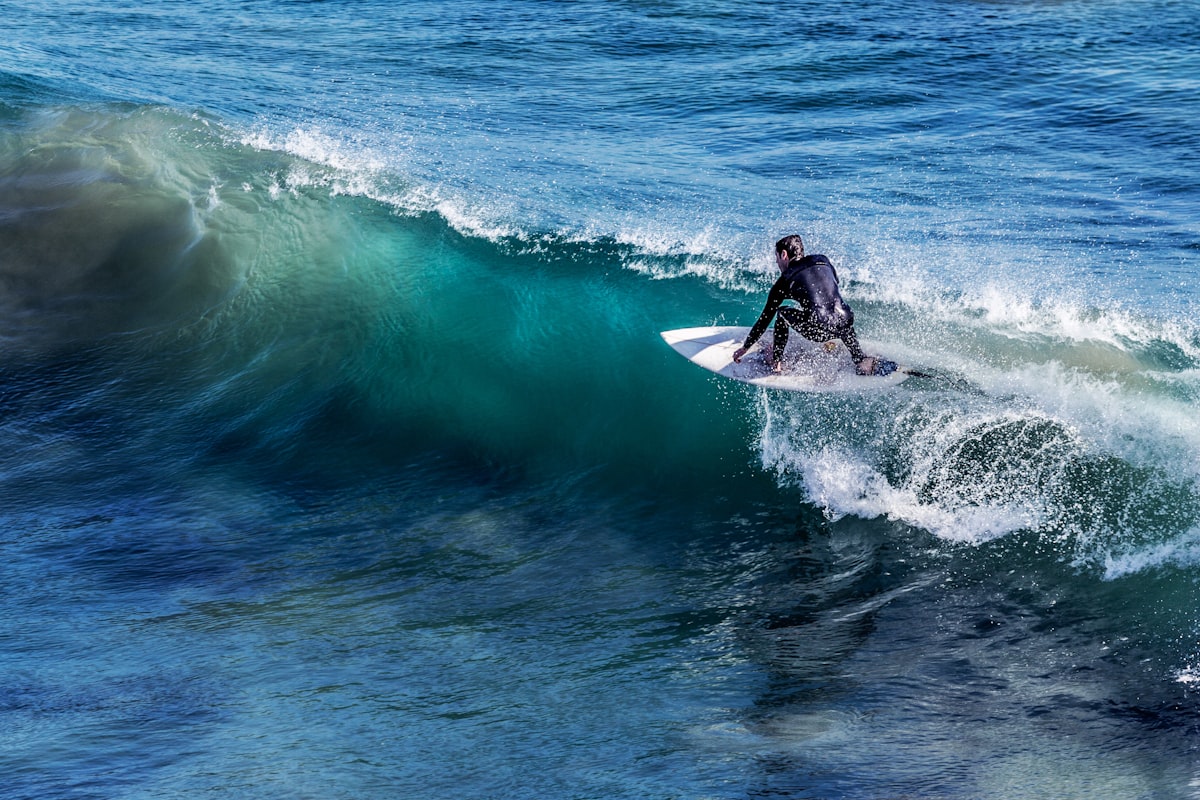
Tail Shape Doesn't Work in Isolation
It's tempting to read all of this and conclude that you can pick a board based on tail shape alone. You can't. Tail shape interacts with three other design elements, and changing one without considering the others will give you a board that doesn't perform the way the tail suggests.
Tail Width
The named shape tells you about the silhouette, but the width of the tail measured at twelve inches from the back (called the "tail twelve") tells you about the planing area. A narrow swallow on a high-performance shortboard rides nothing like a wide swallow on a retro fish, even though both are technically swallow tails. Always look at the tail width in the dimensions, not just the shape name.
Rocker
A flat tail rocker keeps your speed up but reduces vertical performance. A pulled-up tail rocker gives you snap and projection at the cost of speed in flat sections. The right tail shape depends partly on which rocker it's paired with — a wide squash with too much tail rocker can feel sluggish, while a narrow pin with too little rocker can pearl on steep drops.
Fins
Fin placement, area, and toe-in all amplify or counteract what the tail is doing. A wide tail with stiff, large fins can ride almost like a narrower tail with looser fins. If your board feels too loose or too stuck, the fix is sometimes a fin swap rather than a different tail shape.
Where You Stand
Where your back foot ends up on the board changes how the tail loads. Surfers with a habit of standing too far forward will never feel the bite of a pin, and surfers crouched far back on a wide squash will overload the tail and bury it. Tail shape only works if your stance lets you actually drive the back of the board.
How to Choose Your Next Tail
If you're shopping for a new board and trying to decide on a tail shape, work through this short sequence:
1. Be honest about your average wave. Not the best day of the year. The average. Most of us surf weak, average waves most of the time, and we overestimate how often we get to ride good ones.
2. Match the tail to those waves, not your aspirations. A pin tail is useless if you only surf head-high once a month. A wide swallow is frustrating if you primarily surf overhead point breaks.
3. Think about what you're working on technically. If you're chasing snaps and air, lean toward squash. If you're working on style and flow, lean toward round. If you're getting into bigger waves, look at pins.
4. Talk to a shaper, not a salesperson. If you can order a custom board, you'll learn more in a 20-minute conversation with a shaper than you will from any review. Bring photos of your usual waves and be specific about what you want the board to do.

Build a Quiver That Plays the Whole Field
The right answer for most intermediate surfers isn't to find the one perfect tail. It's to build a small quiver of two or three boards that cover the conditions you actually surf. A typical setup might look like this:
- Small-wave board: A fish or groveler with a wide swallow or diamond tail, for mushy waist-high days
- Everyday shortboard: A 5'10" to 6'2" with a squash or round tail, for the bread-and-butter range
- Step-up: A slightly longer, narrower board with a round or pin tail, for the days when the swell jumps
Three boards with three different tail shapes gives you the full spectrum from planing to hold, and ensures that whatever the ocean is doing on a given day, you have a board whose tail matches the conditions.
Reading Boards in the Wild
Once you understand tail shapes, you'll start reading every board you see at the beach differently. The friend on a 5'6" with a deep swallow — they're set up to fly through small mush. The surfer paddling out on a 6'4" pin on a big day — they're optimizing for control on fast, critical waves. The local longboarder with a round tail — they're chasing classical, drawn-out style.
You don't need a different board for every condition, and chasing the optimal tail for every session is a great way to spend money you don't need to spend. But understanding how each tail shape changes a board's intent will sharpen the way you choose your equipment, the way you talk to shapers, and the way you understand your own surfing. The next twelve inches of a board you ride aren't decoration — they're a design statement. Now you can read it.
Read it. Then take it to the water.