Concaves and Channels: How a Surfboard's Bottom Contour Shapes Your Ride

Neptune
May 11, 2026
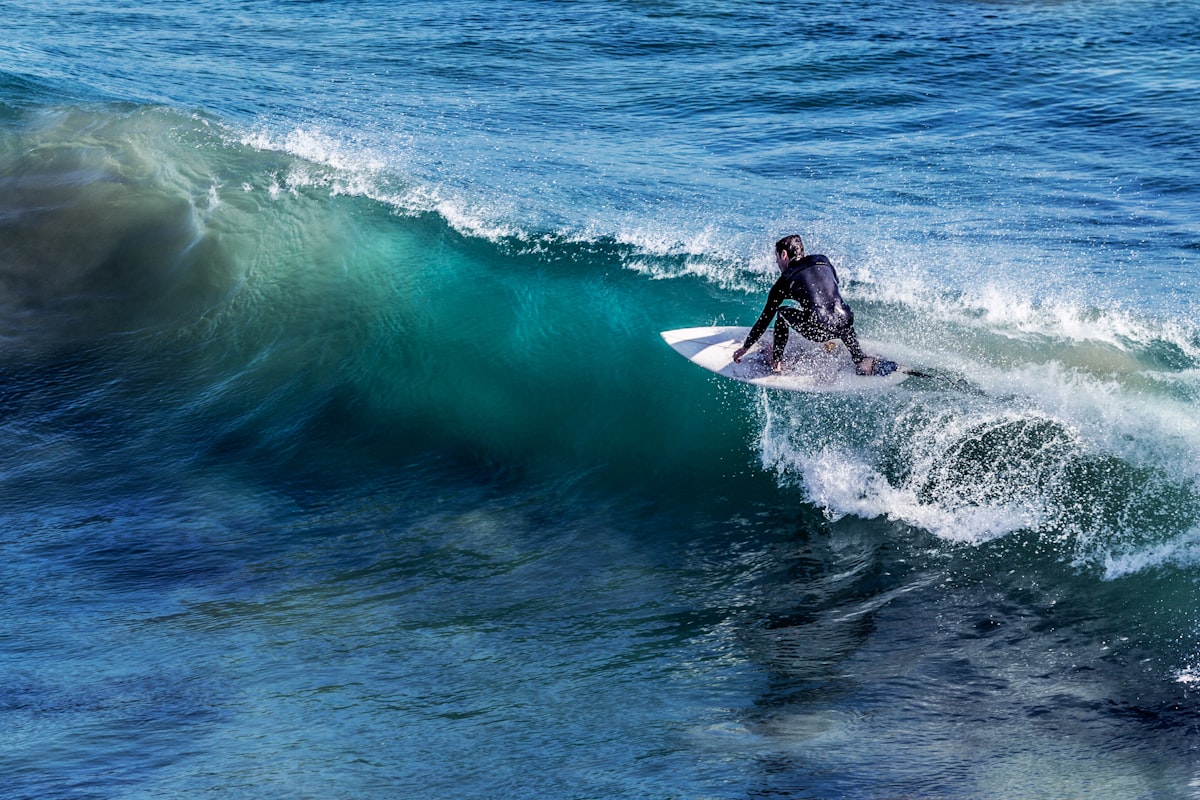
The Hidden Half of Surfboard Design
When most surfers describe a board, they talk about the things you can see from above — length, outline, tail shape, fin setup. The bottom of the board gets ignored, mostly because it's the side that lives in the water and the side you only glance at when you wax up. But that bottom surface is where the entire physics of surfing actually happens.
Water doesn't care about your deck. Water cares about the shape it has to flow around as it leaves your tail at twenty miles an hour. The contours you've sculpted into that bottom decide whether water releases cleanly or drags, whether your board generates lift or sticks to the face, whether your turns feel locked-in or skatey.
Concaves and channels are the language shapers use to control all of that. They're the difference between a board that feels alive under your back foot and a board that feels like a piece of furniture. Most surfers ride them their whole lives without ever understanding what they do — and when something feels off about a board, the bottom contour is usually the last place anyone looks.
This guide will fix that. By the end, you'll be able to flip any surfboard over, read its bottom, and predict how it will behave before you ever paddle out.
What "Bottom Contour" Actually Means
The bottom of a surfboard is not flat. It's a sculpted surface designed to manage water flow from nose to tail. Shapers build contours into the foam in three ways:
- Concaves — hollowed-out depressions that channel water under the board
- Channels — actual grooves cut into the foam, usually toward the tail
- Vees — convex ridges running down the center, where the bottom rises slightly to either side
These elements rarely appear alone. A modern shortboard might have a single concave under the front foot that splits into a double concave through the middle and finishes in a slight vee out the tail. That sequence isn't decoration — it's a deliberate route for water to follow as the board accelerates and turns.
The simplest way to understand contour is to think about water as a thing the board has to do something with. As the board moves forward and tilts onto a rail, water floods under the bottom and has to escape somewhere. Whether it gets compressed, redirected, or released cleanly determines almost everything about how the board feels.
Single Concave: Lift and Speed
The single concave is the most common bottom feature in modern surfboards. It's a smooth, shallow depression hollowed out along the centerline, deepest under the front foot and tapering toward the nose and tail.
What it does: as the board moves forward, water gets funneled into the concave and compressed. Compressed water pushes back up against the bottom, which generates lift. Lift gets the board planing higher, and a board sitting higher in the water encounters less drag and goes faster.
In practical terms, a single concave board:
- Paddles easily because it sits up on the water
- Picks up speed quickly down the line
- Feels lively and responsive in flat sections
- Tends to feel "loose" when leaned hard onto a rail
The downside: pure single concave boards can feel slippery when you really lean them over. Because the concave is symmetrical, water exits to both rails at once, which doesn't give either rail a strong grip. That's why almost no modern shortboard runs a pure single concave from nose to tail — most blend into a double concave through the back third of the board.
If you've ever ridden a board that felt fast in straight lines but a little washy in turns, that's a single concave behaving exactly as designed.
Double Concave: Bite and Drive
A double concave is two parallel hollows running side by side, separated by a small ridge or flat section down the middle. It's almost always found in the back half of the board, often blended out of a single concave forward of the fins.
What it does: instead of funneling all the water down one central channel, a double concave splits the flow into two streams and directs each one out through the rail-side fins. This creates two important effects.
First, water exits the tail more aggressively, which accelerates the board through the back of every turn. Second, the angled flow puts pressure against each fin in a way that gives them more bite — the board grips the wave face instead of sliding across it.
A board with a strong double concave through the tail will feel:
- Locked-in through hard, leaned-over turns
- Quick to release out of the lip
- Powerful through the bottom turn — that "drive" sensation you read about in board reviews
- Slightly more demanding on smaller, weaker waves
Doubles are why a high-performance shortboard feels so different from a fish. Fish boards typically run flat to single concave throughout, prioritizing easy speed in soft waves. Performance boards layer a double in to harness the energy of steeper, more powerful surf.
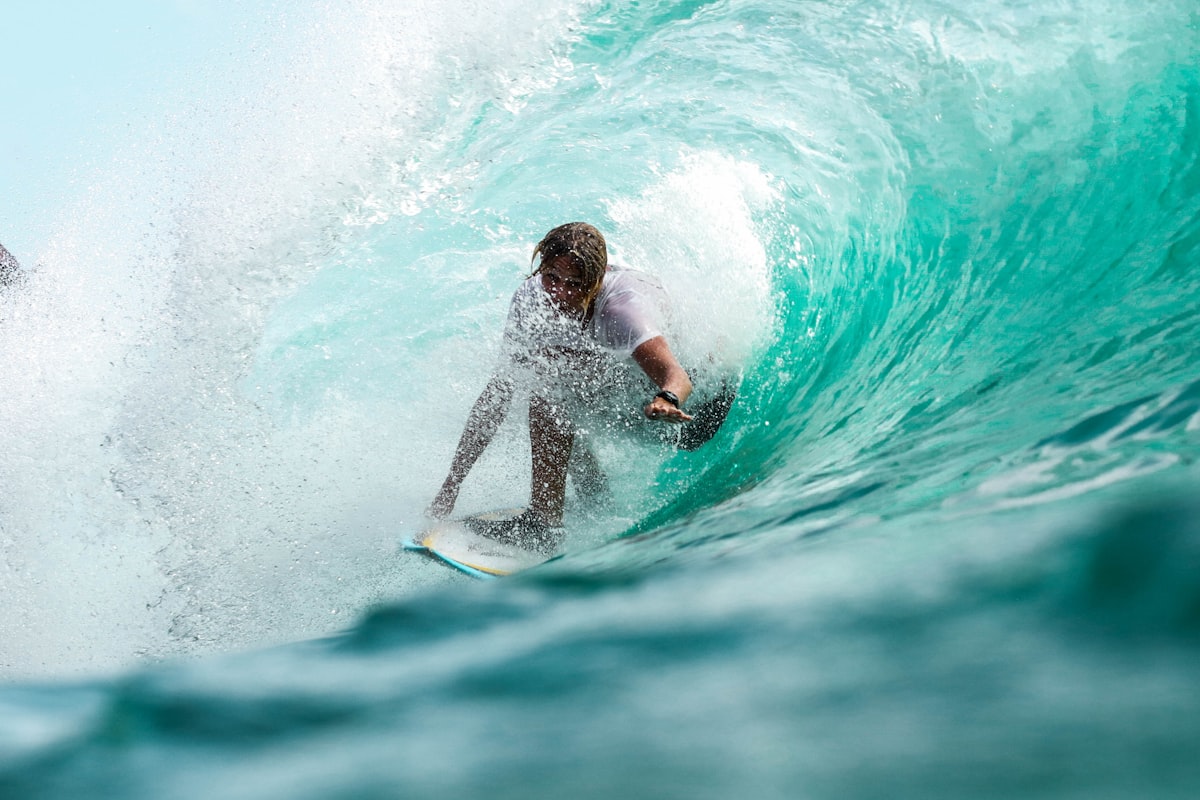
Vee: The Forgotten Contour
Vee bottoms are the oldest design element in modern surfing. The bottom of the board rises slightly along the centerline so that the rails sit lower than the stringer — like a very shallow upside-down V. They were the standard for shortboards in the 1970s and 1980s before concaves took over.
A vee bottom does the opposite of a concave: it makes the board easier to roll from rail to rail. Instead of sitting flat on the water, a vee'd board is already half-tilted in either direction, so it pivots into turns with very little input from your feet.
You'll find vee in three places on modern boards:
- Tail vee — common in step-ups, guns, and bigger-wave boards. Helps the board release out of the back of turns and prevents the tail from sticking when carving on overhead waves.
- Mid-vee — found on some retro-inspired single fins and longboards. Gives the board a smooth, drawn-out turning feel.
- Spiral vee — a vee that rotates as it travels down the tail, blending double concave forward into vee at the very back. Common on John John Florence-style high-performance shortboards.
If you've ever surfed an older single fin and felt how easily it banked side to side compared to a modern board, you were feeling vee. It's a fundamentally different way of getting a board onto its rail — gentler, more drawn out, less explosive.
Channels: Grooves That Bite
Channels are the most aggressive bottom contour you'll see on a stock surfboard. They're literal grooves cut into the foam, usually four or six of them, running parallel from somewhere around the front fins back through the tail.
Channels emerged in Australia in the late 1970s and have come in and out of fashion ever since. They show up regularly on Al Merrick boards, Maurice Cole shapes, and a handful of modern small-batch shapers. The current revival has a lot of intermediate-to-advanced surfers asking what they actually do.
What channels do: each groove acts like a miniature fin. As water flows along the bottom of the board, it has to follow the path of the channel rather than sliding sideways. That gives the board enormous grip on the wave face — far more than fins alone could provide.
A channeled board feels:
Working on single concave? Get personalized tips from Neptune's AI coach.
Try Free- Glued to the wave through fast, drawn-out lines
- Aggressive off the bottom, with a noticeable "shotgun" acceleration as water exits the channels
- Slightly less playful than a smooth-bottomed board
- Specific. Channels reward precise foot placement and punish sloppy weighting.
The downside: channels are draggy in mushy waves. They want clean water to flow through them. Surf a channel-bottom board in soft, weak surf and it'll feel like you're paddling a board with a parking brake on. They shine in steep, hollow, powerful waves where their grip lets you stand taller and drive harder than a smooth bottom would allow.
How Bottom Contours Combine in a Real Board
Almost no surfboard is one contour from nose to tail. The interesting design happens in the transitions — how a shaper blends one contour into another to manage water flow as it travels the length of the board.
Here's a typical modern high-performance shortboard, from nose to tail:
- Nose to front foot — flat or very slight single concave. Helps the board enter steep drops cleanly without bogging.
- Front foot to mid-board — single concave deepens. This is where the board generates most of its lift and speed.
- Mid-board to fin cluster — single concave splits into a double concave. Water now starts being directed toward the fins.
- Through the fins to the tail — double concave with subtle vee out the back. Maximum drive into and out of turns, with vee letting the tail release at the end of the carve.
That sequence isn't accidental. The board is designed to plane as you stand up, accelerate as you trim, grip as you turn, and release as you finish. Each contour does a specific job at a specific moment in the wave-riding cycle.
A fish board reads completely differently:
- Nose to front foot — flat or very mild concave. The wide, flat planing surface picks up speed in tiny waves.
- Mid to tail — flat or slight double concave. The fish trades drive for glide.
- Tail — sometimes a hint of vee between the swallow points. Helps the wide tail roll rail to rail despite its width.
Same principle, different priorities. The fish is built for soft waves and easy speed. The shortboard is built for power and control.
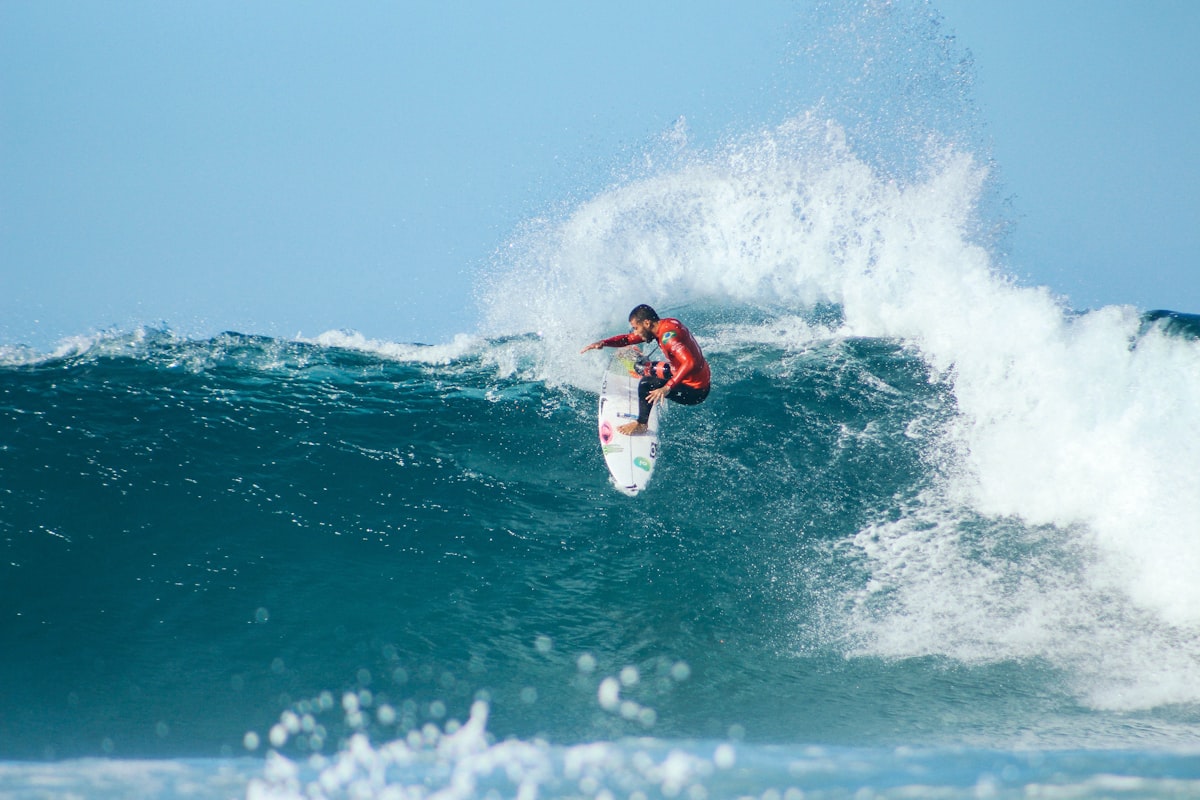
How to Read a Board's Bottom
You can learn a lot about a board in thirty seconds if you know what to look for. Next time you're in a shop or borrowing a friend's board, do this:
Step 1 — Lay it on a Flat Surface
Put the board upside down on a clean floor or grass. Get your eye low, level with the deck, and sight down the length of the bottom from nose to tail.
Step 2 — Check the Center
Run your hand from nose to tail along the centerline. Feel for depressions — that's the single concave. A board with a noticeable scoop under your palm in the front-foot zone has a meaningful single concave. A board where your hand barely registers a curve has a flat or low-concave bottom.
Step 3 — Check the Tail
Now look at the back third. Run your hand across the bottom from rail to rail, just in front of the fins. If you feel two parallel dips with a slight rise between them, that's a double concave. If the center sits higher than the rails, that's vee. If you can see actual grooves cut into the foam, that's a channel bottom.
Step 4 — Estimate the Depth
Concaves are typically measured in fractions of an inch. A quarter-inch single concave is moderate. A half-inch is deep — that board will feel fast and lively but might be tricky to hold onto a rail. Anything past three-quarters of an inch is aggressive and will demand precise riding.
Step 5 — Note the Transition
This is what separates a thoughtful shape from a generic one. Where does the single concave become a double concave? Where does the vee start? A smooth, intentional transition means the shaper had a specific feel in mind. An abrupt or vague transition often means the bottom was rushed.
Matching Bottom Contour to Your Conditions
Bottom contour is not a "better or worse" question. It's a "right tool for the job" question. The same contour that makes one board sing in head-high beach break will make another board miserable in waist-high mush.
For weak, mushy, summer waves: Look for flat to mild single concave throughout. You want maximum planing surface and minimum drag. Heavy concave or channels will feel sluggish in soft surf because there isn't enough wave power to push water through them.
For everyday clean beach break: A blended single-to-double concave with subtle vee through the tail is the classic all-rounder. It planes well, turns predictably, and doesn't punish you for being slightly off your feet.
For steep, hollow, powerful waves: This is where deep doubles, channels, and tail vees come into their own. The wave provides the energy; you need contour that grips, drives, and releases cleanly. Don't bring a flat-bottomed fish to overhead reef — you'll get bucked off.
For step-up and gun shapes: Vee through the tail becomes critical. On bigger waves, you need the board to release at the end of the turn rather than trying to grip across an entire wall of water. Almost every gun ever shaped runs vee out the back for exactly this reason.

Common Mistakes Surfers Make About Bottom Contour
After reviewing thousands of board choices, a few patterns show up over and over.
Buying based on outline alone. Two boards with identical outlines and volumes can ride completely differently because of bottom contour. The outline tells you the board's footprint. The contour tells you how it'll behave once you stand up. Always look at both.
Assuming "more concave equals better." Concave generates lift, but lift isn't always what you want. In small, gutless waves, a deep concave can actually slow the board down because the contour adds drag without enough wave power to compensate. Modest concave often outperforms aggressive concave below shoulder-high.
Ignoring the tail. Surfers obsess over nose rocker and ignore tail contour, but the tail is where every turn happens. The contour through the back twelve inches of your board has more effect on how it carves than anything else on the bottom.
Mismatching contour to fin setup. Channels and deep concaves work best with stiffer, more upright fins. Flat bottoms and mellow contours pair better with raked, looser fins. Putting a stiff, gripping fin on a loose, flat-bottomed board can make it feel locked-up rather than lively.
Confusing concave with rocker. They're related but different. Rocker is the curve of the bottom from nose to tail when viewed from the side. Concave is the curve across the width of the bottom when viewed from the front. A board can have flat rocker and deep concave, or heavy rocker and a flat bottom. Read both independently.
How to Test Bottom Contour for Yourself
Reading a board is one thing. Feeling it is another. The best way to internalize what concaves and channels do is to consciously surf two different bottoms back-to-back in the same session.
Find a friend whose board has a noticeably different bottom from yours — say, your single-to-double concave shortboard against their flat-bottomed fish. Trade for ten waves each. Pay attention specifically to:
- How quickly each board picks up speed when you trim down the line
- How firmly each one grips when you lean hard into a bottom turn
- How easily each one breaks free when you throw the tail at the lip
- How willingly each one paddles into a soft, sloping wave
You'll feel the differences immediately. The single-to-double concave will feel locked-in and powerful through carves but a little reluctant in mushy sections. The flat fish will glide forever in soft surf but slip out from under you when the wave gets vertical. Neither board is better — they're optimized for different priorities.
That direct comparison teaches you more about bottom contour in twenty minutes than any article can.
Building Bottom Contour Into Your Quiver
If you're putting together a quiver — even a small one — bottom contour is one of the variables you should think about deliberately. The goal isn't to own boards with every possible contour. It's to make sure your two or three boards cover the conditions you actually surf.
A simple two-board approach:
- Small wave board — flat to single concave throughout. Wide, voluminous, designed to glide. This is your go-to for waist- to chest-high waves on the average day.
- Performance board — blended single-to-double with subtle vee. Narrower, lower volume, designed to carve. This is your tool for the days when the surf is shoulder-high or better and clean.
Adding a third board? Consider what your home break does on its biggest days. If it gets steep and powerful, a step-up with double concave and tail vee will give you a board that holds in conditions where your everyday shortboard starts to feel sketchy. If it gets glassy and long-walled, a smooth single-concave mid-length will let you draw long, drawn-out lines across the entire wave.
Either way, you're not just buying boards — you're buying bottom contours that match the water you ride in.
The Takeaway
Bottom contour is the half of board design that hides in plain sight. Every board you've ever ridden has had specific decisions baked into its bottom — decisions that shaped how it paddled, how it turned, and how it felt under your feet. Learning to read those decisions changes the way you choose, ride, and talk about surfboards.
You don't need to memorize every term or chase exotic channel bottoms to surf better. But the next time a board feels mysteriously good or strangely off, flip it over. Run your hand along the bottom from nose to tail. Look at the transitions. The story of why the board behaves the way it does is written into that surface — you just had to know where to read it.
The best surfers aren't necessarily the ones with the most boards. They're the ones who understand what each board is doing, why it's doing it, and how to match it to the wave in front of them. Bottom contour is one of the biggest pieces of that puzzle. Now you know how to see it.
Want personalized coaching on single concave?
Neptune's AI coach can help you improve faster with personalized feedback, session tracking, and real-time conditions.