Breath-Hold Training for Surfers

Neptune
April 18, 2026

The Moment That Changes How You Think About Surfing
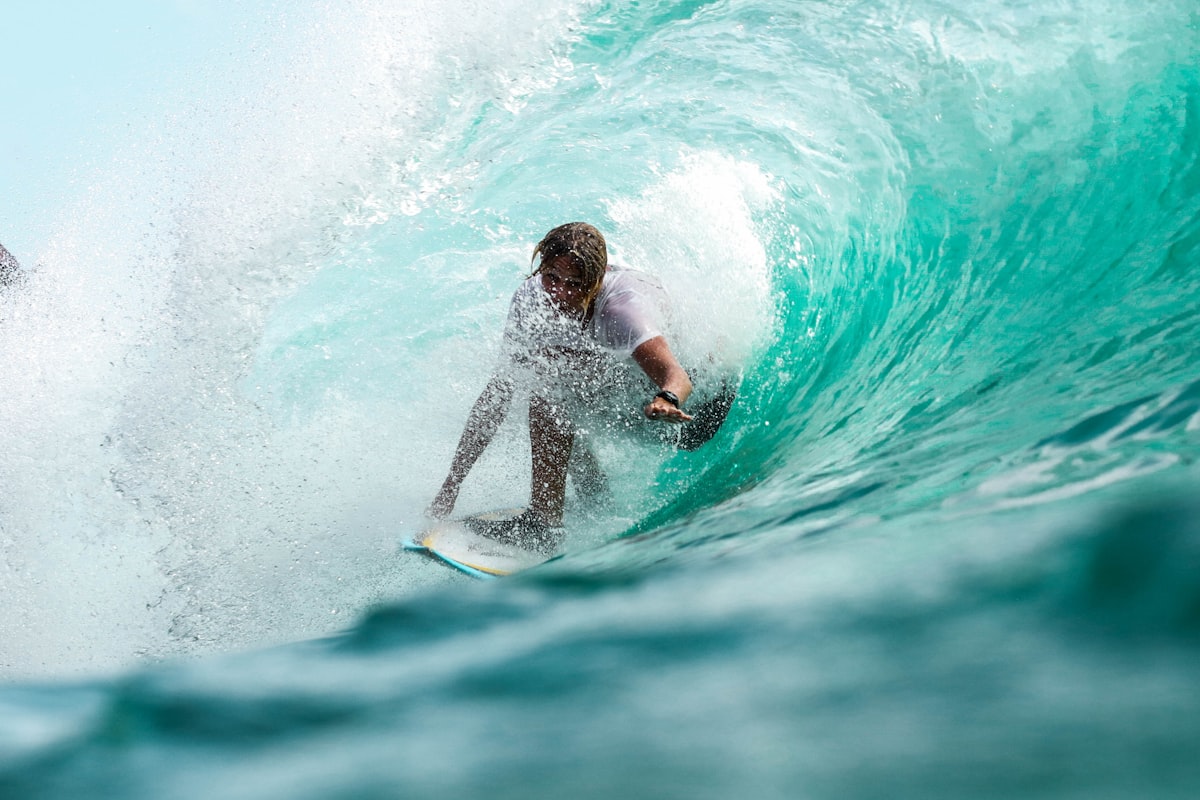
Every surfer remembers a bad hold-down. The surface is farther than you thought.
Your body wants air. Panic burns the oxygen you still have.
Breath-hold training — also called apnea training — is how you interrupt that spiral. It's not about turning yourself into a freediver who can hold for four minutes. It's about building the physical capacity and the mental calm to stay functional when the ocean decides to keep you underwater longer than you'd like. And crucially, it's the single most underrated training modality in surfing.
This guide covers the physiology, the techniques, the protocols, and the safety rules. Most of this work costs nothing and happens on your couch.
Why Surfers Need This More Than Most Athletes
The average surf hold-down is shorter than people imagine. At a typical beach break, most wipeouts keep you under for 3 to 6 seconds. Even a two-wave hold-down in overhead surf is usually under 15 seconds of actual submersion time.
So why train for more?
Two reasons. First, the issue isn't usually total hold time — it's your ability to stay calm, conserve oxygen, and think clearly while being violently rag-dolled. A surfer who can hold for 2:30 on land in a meditative state might functionally have 20 seconds of usable breath when they're being driven into the reef and their leash is wrapped around their neck. Training closes that gap.
Second, conditions can stack. A bad wipeout at the wrong moment, a leash tangle, a shallow reef, a long-period swell that doesn't give you recovery time — these are the scenarios where 45 to 60 seconds of composure can genuinely save your life. Most surfers can't manage 30 seconds of a static hold with good form. The margin is thinner than you think.
What Breath-Hold Training Actually Improves
- CO2 tolerance. The urge to breathe is driven primarily by rising CO2, not falling oxygen. Trained athletes simply don't feel that urge as early.
- Lung volume and elasticity. With consistent practice, your tidal and vital capacity both increase modestly.
- Diving reflex activation. Submersion in cold water triggers a mammalian reflex that slows heart rate and conserves oxygen. Training strengthens this response.
- Calm under stress. This is the one that matters most. Your ability to override the panic signal is trainable.
- Recovery breathing. You learn to oxygenate efficiently when you do surface, which shortens the interval before you're functional again.
The Physiology You Need to Understand
Before getting into protocols, it helps to understand what's happening inside your body when you hold your breath. Most people have this wrong, which is why their training is inefficient.
The Urge to Breathe Is a Lie
Your brain's respiratory centers trigger the urge to breathe based on blood CO2 concentration, not oxygen. This is why hyperventilating before a long hold is dangerous — you lower your CO2 artificially, delay the urge to breathe, and can black out from low oxygen before your body ever tells you to breathe. That's how shallow-water blackouts kill experienced freedivers.
What this means for surfers: the first strong urge to breathe is not an emergency. It's a chemical signal, not a deadline. You probably have 30 to 60% of your actual hold remaining at that moment.
Diaphragmatic Contractions Are Normal
After the urge to breathe builds, your diaphragm begins to contract involuntarily. These feel like hiccups or spasms. Beginners interpret these as "I need to breathe right now." They don't. These contractions can go on for 30 to 60 seconds while you remain conscious and oxygenated. Learning to relax through them is a core skill.
The Mammalian Dive Reflex
When your face hits cold water, three things happen: your heart rate drops (bradycardia), blood shifts from your extremities to your core and brain (peripheral vasoconstriction), and your spleen releases oxygen-rich red blood cells. You get "free" oxygen savings just by being in the ocean — which is why your pool holds will always feel harder than your real-world holds when conditions are cold.

The Two Foundational Protocols: CO2 and O2 Tables
These are the workhorses of apnea training. Every freediver uses them. You can do both on your couch.
CO2 Tolerance Tables
The purpose here is to teach your body to function with high CO2 levels — which is exactly what happens during a hold-down when you can't exhale. You hold for a fixed duration, rest for decreasing intervals, and repeat. Your hold time stays the same; your recovery shrinks.
Sample CO2 table for a 1:00 hold:
| Round | Breathe | Hold | |-------|---------|------| | 1 | 1:45 | 1:00 | | 2 | 1:30 | 1:00 | | 3 | 1:15 | 1:00 | | 4 | 1:00 | 1:00 | | 5 | 0:45 | 1:00 | | 6 | 0:30 | 1:00 | | 7 | 0:15 | 1:00 | | 8 | — | 1:00 |
Start with a hold time you can comfortably do once — usually 40 to 60% of your personal max. If your max is 2:00, start tables at 1:00. Progress by adding 5 to 10 seconds to your hold every two weeks.
O2 Tolerance Tables
These train your body to function with depleted oxygen — the other side of the problem. Your recovery stays the same; your hold time increases.
Sample O2 table:
| Round | Breathe | Hold | |-------|---------|------| | 1 | 2:00 | 1:00 | | 2 | 2:00 | 1:15 | | 3 | 2:00 | 1:30 | | 4 | 2:00 | 1:45 | | 5 | 2:00 | 2:00 | | 6 | 2:00 | 2:15 | | 7 | 2:00 | 2:30 | | 8 | 2:00 | 2:45 |
O2 tables are harder mentally because the holds get progressively longer. They're also more taxing — don't do them more than twice a week.
The Weekly Schedule That Actually Works
Alternate. Don't do both types on the same day. Don't do either more than 3 to 4 times per week. A realistic schedule:
Working on breath hold training? Partner with Neptune on iPhone and Apple Watch.
Get the free app- Monday — CO2 table
- Wednesday — O2 table
- Friday — CO2 table
- Saturday or Sunday — One long static hold, relaxed, after a warmup
Two weeks of consistent work will meaningfully extend your comfortable hold time. Eight weeks will change how you feel in the lineup.
Static Apnea: The Meditation Practice Disguised as Training
Once tables feel manageable, integrate static apnea — a single long hold, done lying down, fully relaxed, with a focus on mental calm rather than duration.
The Setup
Lie flat on your back on a bed or couch. Close your eyes. Set a timer that chimes every 30 seconds so you have a reference without thinking about it. Take slow, deep breaths for 2 to 3 minutes — nasal inhales, long exhales. The exhale should be longer than the inhale. This is not hyperventilation. You're calming your nervous system, not blowing off CO2.
Then take a final deep breath — not a strained maximum, just a full, relaxed inhale — and hold.
What to Do Mentally During the Hold
The goal is to stay completely still, mentally and physically. Any muscle tension burns oxygen. Any anxious thought spikes your heart rate. Any fidgeting wastes capacity. The best apnea athletes describe static holds as a meditation practice — you're training the mind to not react.
A few techniques that help:
- Body scan. Start at your feet and slowly move your attention upward, relaxing each muscle group as you go.
- Counting. Count breaths you won't take. A slow count to 100 takes roughly 2 minutes if you pace it right.
- Visualization. Picture a specific wipeout or lineup scenario and mentally rehearse staying calm through it.
- The "wave" concept. When the urge to breathe hits, imagine it as a wave that rises, peaks, and recedes. Don't fight it. Watch it pass.
The Rule That Cannot Be Broken
Never, ever practice static apnea alone in or near water. Not in a pool. Not in a bathtub. Not even face-down on your couch if you're in a room alone. Shallow-water blackout is silent and fast — no struggle, no warning. A trained freediver can black out in water they could stand up in and drown without ever moving. The couch is safe because if you pass out on dry land, you simply start breathing again. The water is not. Always have a buddy, always stay dry if you're training solo.
Dynamic Apnea and Pool Work
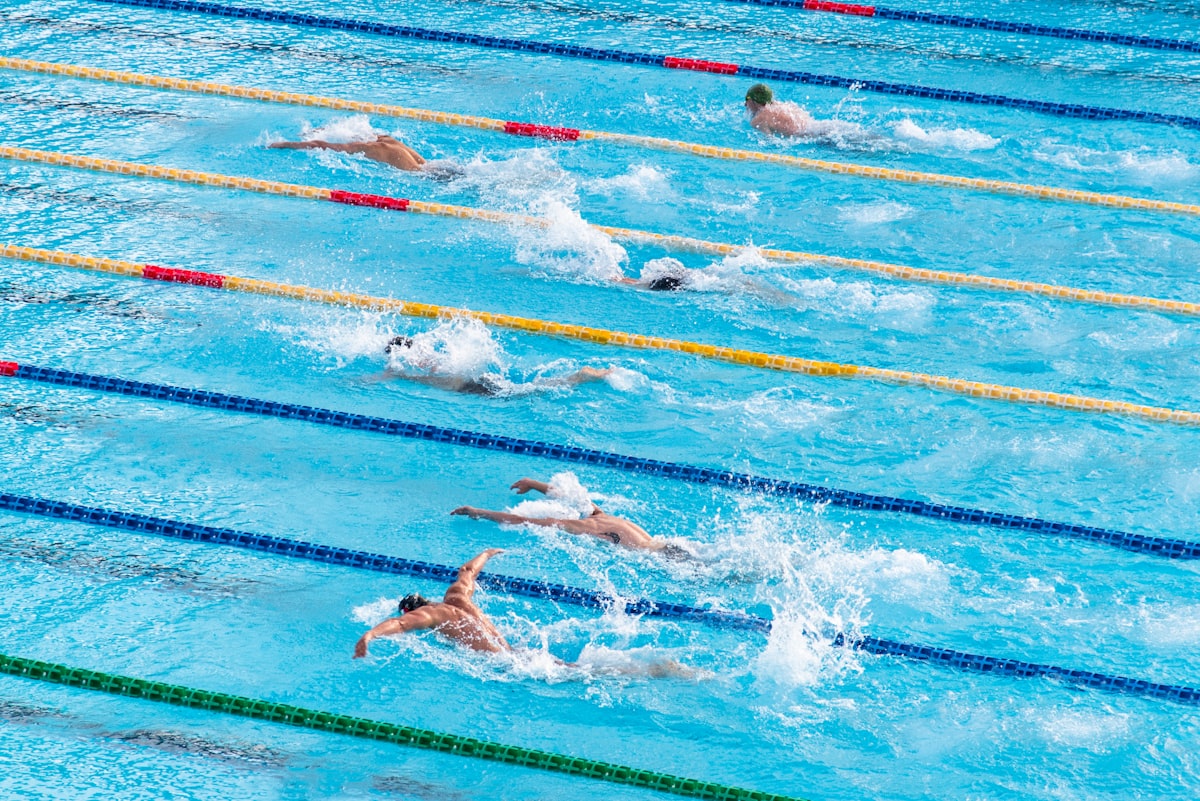
Static holds build the chemical tolerance. Dynamic apnea — holding your breath while moving — builds the functional version of that tolerance, which is what actually matters when you're being tumbled by a wave.
Underwater Laps
At your local pool, swim a set distance underwater on a single breath. Start with 15 meters and build. Rest fully between each rep — at least 2 minutes. This is not a metabolic conditioning workout. You're training the ability to work aerobically on one breath.
A good progression:
- Week 1–2: 4 x 15m underwater, full rest
- Week 3–4: 4 x 20m underwater
- Week 5–6: 4 x 25m underwater
- Week 7+: 3 x 35m underwater
Go with a partner. Every time. No exceptions. Tell the lifeguard what you're doing.
Hypoxic Sets
Swim freestyle at a moderate pace, but breathe every 5, 7, or 9 strokes instead of every 3. This builds CO2 tolerance while working aerobically — a combination that maps directly to paddling out through a long set.
Rock Runs (Advanced)
Pioneered by big-wave surfers in Hawaii, rock runs involve carrying a heavy rock along the ocean floor for as long as you can hold your breath. The combined stress of exertion, submersion, and load is as close as you can simulate a real hold-down on purpose. Only do this with experienced training partners. Never solo. Never in surf.
Breathing Techniques Before and After a Session
Breath-hold training isn't just about the hold — it's about the breathing patterns around it. What you do in the 30 seconds before a big set approaches, and the 30 seconds after you surface from a wipeout, matters enormously.
The Pre-Session Breath Reset
Before you paddle out, especially on a serious day, spend 2 minutes doing box breathing: inhale 4 seconds, hold 4 seconds, exhale 4 seconds, hold 4 seconds. This lowers your resting heart rate, activates your parasympathetic nervous system, and gives you a physiological baseline of calm to start from.
The Pre-Wipeout Breath
When you see a wave you're not going to make, you have a choice: flail, or breathe. The surfers who do well on heavy days take one big, relaxed inhale through the nose right before impact — not a panicked gulp, a full, slow breath. This is the single most trainable moment in surfing, and it starts with recognizing it's coming.
Recovery Breathing at the Surface
When you surface after a hold-down, don't gasp. Don't breathe as fast as you can. Do the opposite — three quick "hook" exhales (forceful out-breaths through pursed lips) followed by normal inhales. This clears CO2 faster than panicked breathing and gets you oxygenated in about 15 seconds instead of 30.
Common Mistakes That Stall Progress
Hyperventilating Before Holds
It feels like it helps. It doesn't — it's dangerous. Hyperventilation strips CO2 from your blood, which delays the urge to breathe, but doesn't add oxygen. You can black out without warning. Two or three slow, deep breaths before a hold is enough. More is counterproductive.
Holding With Tension
Clenched jaw, tight shoulders, squeezed abs — all of it burns oxygen you don't have to spare. Your body should be completely loose during a hold. Practice relaxation deliberately. It's a skill.
Skipping Warm-Ups
Cold, tight lungs don't perform. A few minutes of gentle diaphragmatic breathing and some light stretching of the chest and rib cage will meaningfully increase your hold time on any given day.
Chasing Numbers
A 4-minute static hold impresses no one in the water if you panic at 15 seconds when a wave is actually landing on you. Don't chase PRs. Build the skill of calm, and let the duration follow.
Training Too Often
Apnea work is stressful on the nervous system. Four sessions a week is a hard ceiling for most people. Seven sessions a week will stall your progress and may impair your surfing by leaving you chronically fatigued.
An 8-Week Starter Program
If you've never done structured breath-hold training, here's a simple program that will deliver results.
Weeks 1–2: Establish your baseline with a single relaxed static hold once a week. Most untrained people land somewhere between 45 seconds and 1:30. Don't strain. Note the number.
Add two CO2 tables per week, with hold times at 50% of your baseline. So if your baseline is 1:20, do CO2 tables with 40-second holds.
Weeks 3–4: Add one O2 table per week. Continue CO2 tables twice weekly. Stay at 50% of baseline hold time.
Weeks 5–6: Retest your max hold (once, in a relaxed state, with a partner present). You'll likely see a 20 to 40% improvement. Adjust your table times to 50% of your new baseline.
Add one pool session per week — hypoxic freestyle sets or 4 x 15m underwater laps with full recovery.
Weeks 7–8: Add dynamic apnea work. Build pool distance. Continue tables. Test max one more time at the end of week 8.
A realistic result for a committed surfer starting from scratch: 1:00 max hold becomes 1:45 to 2:15. More importantly, you'll feel different in the water. A long hold-down stops being an existential threat and becomes something your body knows how to handle.
When You Don't Need This (and When You Really Do)
Not every surfer needs to train breath-hold. If you surf knee- to waist-high beach breaks in warm water, the safety value is modest. Spend your training time on paddling and fitness.
But the moment any of these are true, breath-hold training shifts from optional to essential:
- You surf reef breaks or shallow bottoms
- You surf overhead or bigger
- You surf cold water with bulky wetsuits that restrict breathing
- You surf heavy beach breaks with closeout potential
- You surf remote spots without lifeguards
- You surf solo regularly

Where This Fits in the Bigger Picture
Breath-hold work pairs well with everything else a serious surfer does — paddling-focused fitness, mobility work, mental training, and ocean time. None of these replace the others. A surfer with huge lung capacity who can't paddle is still in trouble. A strong paddler who panics underwater is still in trouble.
What breath-hold training uniquely offers is a dimension of capability you can't build any other way. You cannot accidentally become comfortable underwater. You cannot pick it up by osmosis in the lineup. It has to be trained. And when the moment comes that you need it — the bad set, the broken leash, the one wave too many — you'll either have it or you won't.
The surfers who do this work rarely talk about it. It's invisible in their surfing, which is exactly the point. What you see is calm. What you see is composure. What you see is someone who doesn't rush their recovery between sets, who doesn't flinch when a bomb lands in front of them, who drops in on waves that would have terrified their younger self.
That's not courage. It's preparation.
Start with one CO2 table this week. Do it on the couch, with a timer, in about 15 minutes total. Then do it again on Friday. The ocean will be there when you're ready.
Read it. Then take it to the water.