The Complete Guide to Bodyboarding: Gear, Technique, and Why It Belongs in Every Surfer's Toolkit

Neptune
June 13, 2026
The Most Underrated Way to Ride a Wave
Mention bodyboarding to a stand-up surfer and you'll often get a smirk. The "boogie board" carries a reputation as the foam slab kids flop around on in the shorebreak — a toy, not a craft.
That reputation is spectacularly wrong.
Done well, bodyboarding is one of the most committed, high-performance disciplines in all of wave riding. Bodyboarders pull into barrels that stand-up surfers paddle away from, ride slabbing reef waves that would snap a surfboard, and land aerial rotations that didn't exist in surfing until decades later. The best prone riders take on waves like Teahupo'o and Shark Island — some of the heaviest water on the planet.
But you don't need to chase slabs to fall in love with it. Bodyboarding is also the single most accessible way to start riding real waves: the learning curve is gentle, the gear is cheap and packable, and you can have the time of your life on a two-foot beach break that a shortboarder would call unsurfable.
And here's the part most surfers miss — time spent on your belly will make you dramatically better on your feet. Bodyboarding teaches wave reading, positioning, and barrel knowledge from the exact spot where waves break. This guide covers all of it: the gear that matters, how to choose your first board, the core techniques, and how to use prone riding to level up your whole surfing.
A Quick History (Because It Matters)
Riding waves prone is ancient — Polynesians rode finely shaped wooden bellyboards called paipo long before the modern surfboard existed. But bodyboarding as we know it was born in 1971, when engineer and surfer Tom Morey carved a rectangle out of polyethylene packing foam, lay down on it, and rode a wave in Hawaii. He called it the Morey Boogie.
What Morey created wasn't a toy. The soft, flexible deck conformed to the wave face and let riders access steep, hollow sections rigid surfboards couldn't hold. By the 1980s and '90s, bodyboarding had its own world tour, its own icons (Mike Stewart chief among them), and a tube-riding pedigree surfers genuinely respected. You're not picking up a beach toy — you're picking up a craft with fifty years of high-performance evolution behind it.
The Gear: Less Than You'd Think, But Detail Matters
One of the joys of bodyboarding is how little you need. A board and a pair of fins fit in a backpack. But within that simplicity, a few details make an enormous difference between fun and frustration.
The Board
The single biggest mistake beginners make is buying the wrong board — usually a cheap, stiff foam slab from a big-box store. A real bodyboard is a precision piece of equipment with several key components:
- The core is the foam inside. Polyethylene (PE) is softer, more flexible, and ideal for cold water and a forgiving feel; polypropylene (PP) is stiffer, lighter, more responsive, and better in warm water. Most beginners are well served by a PE core.
- The slick is the hard plastic bottom that planes across the water. Surlyn is the high-performance standard; cheaper boards use HDPE.
- The deck is the soft top your body lies on.
- Stringers are rods (often carbon) running through the core to add stiffness and "memory." More stringers means more drive but a less forgiving flex.
Getting the Size Right
Board size is the most important fit decision, and it's based on your height and weight. The classic rule of thumb: standing the board on its tail, the top should reach somewhere between your belly button and the bottom of your chest.
Too big and the board is sluggish and hard to control. Too small and it won't plane or float you properly, killing your speed. When in doubt, err slightly larger as a beginner for the extra glide, then size down as your technique sharpens.

Swim Fins: The Other Half of Your Engine
If the board is your vehicle, fins are your engine. You cannot bodyboard properly without them. Your bare-footed kick simply can't generate the speed needed to catch and drive across a wave. Good fins let you sprint into waves, hold position in the lineup, and generate the speed that makes turns and barrels possible.
Bodyboarding fins are short, stiff, and wide — built for explosive power, not the long, lazy stroke of snorkeling fins. Look for symmetrical or asymmetrical designs from brands built for the sport. A few tips:
- Fins should fit snugly but not cut off circulation. A heel strap that digs in will end your session early.
- Wear fin socks (thin neoprene booties) underneath. They prevent blisters and chafing, which are the number one reason beginners cut sessions short.
- Always use fin tethers (leashes that connect each fin to your ankle). Losing a fin in heavy water is dangerous and expensive.
The Leash
A bodyboard leash attaches to the nose of the board and coils around your bicep or wrist — not your ankle, since your arms steer the board. A coiled leash keeps the cord out of the water and reduces drag. This is non-negotiable safety gear: a runaway board in a crowded lineup is a hazard to everyone.
Wetsuit and Extras
Because you're submerged and moving constantly, you'll feel colder than you would standing on a surfboard in the same water — dress slightly warmer than your surfing instinct says. Beyond that the kit is minimal: deck wax for grip, sunscreen, and gloves in cold water.
The Foundations: Stance and the Three Riding Positions
Before any tricks, you need to dial in how you lie on the board. Get this wrong and everything downstream feels harder than it should.
Body Position on the Board
- Lie so your hips are near the tail and your chest fills the deck. Too far forward and the nose pearls (digs in); too far back and you lose planing speed.
- Grip the upper corners (the nose) with your hands. Your hands are your steering wheel.
- Keep your back arched and head up, eyes down the line — never staring at the nose of your board.
- Your fins should be in the water behind you, ready to kick.
Prone
Working on your surf technique? Get personalized tips from Neptune's AI coach.
Try FreeLying flat on your stomach is the default and the foundation of everything. The vast majority of your riding — and all of your learning — happens prone. Master this before anything else.
Drop Knee
Drop knee is bodyboarding's most distinctive stance: one fin planted on the front of the board, the other knee tucked back, riding in a half-kneeling position. It's stylish, powerful, and notoriously hard to learn — but it opens up a completely different way to attack the wave. Treat it as an intermediate-plus goal, not a starting point.
Stand-Up
Yes, you can stand on a bodyboard — a niche, spectacular discipline that's the most advanced of the three. File it under "someday."
Learning to Ride: A Step-by-Step Progression
Step 1: Start in the Whitewater
Just like learning to surf, your classroom is the broken-wave whitewater close to shore. Stand waist-deep, wait for a wall of foam, point the board toward the beach, lie on, and kick hard as it reaches you. The goal is simply to feel the board catch and glide. Spend more time here than your ego wants to — it builds the kick timing and board-feel everything else depends on.
Step 2: Learn to Catch Unbroken Waves
Once you can comfortably ride whitewater straight to shore, move out to catch waves before they break. This is where fins earn their keep. As a wave approaches:
- Point the board toward shore and start kicking early — momentum is everything.
- Add a few hard arm strokes (a "dolphin" of effort) as the wave lifts you.
- Feel the moment the wave takes over and you accelerate. Stop kicking frantically and trim.
Step 3: The Angled Take-Off and Trimming Down the Line
Riding straight to shore is fun for a day. The real game is riding across the wave, along the unbroken face, staying just ahead of the breaking section. This is called trimming.
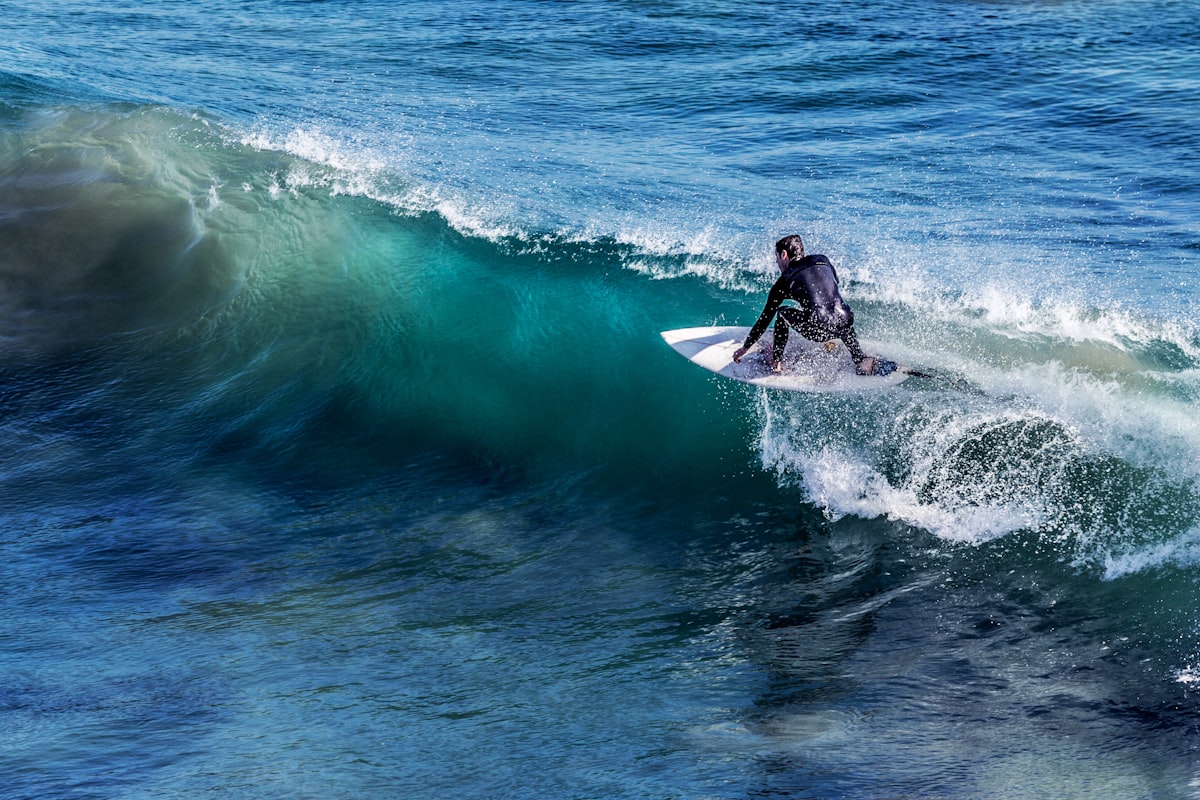
Instead of pointing at the beach, angle your take-off down the line — toward the direction the wave is peeling. Lean on the rail (the edge) closest to the wave face and shift your weight forward for speed. The aim is to ride the green, open shoulder, not get swallowed by the foam.
Trimming is the moment bodyboarding clicks. Suddenly you're not just being pushed to shore — you're riding the wave, drawing a line across a moving wall of water.
Step 4: Bottom Turns and Setting Up
The bottom turn is the engine room of all wave riding, prone or stand-up. To do it on a bodyboard: drop down the face, then dip your inside rail and lean into the turn while pulling the nose up with your inside hand. A good bottom turn projects you back up into the pocket — the steep, powerful part of the wave just ahead of the whitewater — which is where every maneuver and every barrel lives.
The Maneuvers That Make It Addictive
Once you can trim and bottom turn, a whole vocabulary opens up. Here are the building blocks, roughly in order of difficulty.
The Cutback
When you outrun the wave onto a flatter shoulder, the cutback brings you back to the power source. Lean hard on your inside rail and arc the board back toward the breaking section, then straighten out to keep riding. It's the most useful turn in your arsenal because it keeps you in the juice.
The Roll (Barrel Roll / 360)
The roll is bodyboarding's signature move and one of the most achievable "tricks" in all of wave riding. Hit a steep section, lean and throw your weight to flip the board (and yourself) through a full rotation across the wave face, landing back on the water still riding. Because you're attached to the board with your whole body, rolls are far more forgiving to learn than a surfboard air. Most committed beginners land their first roll within a season.
The El Rollo
A close cousin of the roll, the el rollo is performed up and off the breaking lip — you let the wave throw you and the board over and around, rolling with the curl and landing back on the face. It's a rite of passage.
The Air
Bodyboarders were doing airs long before surfers. Hit a ramping section or the lip with speed, project off it, and float through the air before landing back on the face. Air rolls, inverts, and air forwards are the cutting edge of the sport.
The Barrel: The Real Prize
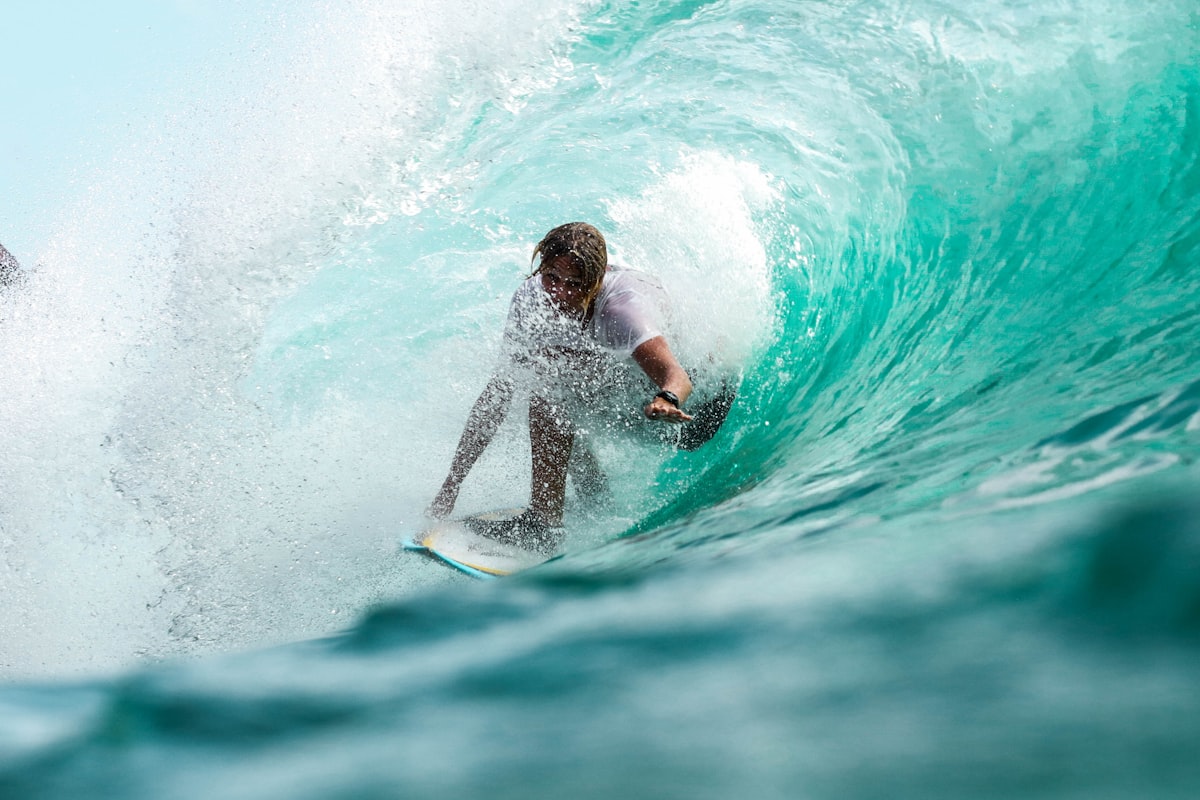
This is bodyboarding's crown jewel. Because the board is small, flexible, and you're low to the water, bodyboarders can fit inside hollow, fast barrels that stand-up surfers can't access. Getting barreled prone is one of the great feelings in the ocean: you set your line, tuck tight to the wave face, and watch the curtain throw over you.
You don't need a heavy reef slab to start. Any steep, hollow beach-break section will give you your first taste of being covered. Chasing that feeling is what turns casual riders into lifelong bodyboarders.
Where to Ride (and Where Not To)

Beach Breaks Are Your Home
Sandy beach breaks are the ideal learning environment: forgiving wipeouts, shifting peaks, and plenty of waves. Look for a spot with clean, peeling waves rather than waves that close out (break all at once) — a wave that peels gives you a shoulder to trim along.
Respect the Shorebreak
Bodyboarders are uniquely drawn to shorebreak — those punchy waves that break right on the sand — because they're hollow and fun. But shorebreak is also where neck and shoulder injuries happen. Never ride shorebreak you don't understand, always know how deep the water is, and protect your head and neck on every wipeout.
Reading the Wave at Sea Level

A hidden advantage of bodyboarding: you see and feel waves from water level, exactly where they break. You learn which waves wall up and offer a long ride, which ones close out, and where the steepest, most makeable peak sits — the same wave literacy that separates good surfers from great ones.
Safety: The Non-Negotiables
Bodyboarding is accessible, but the ocean doesn't grade on a curve. A few rules keep it fun:
- Learn to read rip currents. They're the leading cause of ocean rescues. If caught in one, don't fight it — ride it out or swim parallel to shore until you're free. With fins on, you're well equipped to handle them calmly.
- Protect your head and neck, especially in shallow shorebreak. When you wipe out, come up with an arm over your head.
- Never surf alone as a beginner, and always tell someone your plan.
- Know the lineup etiquette. The surfer closest to the breaking peak has priority. Don't drop in on someone already riding a wave, and don't ditch your board when paddling out. The same rules apply to prone riders as stand-up surfers.
- Stay within your fitness. Bodyboarding is a serious swim workout. Don't paddle out farther than you can comfortably swim back without your board.
How Bodyboarding Makes You a Better Surfer
Even if you never give up your shortboard, a season of prone riding pays dividends on your feet:
- Barrel intuition. Time inside hollow waves teaches positioning and timing that translate directly to tube riding on a surfboard.
- Ocean fitness and breath comfort. The constant kicking builds the cardiovascular base and water confidence that make surfing wipeouts feel trivial.
- Fearlessness in steep waves. Once you've happily pulled into hollow sections prone, the late drops of stand-up surfing feel far less intimidating.
- It's the "always-on" surf. Junky, small, onshore, crowded? A bodyboard turns conditions you'd skip on a surfboard into a fun session.
The Bottom Line
Bodyboarding is the rare pursuit that's both the easiest doorway into wave riding and a genuinely high-ceiling sport you could chase for life. It's cheap, packable, forgiving to learn, and absurdly fun — and it quietly makes you a better surfer every time you paddle out.
So the next time someone smirks at the "boogie board," let them. Grab your fins, find a clean peeling peak, and go get covered. The wave doesn't care how you're riding it — only that you're there.
Want personalized coaching on your surf technique?
Neptune's AI coach can help you improve faster with personalized feedback, session tracking, and real-time conditions.