The Art of Trim in Surfing

Neptune
May 21, 2026
Count the turns on a great ride. There are fewer than you think.
Most of the wave is trim — the quiet work between maneuvers.
Trim is the act of riding the wave at the precise spot on the face where the wave's energy carries you forward, with minimal input, at maximum speed. It is not a maneuver. It is not a trick. It is the baseline of every good ride, and it is the skill that almost nobody talks about.
If your surfing feels effortful — if you find yourself pumping constantly to stay ahead of the whitewater, dropping into flat sections, or losing the wave before it closes out — you don't have a turning problem. You have a trim problem.
This guide is about fixing it.
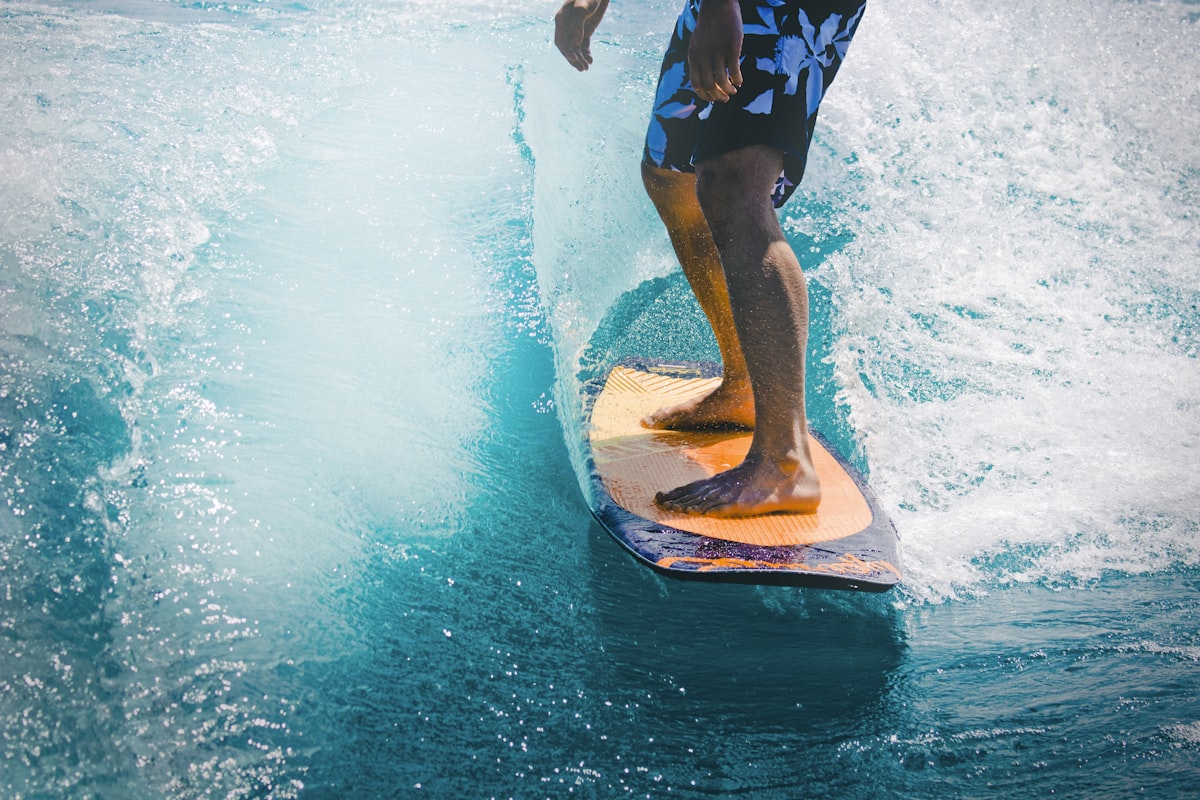
What Trim Actually Is
The simplest definition: trim is when you stop pushing the board and let the wave do the work.
A breaking wave is not a flat surface. It's an angled face with energy moving from the peak toward the shoulder. Somewhere on that face — usually a few feet above the trough and a few feet below the lip — is a "sweet spot" where the wave is steep enough to push you down and across, but not so steep that you fall off the front. Find that spot, hold it, and the wave carries you. You don't pump. You don't paddle. You just go.
That's trim.
The classic image of trim is a longboarder standing high on the nose of a glassy point break wave, board angled across the face, arms relaxed, gliding for thirty or forty yards without a single visible input. But trim isn't just a longboarding concept. Every shortboarder, every twin-fin rider, every aerialist relies on trim between maneuvers. The best surfers in the world spend more of their ride in trim than they spend turning. They just trim so naturally it looks like part of the turn.
Why Modern Surfing Forgot About Trim
Performance shortboarding emphasizes vertical surfing — turns, snaps, airs — and the language of trim doesn't survive in that culture. "Generating speed" has replaced "finding trim." Instructional content focuses on dynamic moves because they're visually exciting and easier to teach in discrete steps.
There's also a generational shift in boards. Modern high-performance shortboards are designed to be pumped — the rocker and outline feel sluggish in straight trim and lively under input. Surfers learn to pump because their boards demand it. When they ride something more glide-friendly — a fish, a mid-length, a log — they keep pumping a board that wants to be trimmed.
The result: a generation that can throw buckets of spray off the top but can't ride a five-foot wave from peak to inside without looking like they're working. Trim is the antidote. Once you feel it, you stop asking "how do I generate more speed?" and start asking "where is the wave going to give me the most energy?"
The Three Components of Good Trim
Trim has three ingredients. Miss any one and trim collapses into a clumsy slide.
Position on the Wave
This is the most important and the most overlooked. You can have perfect stance and perfect rail engagement, but if you're sitting in the wrong spot on the wave, no amount of technique will save you.
The trim spot is the section of the wave face that is just about to break. Not the lip — that's too high and you'll get launched over with it. Not the flats below the trough — that's too low and you'll get caught behind the whitewater. The sweet spot is a band a few feet wide that runs diagonally down the face, ahead of the breaking section and below the lip.
When you're in trim, the breaking part of the wave will be just behind your tail, the open shoulder will be just ahead of your nose, and the wave face will be pushing you both down and forward. You'll feel a noticeable acceleration.
If you feel yourself slowing down, you're either too high (move down) or too far ahead of the section (slow down or fade back). If you feel like the whitewater is about to catch you, you're too low or too far back (move up the face or angle higher).
Board Angle
Once you're in the right spot, the board needs to be angled appropriately to the wave. Too parallel to the wave (board pointed straight at the shoulder) and you'll skip out — you've lost the downward pull. Too vertical (board pointed at the beach) and you'll drop off the bottom into the flats.
The right angle splits the difference. The nose of your board should point along a line between the breaking section and the inside of the wave — diagonally down the face, but biased toward the shoulder. This angle changes constantly as the wave changes shape, which is why trim isn't a static position. It's a dynamic adjustment.
A useful image: imagine the wave face is a hill, and you are skiing across the hill, not down it and not along it, but diagonally. The angle of descent across the face determines your speed and your line.
Weight Distribution
Where you stand on the board controls how much of the bottom is in the water. Stand too far back and the nose lifts, the rocker engages, and the board sinks deeper into the face — slower. Stand too far forward and you push the nose into the water, which feels fast for a second but bogs the front rail and stalls the board.
For most boards, the trim position is centered — over the front foot, weight slightly forward of the stance's midpoint. On a longboard, walking up to the nose during trim is the entire point: the more forward weight, the longer the wetted surface, and the more the wave can push the whole board.
Weight isn't just front-back. Side-to-side matters too. Lean too far toward the wave and you sink the inside rail (which can be useful in steep sections but slows you on softer ones). Lean too far away and you set on the outside rail, which is slower again. Neutral, centered, slightly biased toward the inside rail — that's trim.
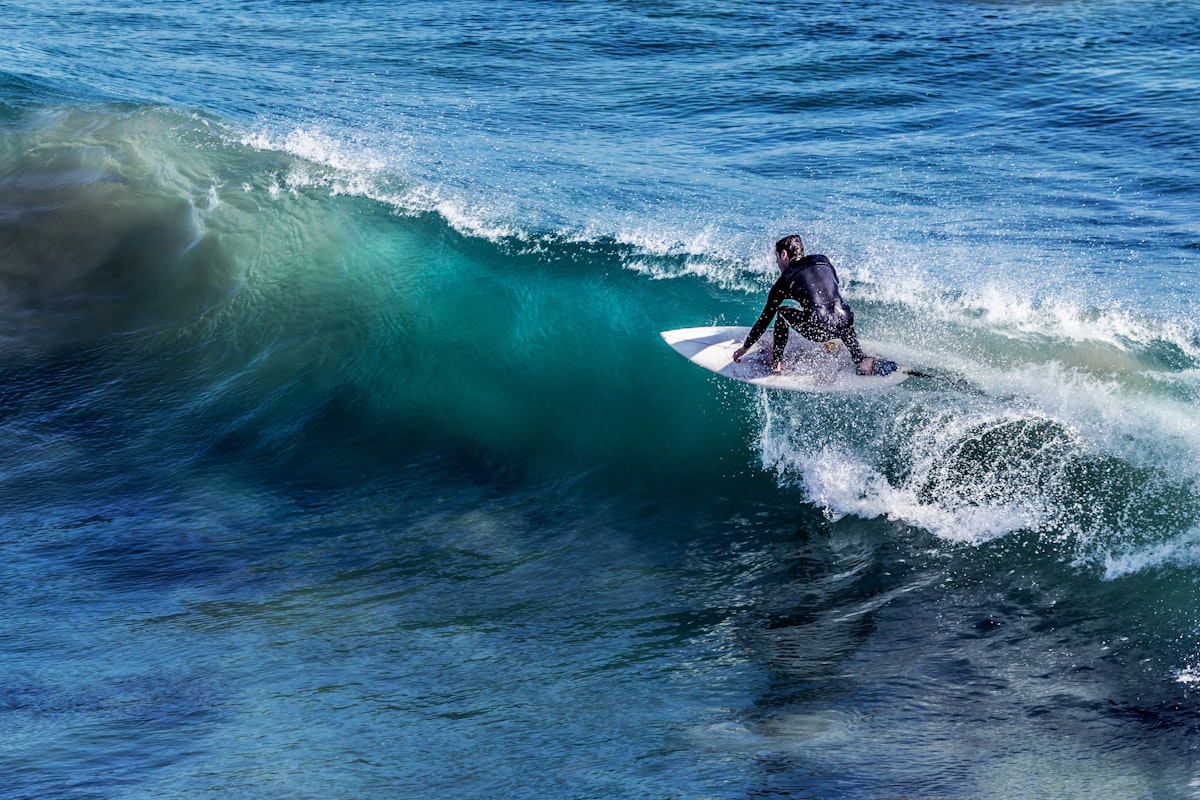
How to Recognize Trim When You Feel It
The first time you feel real trim, you'll never forget it. The board is being pulled forward by something invisible. You stop pumping not because you decided to — every input felt like resistance against a current already taking you faster than you could push.
Specific sensations to look for:
Working on your surf technique? Partner with Neptune on iPhone and Apple Watch.
Get the free app- The board goes quiet. No chatter, no spray, no slap.
- Your feet stop adjusting. No micro-correcting. The board sits where it sits.
- Steady pressure on your front foot. A pull forward as if the board were on rails.
- The wave feels longer. A three-second fast wave becomes a twenty-second one.
Once you've felt this, you can chase it. This is why one good ride at a long, clean point break is the most accelerative experience in early-intermediate surfing. Your body learns trim, and your brain replicates it.
Common Reasons You're Not in Trim
You're Pumping Too Early
Pumping is a tool, not a substitute for finding the right spot on the wave. Many surfers pump immediately after their bottom turn because that's what they've been taught. But pumping consumes wave energy — every pump disturbs the wave face. If you're already in the trim band, pumping actually slows you down.
Try this: after your bottom turn, do nothing. Stand still. See what the wave does. Only pump if you're genuinely losing speed.
You're Riding Too Vertical
Many intermediate surfers exit the bottom turn pointed too directly at the lip, then have to make a hard adjustment to flatten out — and that adjustment kills momentum. A more horizontal bottom turn that exits diagonally across the face leaves you in trim immediately.
You're Surfing Through Dead Sections
Not every part of every wave has trim energy. Some waves have soft middles where the face goes flat for a beat. If you're trying to trim through dead water, you don't have a trim problem — you have a wave-selection problem. Either cut back into the pocket or use a maneuver to get back to the energy.
Your Board Doesn't Want To
A high-performance thruster with aggressive rocker and a narrow tail wants to be pumped. A fish wants to glide. A longboard wants to trim more than anything else. If you're learning to trim, borrow a mid-length or a fish — they'll teach trim faster than any shortboard. Once you have the feel, bring it back to your usual board.

A Practical Practice Plan
You can't drill trim on land. You have to surf, and you have to surf the right waves. Here's a structured way to develop the skill.
Step 1: Pick the Right Wave
Trim is easiest on long, peeling waves. Find a point break, a long sandbar peel, or a soft reef where waves break in one direction for a hundred yards or more. Avoid closeouts and short sections. The longer the wave's open face, the more time you have to find the sweet spot.
Size matters less than shape. A clean, two-foot peeler is better for trim practice than a six-foot bowl that ends in a closeout. Quality over quantity.
Step 2: Ride a Trim-Friendly Board
Borrow, rent, or buy something that rewards glide. A 7'0" mid-length or a 5'8" fish for a smaller surfer. A 9'0" longboard for the most exaggerated trim experience. Save your high-performance shortboard for after the lesson sinks in.
Step 3: Limit Your Maneuvers
For an entire session, give yourself one rule: no turns. No cutbacks, no off-the-lips, nothing. You get a takeoff, a bottom turn, and then you trim until the wave ends. If you feel the urge to do a turn, suppress it.
This is harder than it sounds. You'll feel boring. You'll feel like you're wasting waves. Stay with it. The point is to force your body to find speed without artificial input.
After thirty minutes of this, switch on the awareness: where on the wave am I when the board feels fastest? What is my body doing differently in the fast moments versus the slow ones? Where is my weight? Where am I looking?
Step 4: Notice Where You Lose Speed
Most surfers lose speed gradually, in patterns — always after the bottom turn, every time they try to set an inside line, two seconds in and then dead. Identify the moment. Then experiment: shift weight forward, angle the board lower, don't pump and just wait. Trim isn't a fixed technique. It's a feedback loop with the wave.
Step 5: Translate Back to Your Regular Board
Once you've felt real trim on a glide-friendly board, take it back to your usual setup. You'll discover that even high-performance shortboards have a trim line — it's just narrower and more sensitive. The same principles apply. Find the sweet spot. Angle the board. Trust the wave.
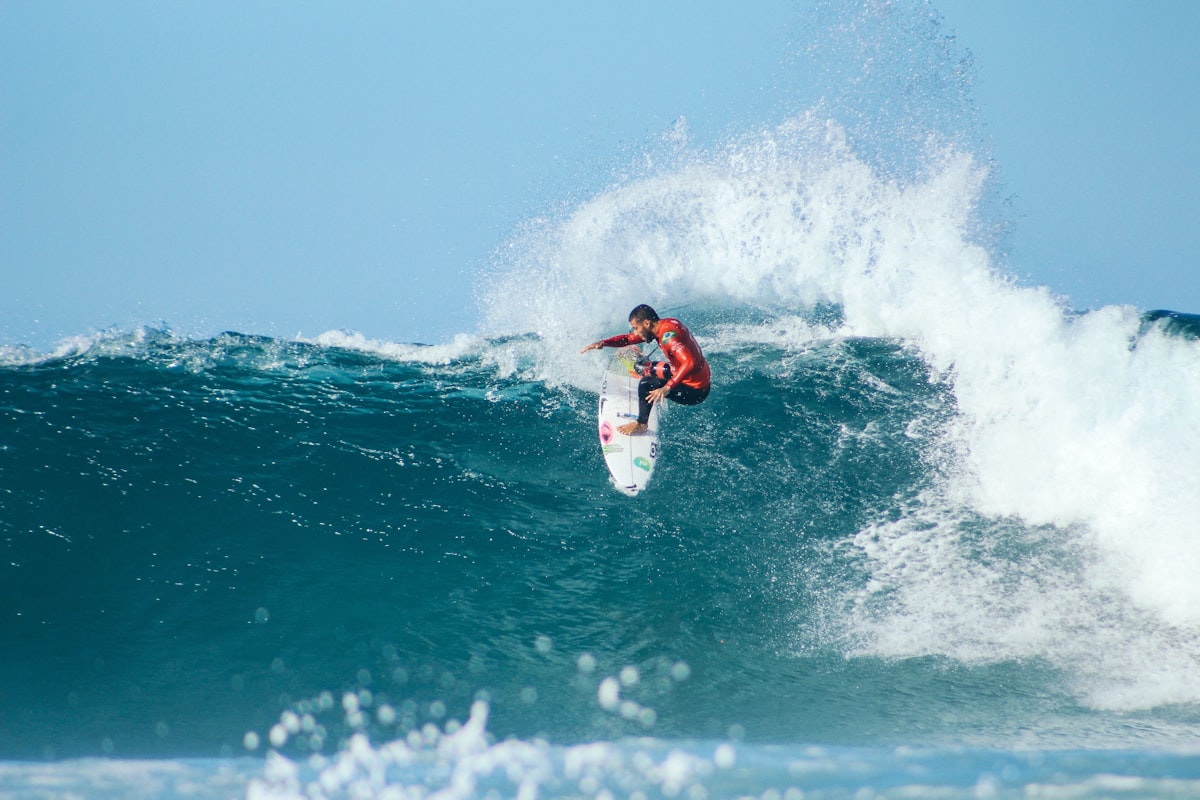
Trim and Style
Style is not posture or hand position. Style is the visible signature of a surfer using less effort than the wave requires. When a surfer looks calm and balanced on a fast wave, it's because they're in trim. The wave does the work. The surfer stays out of the way.
This is why old footage of surfers like Gerry Lopez at Pipeline looks so different from modern shortboarding. Lopez isn't doing more — he's doing less. If you want better style, don't practice posing. Practice trim. Style is what trim looks like from the beach.
For more on this, see our guide on developing flow in surfing.
How Trim Improves Every Other Maneuver
Once trim is real in your surfing, every maneuver gets better.
Cutbacks become smoother because you enter them with momentum the wave gave you. You carve harder because the board has speed in reserve.
Off-the-lip turns become more powerful because you arrive at the lip with the wave's energy still pushing you. Pumpers arrive exhausted; trimmers arrive loaded.
Aerials need a clean approach — a board gliding flat, weight settled, at the right speed. Pumping into the launch ramp causes bogs and skips. Trim releases cleanly.
Tube riding is essentially extreme trim. Inside the barrel you can't pump or turn — you must find the line and hold it.

The Mindset Shift
The pumping mentality says the wave gives a base and the surfer adds speed. The trim mentality says the wave already has all the speed you need — your job is to find it and stay out of the way.
That shift changes everything. You stop fighting the ocean and start listening to it. Small, soft waves come alive because you're not demanding they be more than they are. This is a quieter relationship with surfing, and it's the version that surfers in their sixties and seventies are still riding waves that twenty-somethings paddle past for.
Trim is free. Pumping, turning, and airs all spend physical reserves. Trim doesn't. The wave provides the energy; you provide the awareness.
Learn to pump — you'll need it. Learn cutbacks and floaters. But spend at least as much time learning to do nothing on a wave. Stand still. Find the spot. Let the wave move you.
Use Neptune to log your sessions and notice which boards and conditions teach you the most about trim. The fastest sessions aren't the ones with the most maneuvers — they're the ones where you stayed in the pocket longest, doing the least, and feeling the most.
That's the art of trim. Don't let modern surfing talk you out of it.
Read it. Then take it to the water.