Style in Surfing: How to Develop Flow

Neptune
May 6, 2026
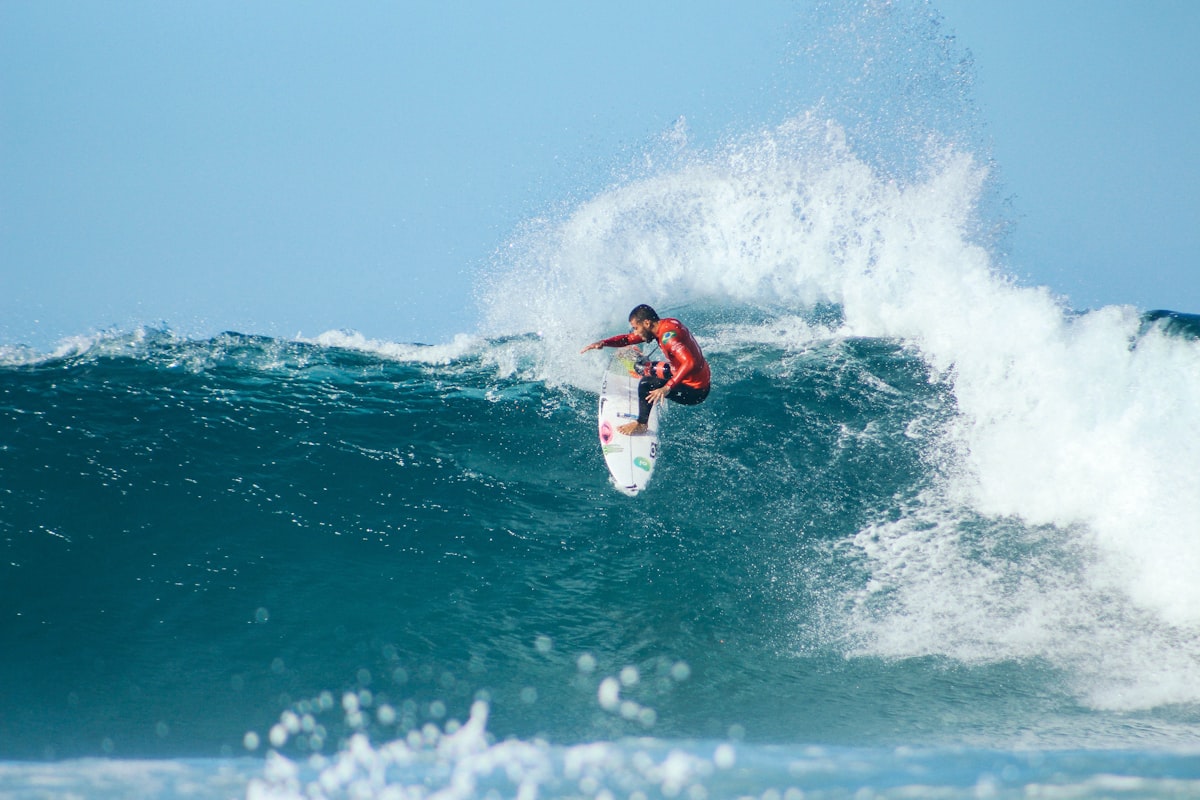
Watching a great surfer, you stop counting maneuvers.
You watch the line — how they entered, where they stood, how little they rushed.
That's style. And contrary to what beginners often assume, it isn't a lucky aesthetic gift. It's a set of habits, choices, and physical fundamentals that anyone can develop with intention. This guide breaks down what surf style actually is, why it matters more than landing flashy maneuvers, and how to start cultivating it on your next session.
What Surf Style Actually Is
Style in surfing is shorthand for a few things working together:
- Posture — how you hold your body on the board
- Timing — when you initiate maneuvers within the wave's phases
- Line choice — the path you draw across the wave face
- Economy of motion — using only the movement required, no more
- Wave selection — picking waves that match your ability and intention
A stylish surfer isn't necessarily the most technical surfer in the lineup. They're the one whose surfing reads as a single, coherent expression rather than a sequence of attempts.
Style is intensely personal. The goal isn't to copy a specific surfer's look — it's to develop a version of surfing that feels like yours.
Why Style Matters More Than Maneuvers
If you only count maneuvers, you'll miss the point of surfing.
A surfer who lands a clean roundhouse cutback in the right spot on the wave will get more respect — from judges, peers, and themselves — than a surfer who throws three twitchy snaps in the wrong sections. Why? Because the cutback was with the wave. The snaps were against it.
This is the core insight: the wave is the canvas, not your maneuvers. Your job is to read what the wave is offering and respond with the most appropriate move. Style is what emerges when you consistently make that good response.
There's also a practical reason to care. Stylish surfers maintain speed better, fall less, and surf longer into their lives. Tense surfers waste energy on every wave and plateau because their bodies are working against them. Style isn't just aesthetic — it's efficient.
The Foundations of Stylish Surfing
Style isn't applied like a coat of paint over your existing surfing. It's built into the foundations. Get these four things right and stylish surfing follows almost automatically.
Stance and Posture
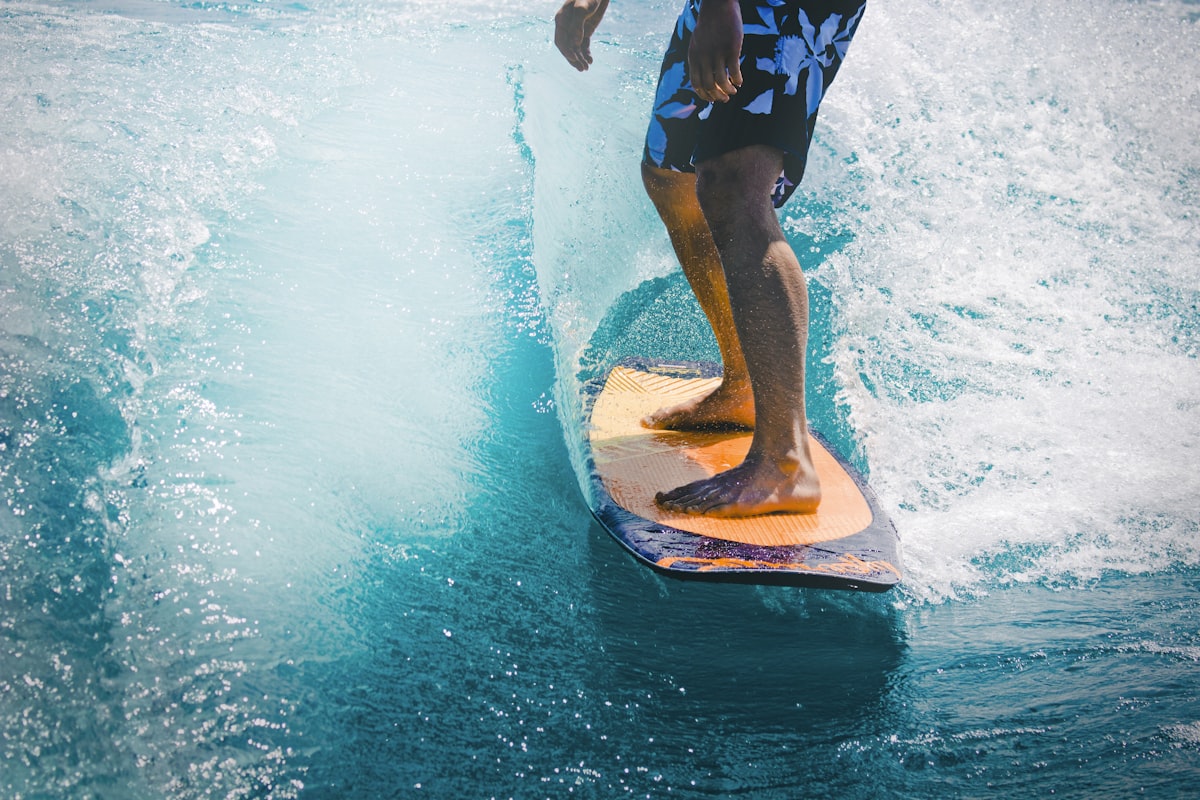
Watch any surfer you admire and notice their stance. You'll see a few common traits:
- Knees bent, hips low — not crouched and stiff, but loaded and ready
- Shoulders relaxed, not hunched up toward the ears
- Chest open, facing the direction of travel rather than collapsed downward
- Arms hanging easy, lightly extended, not flailing or tucked tight
The most common stance error among intermediate surfers is what coaches call "the poo stance" — bent at the waist with a straight back, butt sticking out, head down looking at the nose of the board. It's stable, but it's also locked. You can't carve from a poo stance. You can only stand and ride.
The fix is to bend at the knees and hips, not the waist. Your spine should stay relatively neutral. Your chest stays up. Imagine you're sitting back into an invisible chair, not folding forward over a kitchen counter.
Where You Look
Eye line is the single most underrated element of style. Where your eyes go, your shoulders rotate. Where your shoulders rotate, your hips follow. Where your hips face, the board goes.
If you want to surf more stylishly, start by looking further ahead. Beginners look at the nose of their board. Intermediates look at the section directly in front of them. Advanced surfers look at the section after the one they're currently riding — they're already planning the next move while flowing through this one.
Try this on your next session: deliberately keep your chin up and your eyes scanning the wave 5 to 10 yards ahead of your board. You'll feel your whole body unlock. Maneuvers you've been forcing will start to flow because your body finally knows where it's going.
Weight Distribution
Stylish surfing involves constant, subtle weight transfer between your front foot and back foot, and between your toe-side and heel-side rails. The board responds to weight, not muscle. Surfers who push the board around with their legs look forced. Surfers who shift their weight from one rail to the other look fluid.
A useful drill on land: stand in your surf stance on a balance trainer or cushion, close your eyes, and feel how small shifts in your hip position change your weight distribution. You don't need to move your feet to change the rail you're on. You shift your hips, and your weight follows.
On the wave, this translates to subtler turns, fewer pumping motions to maintain speed, and far less wasted energy.
Hand and Arm Position
Hands tell on you. They reveal what's happening internally — your fear, your tension, your confusion about what to do next.
Stylish surfers keep their hands low and their arms loose. The trailing hand often drags or skims the wave face during turns, acting as both a balance reference and a cue for where the body should rotate. The lead hand stays in front, but relaxed, not pointing or chopping at the air.
Common style-killing hand mistakes:
- Windmilling — arms swinging wide for balance during turns
- T-rex arms — both hands tucked close to the chest, locked
- Karate chops — hands held high and stiff, hyperextended
Working on your surf technique? Partner with Neptune on iPhone and Apple Watch.
Get the free appIf you film yourself surfing and your arms look frantic, the rest of your body is too. Calming your hands often calms your whole stance.
Style Comes From Wave Selection
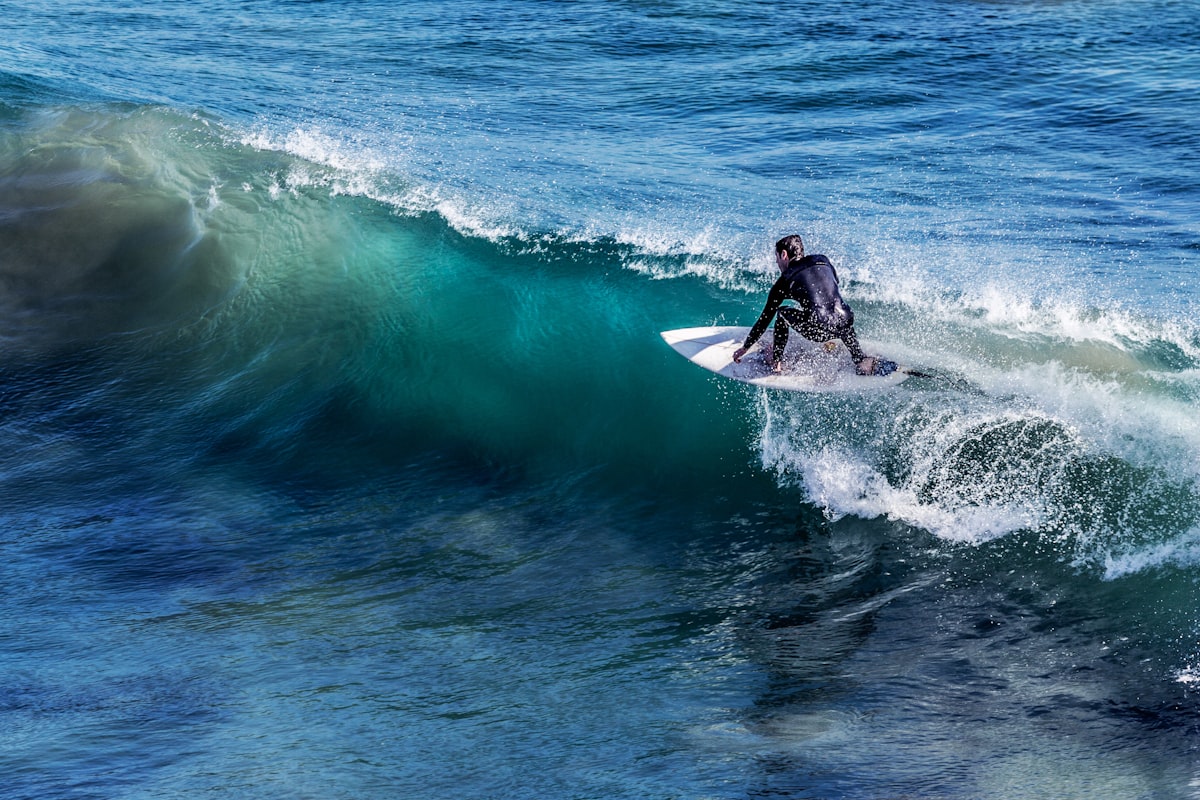
This sounds obvious but is widely ignored: you cannot surf with style on a wave that's wrong for you.
A wave that's too steep, too fast, or too far overhead forces you into survival mode. A wave that's too small or too soft doesn't have the energy to support clean lines. The waves where style emerges are the ones at the upper edge of your comfort zone, not the upper edge of your ability zone.
Practical implications:
- Sit deeper than you think you should. Most intermediate surfers sit too far out, scratching for waves they end up paddling for too long. Sitting in the impact zone — where the wave is breaking — gives you cleaner takeoffs and more time on the wave face.
- Don't paddle for everything. Stylish surfers are picky. They watch sets, learn the spot, and conserve energy for the right wave. The result is fewer waves caught but more meaningful rides.
- Match your board to the conditions. A high-performance shortboard in mushy waist-high surf will make even an excellent surfer look stiff. A fish or mid-length in those same conditions will let style breathe.
When you find yourself surfing badly, the first question to ask isn't "what am I doing wrong?" — it's "is this the right wave for me right now?"
Power vs. Flow: Two Schools of Style
Surfing has two broad stylistic traditions, and most surfers gravitate toward one or the other.
Power surfing is about generating force, gouging deep arcs, and finishing maneuvers with explosive snaps. Think Andy Irons, Tom Curren, John John Florence on a good day. Power surfers compress and explode through turns. They draw bold lines that put visible force into the wave.
Flow surfing is about linking movements seamlessly, drawing smooth arcs, and matching the wave's rhythm rather than fighting it. Think Rob Machado, Stephanie Gilmore, Craig Anderson. Flow surfers seem to glide between maneuvers without obvious effort.
Both are stylish. Neither is "correct." The mistake is trying to be both at once, or copying one when the other suits your body and the conditions you usually surf better.
If you surf small, soft waves most of the time, lean into flow. The waves don't have the energy for explosive power surfing, and forcing it just looks twitchy. If you surf punchy waves with steep faces, lean into power. Trying to flow through a hollow head-high beach break wave looks underdone.
The best surfers blend both, but they always lead with one. Figure out which is your default — and let the other complement it rather than compete with it.
How to Develop Your Own Style
You can't fake style. You can only practice the habits that allow it to emerge. Here's a practical progression.
Watch More Surfing — Critically
Most surfers watch surfing for entertainment. Stylish surfers watch it as study.
Pick one surfer whose style appeals to you and watch ten minutes of their footage with the sound off. Don't watch the maneuvers — watch the transitions. How do they enter the wave? What do they do in the flat sections? Where are their hands when nothing is happening? What's their face doing?
You'll start noticing things you've never seen before. Then go surf and try to bring even one of those small details into your own surfing. The transformation isn't immediate, but over months it accumulates.
Film Yourself — Honestly
There's a brutal but necessary moment in every developing surfer's life when they watch themselves on video for the first time and realize they look nothing like they thought they did.
Embrace this. Filming yourself, even with a cheap action camera or a phone from the beach, is the single fastest way to identify the gap between how your surfing feels and how it looks. The feel is unreliable; the footage doesn't lie.
Look for: poo stance, windmilling arms, looking down at the board, no rotation through turns, stiff knees, head leading the body instead of following it. Pick one issue per session and work on it.
Slow Down
This is the counterintuitive one. Most intermediate surfers think they need to surf more aggressively to look stylish. The opposite is usually true.
Style emerges when you do less, not more. Try this drill on your next session: pick five waves and surf each of them with the explicit goal of doing fewer maneuvers than feel natural. Just trim. Draw one long line. Maybe one cutback. End the wave early.
You'll feel like you're underperforming. The footage will tell a different story.
Don't Force Maneuvers
A maneuver attempted in the wrong section is a maneuver that ruins your line, even if you somehow land it. Stylish surfers wait for the wave to give them the section, then respond.
The discipline here is restraint. If the wave doesn't offer a cutback, don't do one. Let the wave die. Paddle back out. The next wave might give you exactly what you wanted.
Match Your Board to Your Style
Boards have personalities. A high-performance shortboard wants to be turned hard and often. A longboard wants to be trimmed and walked. A fish wants to be carved with weight, not muscled. A mid-length wants long, drawn-out arcs.
If your style is more flow-oriented, a board with more volume, softer rails, and a wider tail will let you draw the lines that suit you. If your style is more power-oriented, a board with thinner rails, a narrower tail, and lower volume will reward your aggression.
Riding the wrong board for your style is one of the most common reasons surfers feel "off." The board is fighting them. Switch to a shape that complements your natural movement and entire sessions transform.
Common Style Mistakes Even Experienced Surfers Make
A few patterns that quietly undermine style, even at advanced levels:
- Over-paddling onto waves. Three extra strokes after you've caught the wave makes the takeoff look frantic. Trust your speed and pop up earlier.
- Rushing the bottom turn. A drawn-out, patient bottom turn is the foundation of every good top turn.
- Pumping for speed in the wrong sections. If you have to pump to keep up, you took the wrong line off the bottom. Style fixes the line; pumping is a band-aid.
- Riding too far out on the shoulder. Style happens in the pocket. If you've ridden onto the flats, you're no longer using the wave's energy — just inertia.
The Mental Game of Style
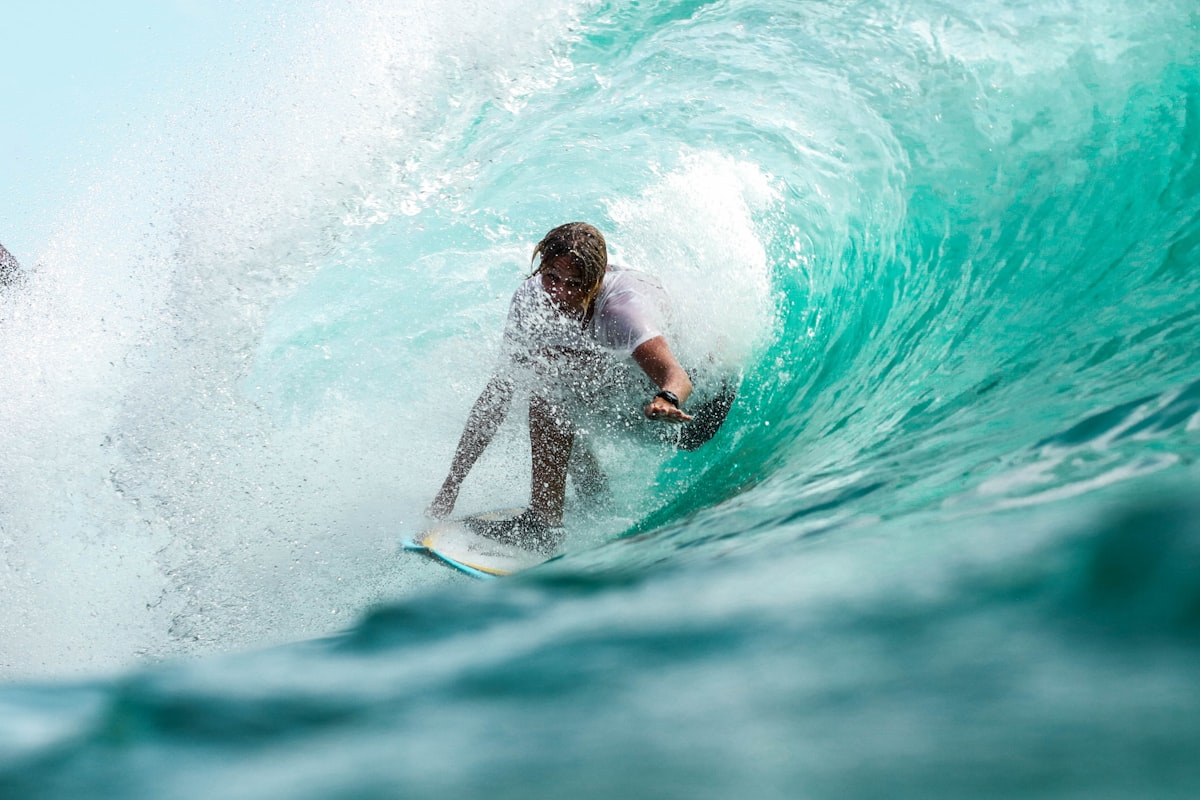
Underneath the physical mechanics, style is a state of mind. Tense surfers don't surf with style. Doubtful surfers don't surf with style. Surfers who are trying to impress other people don't surf with style.
Style emerges from a particular kind of presence — fully engaged with the wave, but not anxious about the outcome. The Japanese have a concept called mushin, "no mind," that fits perfectly. The mind is so absorbed in the moment that it stops second-guessing itself.
You can cultivate this. A few small practices:
- Breathe out as you take off. Holding your breath cranks tension into your whole body.
- Surf alone sometimes. A crowded lineup tempts you to grandstand. Solo sessions teach you what surfing feels like when no one is watching.
- Surf small waves on purpose. With no consequence and no audience, you can experiment with stance, timing, and line choice without ego getting in the way.
- Surf tired. When you're worn out, you're forced into economy. This is style training.
Closing Thought
Style is the long game. You won't develop it in a session, or a season, or even a year of surfing. But every time you choose patience over panic, position over force, and the right wave over the available one, you're building it.
The surfers you watch with envy on Instagram — the ones who make every wave look like art — aren't doing anything mystical. They've just spent thousands of hours noticing what works, eliminating what doesn't, and trusting the wave more than their own instinct to muscle it.
The good news is that this practice is available to you on every wave you catch, starting tomorrow. The only question is whether you treat surfing as a series of moves to land, or as a single ongoing expression to refine.
Choose the second one. Style follows.
Read it. Then take it to the water.