Surf Fitness: 7 Exercises for Flat Days

Neptune
March 4, 2026
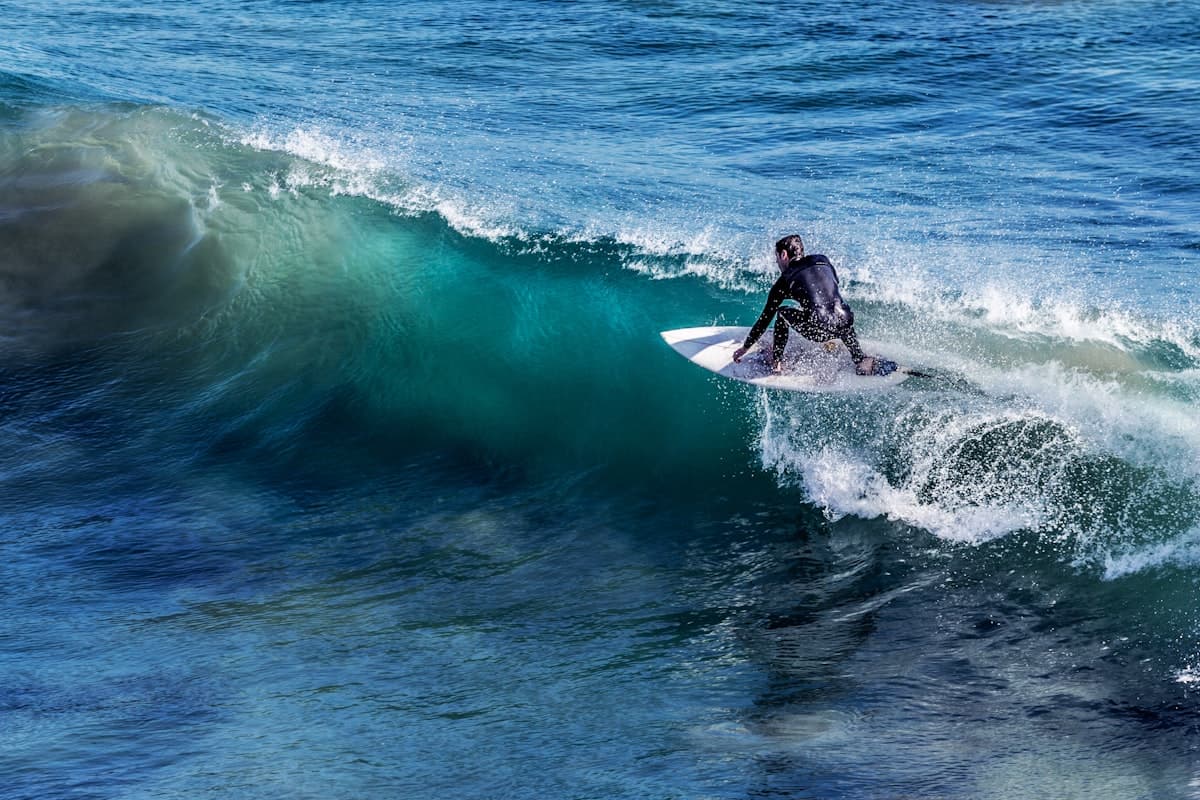
Why Should Surfers Train on Flat Days?
A week of ankle-high mush is not wasted time.
Surfing needs explosive paddling, a stable core, lower-body strength, and mobility. You can train all of it on land.
The workout below targets all of these. Every exercise is chosen because it directly transfers to something you do in the water. No filler, no gym machines — just bodyweight and intention.
Exercise 1: The Surf Pop-Up Push-Up
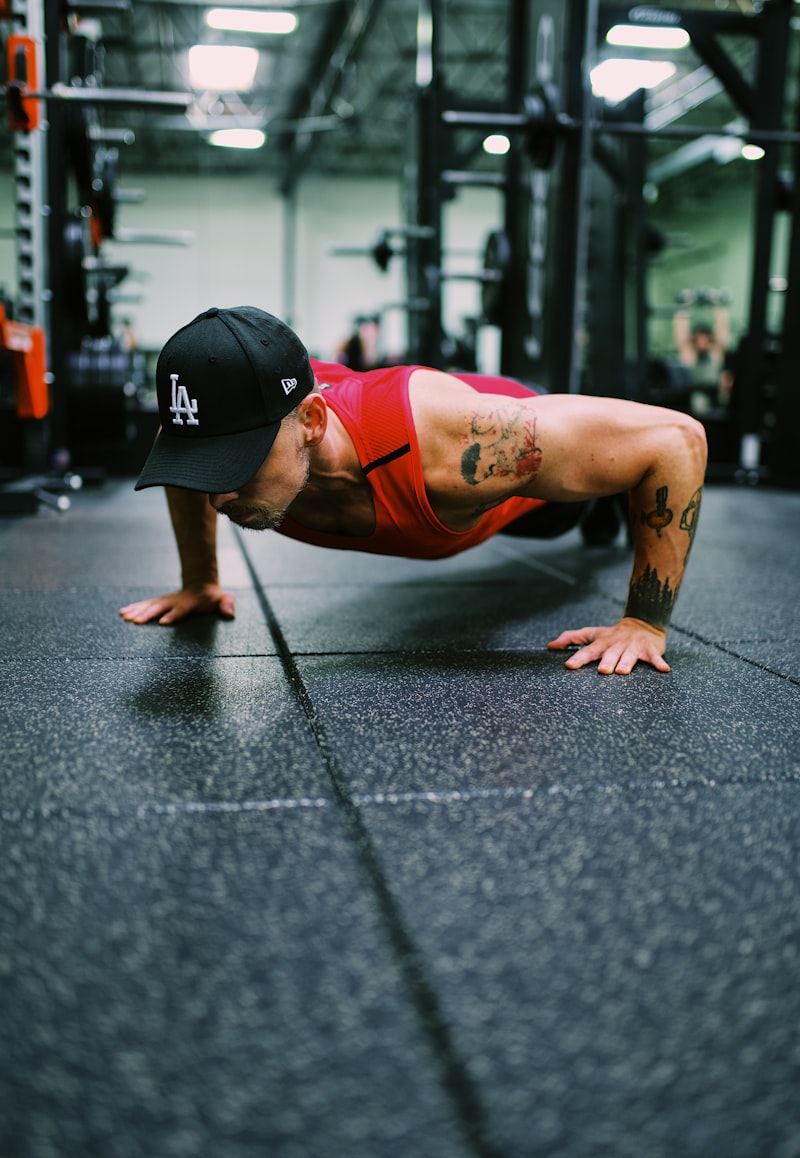
This isn't a regular push-up. It's a surf-specific variation that mimics the exact movement pattern of your pop-up.
How to do it:
- Start in a standard push-up position, hands slightly wider than shoulder-width, fingers angled outward
- Lower your chest to the ground with control
- Push up explosively — as your arms extend, jump your feet forward into your surf stance in one motion
- Hold your surf stance for one second (knees bent, eyes forward, arms balanced)
- Return to the starting push-up position and repeat
Sets and reps: 3 sets of 8–10 reps
Why it works for surfing: This is the most direct training stimulus for your pop-up. It builds the explosive chest, shoulder, and tricep power you need to push off the board, while training the hip flexor speed required to get your feet underneath you. The more automatic this movement becomes on land, the faster and smoother your pop-up will be in the water.
Scale it down: If the full surf pop-up is too advanced, start with regular push-ups and add the foot-jump as a separate movement. Build toward combining them.
Exercise 2: The Forearm Plank (and Variations)
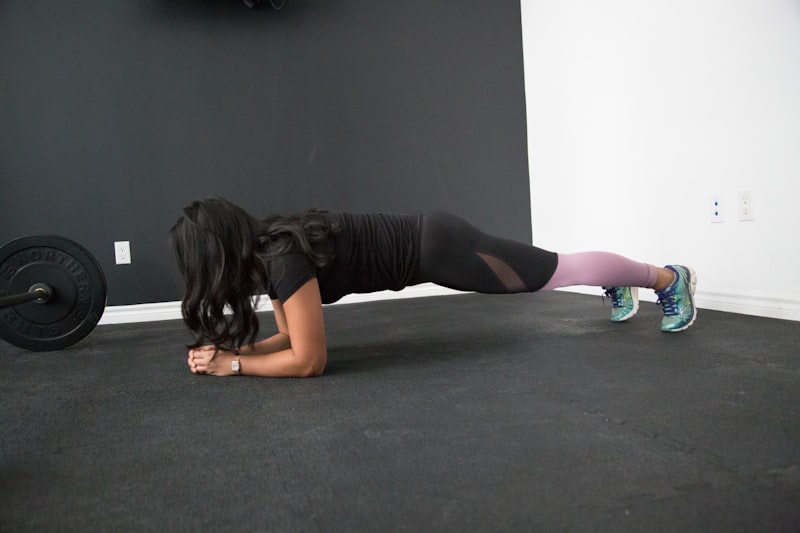
If you only do one exercise for surfing, make it the plank. Your core is the connection point between your upper and lower body on a surfboard. When your core is weak, everything from paddling to turning suffers.
How to do it:
- Rest on your forearms and toes, elbows directly under your shoulders
- Keep your body in a straight line from head to heels — no sagging hips, no piked butt
- Squeeze your glutes and brace your abs like someone is about to push you
- Hold for time
Sets and duration: 3 sets of 45–60 seconds. Work up to 90 seconds.
Why it works for surfing: The plank trains the exact type of core endurance you need in the water — sustained isometric tension. When you're paddling, your core holds your torso rigid so your arms can generate power. When you're riding, your core stabilizes your upper body while your legs drive turns. The plank builds that endurance without the spinal flexion of sit-ups.
Level up: Once 60-second holds are easy, try these variations:
- Side plank: Roll to one forearm and stack your feet. Targets the obliques you use in turns.
- Plank shoulder tap: From a high plank, tap your left shoulder with your right hand, then switch. Trains anti-rotation — the ability to stay stable while one side of your body moves.
- Single-leg plank: Lift one foot off the ground. The instability forces your core to work harder, simulating the uneven forces on a surfboard.
Exercise 3: The Bicycle Crunch
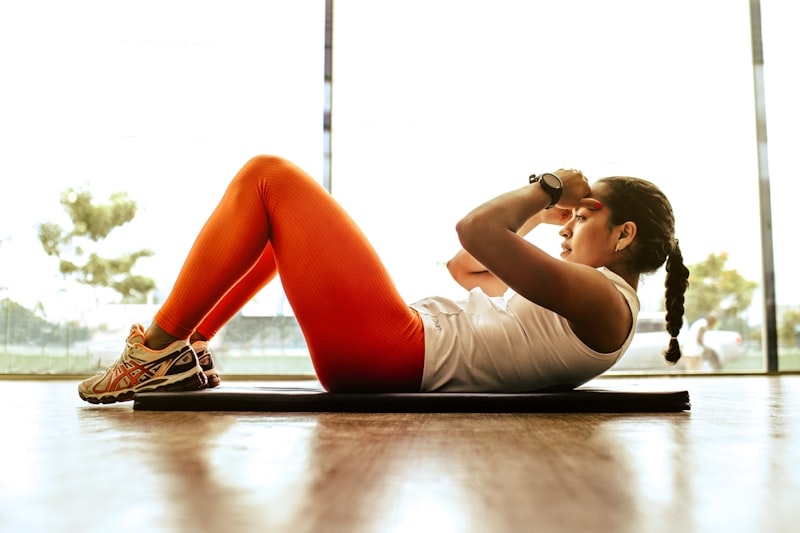
While the plank builds stability, the bicycle crunch builds rotational power. Every turn you make on a wave involves your core rotating your upper body relative to your lower body. This exercise trains that exact pattern.
How to do it:
- Lie on your back, hands behind your head, legs lifted with knees at 90 degrees
- Extend your right leg straight while rotating your right elbow toward your left knee
- Switch sides in a smooth, pedaling motion
- Keep your lower back pressed into the floor throughout
Sets and reps: 3 sets of 20 reps (10 per side)
Why it works for surfing: The bicycle crunch strengthens your obliques and hip flexors in a rotational pattern. When you do a bottom turn or carve off the top, your obliques are the primary drivers of that rotation. Stronger obliques mean more powerful, controlled turns.
Exercise 4: The Indo Board Squat (or Single-Leg Squat)
Balance and leg strength don't need a photo — they need practice. If you have a balance board or Indo Board, this is where it earns its place in your living room. If not, single-leg squats on flat ground work just as well.
How to do it (balance board):
- Stand on your balance board in your surf stance
- Slowly lower into a squat, keeping your weight centered
- Hold the bottom position for 2 seconds
- Rise back up with control
- If you lose balance, step off and reset
Working on your surf fitness? Partner with Neptune on iPhone and Apple Watch.
Get the free appHow to do it (no equipment):
- Stand on one leg, other foot lifted slightly off the ground
- Lower into a single-leg squat as deep as you can control
- Push back up to standing
- Complete all reps on one side, then switch
Sets and reps: 3 sets of 10 per leg
Why it works for surfing: Surfing is fundamentally a single-leg balance sport. Even though both feet are on the board, your weight is constantly shifting from front foot to back foot. Single-leg squats build the quad, glute, and ankle stability you need for clean bottom turns and stable trim. The balance board version adds the instability element that makes it even more surf-specific.
Exercise 5: Swimming for Paddle Endurance
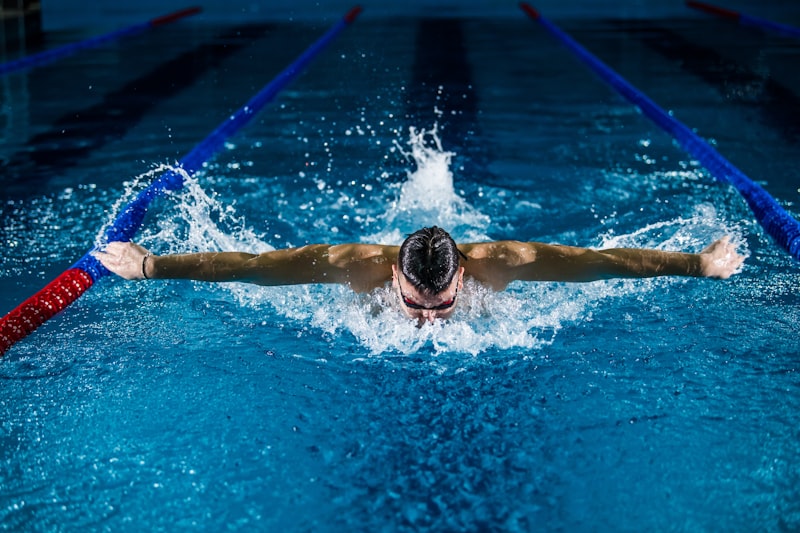
Nothing replicates paddling better than swimming. If you have access to a pool, swimming is the single best cross-training activity for surfing.
How to do it:
The goal isn't to swim fast — it's to build the sustained shoulder endurance you need to paddle for an entire session without your arms giving out.
- Freestyle intervals: Swim 50 meters at moderate effort, rest 15 seconds, repeat 10–20 times. This mimics the pattern of paddling out, resting in the lineup, paddling for a wave, and repeating.
- Extended sets: Swim 200–400 meters continuous at a comfortable pace. This builds the aerobic base you need for long sessions.
- Sprint paddles: Swim 25 meters as fast as you can, rest 30 seconds, repeat 6–8 times. This simulates the burst of paddling into a wave.
Frequency: 2–3 times per week on flat days
Why it works for surfing: Swimming engages the same shoulder, lat, and upper back muscles you use paddling. The freestyle stroke is biomechanically similar to the surf paddle — and if you want to refine your actual paddle mechanics, our guide to mastering the surf paddle covers technique in detail. Consistent pool sessions mean you show up to your next surf with shoulders that don't burn out after 20 minutes.
No pool access? Resistance band pull-aparts and rows can partially simulate the paddling motion. Lie face-down on a bench or stability ball and do paddling motions with light dumbbells or bands.
Exercise 6: The Hip Flexor Stretch and Pigeon Pose
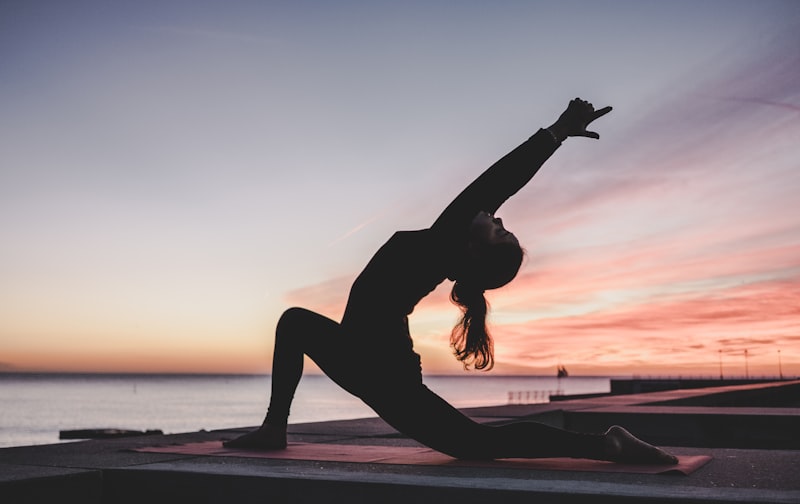
Tight hips are one of the most common limiters for surfers, especially those who work desk jobs during the week. If your hip flexors are tight, your pop-up is slower, your surf stance is compromised, and your turns lack range of motion.
Hip flexor stretch:
- Kneel on one knee in a lunge position
- Shift your weight forward until you feel a deep stretch in the front of your back hip
- Hold for 30–45 seconds per side
- For a deeper stretch, raise the arm on the same side as your back knee overhead
Pigeon pose:
- From a push-up position, bring your right knee forward and place it behind your right wrist
- Extend your left leg straight back
- Lower your torso toward the ground
- Hold for 45–60 seconds per side
Why it works for surfing: Open hips let you drop into a lower, more stable surf stance. They allow your back foot to rotate for powerful backside turns. They make your pop-up faster because your legs can move freely underneath you. Flexibility might not feel as exciting as strength work, but it's often the difference between a stiff, upright stance and a fluid, compressed one. If you're surfing in cold water, a wetsuit that restricts your range of motion compounds the problem — choosing the right wetsuit with adequate stretch keeps your flexibility gains intact in the water.
Bonus — full yoga flow: If you have 20 minutes, a yoga session targeting hips, shoulders, and thoracic spine is one of the best things you can do for your surfing. Sun salutations, downward dog, warrior sequences, and spinal twists all target the mobility patterns surfers need.
Exercise 7: The Breath Hold Walk
This one requires zero equipment and can be done literally anywhere. It trains the one physical capacity that every surfer needs but few deliberately practice: breath hold tolerance.
How to do it:
- Take three deep breaths — inhale for 4 seconds, exhale for 6 seconds
- On the fourth inhale, take a full breath and hold it
- Walk at a normal pace while holding your breath
- When you feel the first strong urge to breathe, count five more steps, then exhale and recover
- Rest for 60 seconds and repeat
Sets: 5–8 rounds
Why it works for surfing: Getting held down by a wave triggers a panic response that burns through your oxygen faster than the hold itself. By deliberately practicing breath holds in a controlled, calm environment, you train your body's CO2 tolerance and your mind's ability to stay relaxed when you can't breathe. This directly reduces panic in hold-down situations and gives you more composure in bigger surf.
Safety note: Always practice breath holds on land, never in water alone. Stop if you feel lightheaded or dizzy.
How to Structure Your Flat Day Workout
Here's a simple way to put it all together into a 30- to 40-minute session:
Warm-up (5 minutes):
- 2 minutes of jumping jacks or light jogging
- Hip circles, arm circles, trunk rotations
Strength circuit (20 minutes) — 3 rounds:
- Surf pop-up push-ups: 10 reps
- Forearm plank: 60 seconds
- Bicycle crunches: 20 reps
- Single-leg squats: 10 per leg
- Rest 60 seconds between rounds
Paddle endurance (optional, 15 minutes):
- Swim intervals or resistance band paddling
Flexibility and breath work (10 minutes):
- Hip flexor stretch: 45 seconds per side
- Pigeon pose: 45 seconds per side
- Breath hold walks: 5 rounds
How Often Should Surfers Train on Land?
Aim for 3–4 land sessions per week when the waves are flat. On weeks when you're surfing regularly, 1–2 maintenance sessions is enough to keep your strength and flexibility gains.
The key is consistency over intensity. A moderate 30-minute session done four times a week beats a brutal 90-minute workout done once. Your body adapts to repeated stimulus, and surfing rewards the kind of endurance that comes from regular, sustained training — not occasional heroic efforts.
The Bottom Line
Flat days are training days. Every push-up, every plank hold, every lap in the pool is depositing fitness into an account you'll withdraw from the next time a swell lights up. The surfers who show up strongest when the waves arrive are the ones who didn't take the flat spell off.
Track your flat-day workouts alongside your surf sessions and Neptune will factor your fitness training into your coaching recommendations — helping you build a complete picture of your progression both in and out of the water.
Read it. Then take it to the water.