How to Surf an Unfamiliar Break

Neptune
May 15, 2026

The Moment You Pull Up to a New Spot
A new break is exciting. It is also where most surfers underperform.
That is a familiarity problem, not a skill problem.
This guide is about what to do in the hours and minutes before, during, and after that first session at an unfamiliar wave. Whether you're on a surf trip, visiting family, or just driving an hour up the coast to check out a new break, the framework below will help you adapt faster, surf better, and leave with the locals' respect intact.
Why First Sessions Are Different
A new break demands a different mental approach than your home wave. At home, you have years of pattern recognition working for you. You know where the wave shifts on a south swell. You know the rock that holds the takeoff spot in place. You know who sits inside, who sits deep, and who actually goes when they're up.
At a new spot, all of that is invisible. You're missing the reference data your brain normally uses to make decisions in real time. So your job on a first session isn't to surf at the top of your ability — it's to build a model of the wave as quickly as possible while not embarrassing yourself in the process.
The surfers who travel well understand this. They don't paddle out trying to prove anything. They paddle out trying to learn.
Before You Leave: Research the Spot
You can do a surprising amount of useful homework before you ever touch your wetsuit. The goal isn't to memorize every detail — it's to remove the most dangerous unknowns.
Study the Map and Satellite View
Open a satellite map of the spot. You're looking for:
- The seafloor. Sandy patches show up as lighter tan; reef and rock are darker. This tells you what you're surfing over.
- Channels. Look for darker streaks running perpendicular to the beach — those are deeper water, which usually means easier paddle-out lanes and rip currents.
- The orientation of the bay or point. This tells you what swell direction the spot wants, and what wind direction will make it clean or blown out.
- Access points. Where do surfers actually enter the water? Sometimes the obvious beach in front is closed out and the real takeoff is a five-minute walk away.
Check the Forecast Carefully
For a new spot, swell size is only part of the story. Swell direction and period matter more. A 4-foot south swell at 18 seconds can be doubling-up overhead at a point that wraps that direction, while the same height at 10 seconds barely produces a wave. If you don't know how a spot reacts to different swells, ask in a forum, watch the local cam for a day or two, or look at surf reports from the days you'll be there.
Tide is the other variable that radically changes new breaks. Many spots only work in a narrow window — last two hours of the push, or low to incoming. Showing up at the wrong tide can mean watching a closeout for two hours and concluding the spot doesn't work, when really you just got the timing wrong.
Read Other Surfers' Notes
Surf forums, Reddit, and YouTube clips are gold for new spots. You're not looking for a step-by-step guide — you're looking for the small details. "Takeoff is steep, paddle harder than feels right." "The inside section is shallow, don't ride it all the way through on a low tide." "Locals own the peak. Sit on the shoulder unless you want a chat." These notes give you context that no map can.
At the Beach: Observe Before You Paddle
When you arrive, the temptation is to throw on your wetsuit and run. Don't. The single biggest mistake traveling surfers make is paddling out before they've earned the right to be there — and earning that right starts with watching.
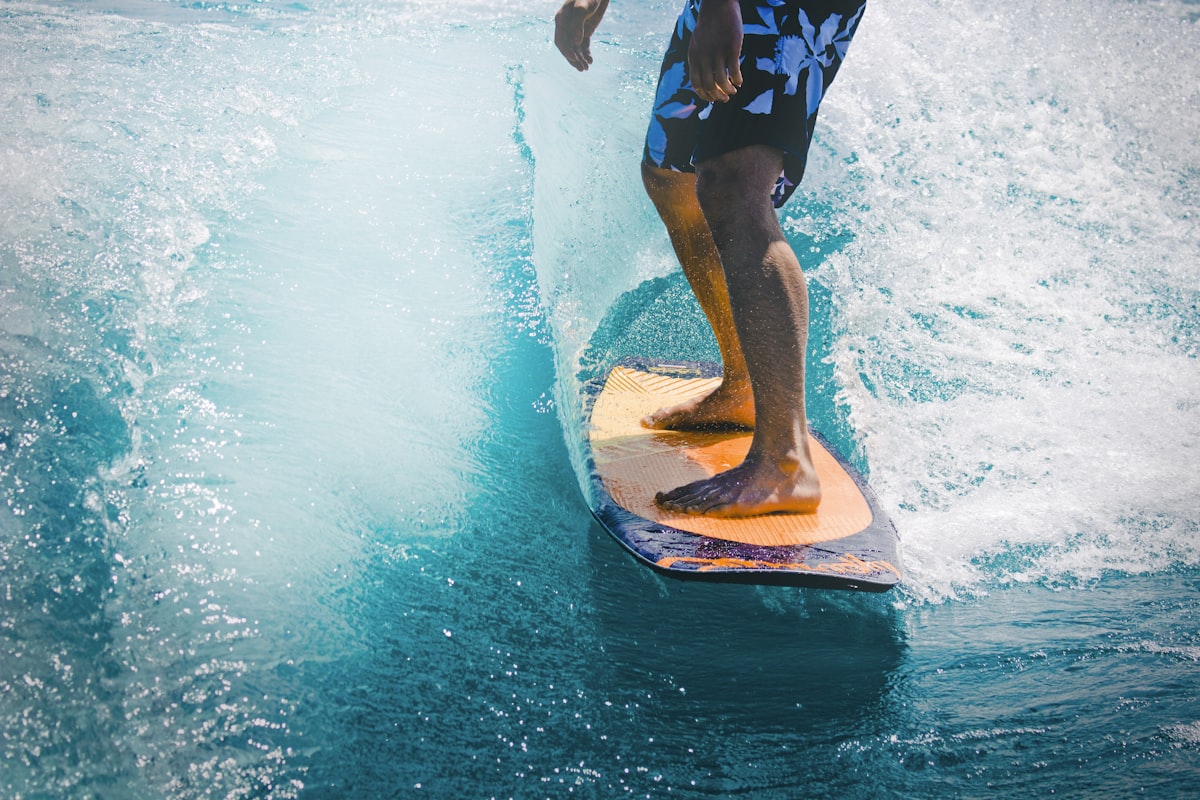
Give yourself a minimum of fifteen minutes of focused observation, more if conditions are bigger or the lineup is busy. Here's what you're looking for.
Find the Takeoff Zone
Watch for where surfers consistently catch waves. There's almost always one specific spot where the wave breaks best — not the whole stretch of water that looks like waves. Identify a landmark on shore (a house, a tree, a tower) and a second landmark (a rock, a buoy, a point) that you can line up to find that exact spot from the water. Triangulation is how every local surfer holds position without thinking about it.
Identify the Wave's Personality
Every wave has a personality. Watch a dozen waves break and ask:
- Does it stand up fast or roll in slow? Fast-breaking waves need a deeper, more committed takeoff.
- Where does it section? Most waves close out somewhere. Knowing where helps you commit to the right line.
- Does it have a sweet spot? Many waves have one section that's noticeably better than the rest — that's where the best surfers are sitting.
- What kills the wave? Does it walk down the line forever, fold over a shallow inside, or run into a backwash?
Watch the Paddle-Out
How are people getting out? Are they walking down the beach and paddling out through a clear channel, or are they punching through the impact zone? Are they timing it between sets? You want to copy what's working — not invent your own paddle-out strategy on a new spot.
Spot the Hazards
Look for rocks barely poking out on the inside, boils that signal shallow reef, kelp patches that can wrap a leash, or current lines that pull surfers down the beach. If you see surfers consistently paddling against a current to stay in position, you'll need to do the same.
Read the Crowd
Who's surfing this spot, and how? Are there a few obvious standouts who get every set wave? Are people sharing waves, or is it strictly priority? Is there a pack inside that handles the cleanup sets, or does everyone scatter? The social structure of a lineup tells you where to sit and how to behave.
Choosing the Right Board for a New Spot
You probably packed limited boards, but if you have a choice, lean toward the one that gives you the most margin for error. A new spot is not the day to ride your performance shortboard that needs perfect waves and perfect technique. It's the day to ride the board that paddles fastest, catches waves easiest, and lets you focus on reading the wave instead of fighting your equipment.
A common mistake is to bring only the board you ride at home, which may be tuned for a totally different wave type. If you're surfing your local beach break on a wide shortboard and suddenly you're at a point that wants drive and rail, you're going to feel disconnected. Where possible, match volume and outline to the wave, not to ego.
Working on lineup positioning? Partner with Neptune on iPhone and Apple Watch.
Get the free appYour First Paddle-Out: Small Goals Only
When you finally hit the water, the goal isn't to get the wave of the trip. The goal is to gather information and get one or two clean rides so you can recalibrate.
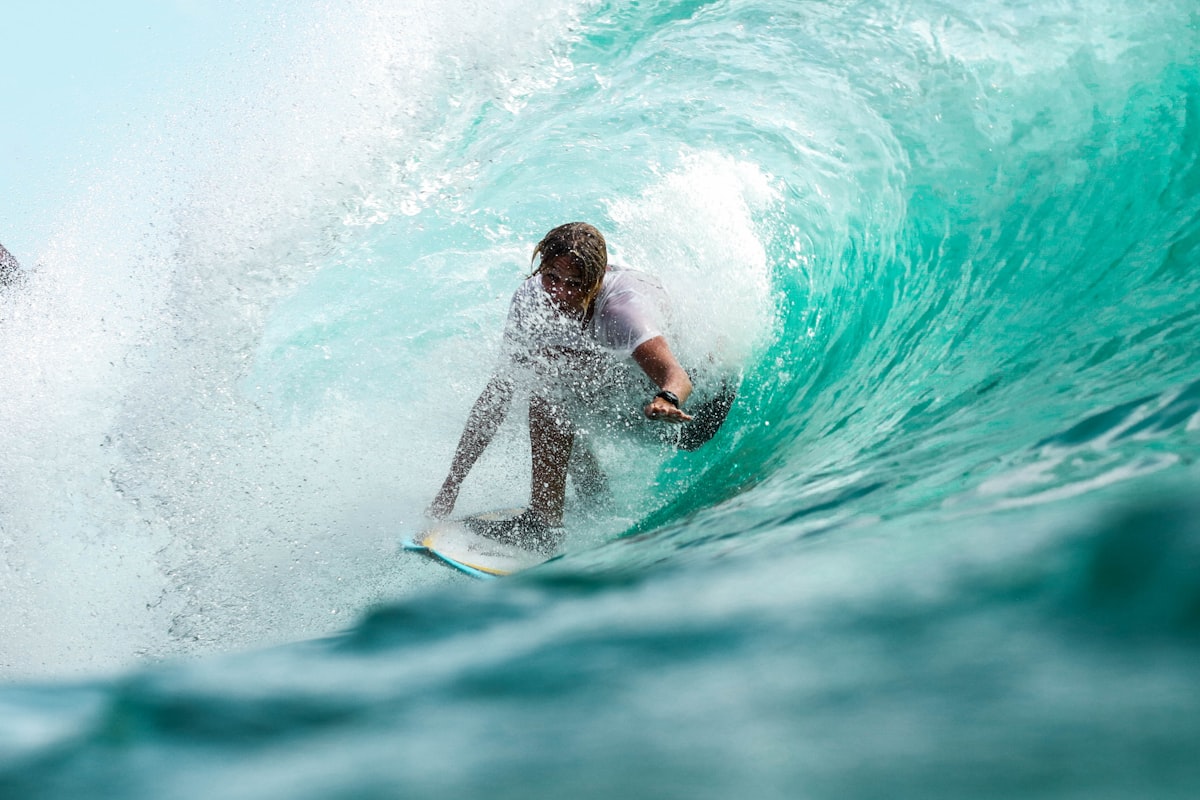
Sit Wide on Your First Wave
For your first wave, position yourself slightly wider and slightly farther from the peak than the locals are sitting. You'll catch a less-perfect version of the wave — a shoulder or a smaller set — but you'll get it without burning anyone, and you'll learn enormous amounts about how the wave breaks under your feet.
A first wave on the shoulder accomplishes several things:
- You feel the speed and steepness of the takeoff
- You see where the wave actually sections from a surfer's-eye view
- You confirm where the safe kick-out zones are
- You signal to the lineup that you're not here to bulldoze the peak
Take Two or Three Easy Waves Before You Go for the Set
Resist the urge to swing on the first set wave that comes your way. Watch a couple of sets go by. Notice the timing — how many waves come in a set, how long between sets, how the lineup shifts after a cleanup. Then go.
Don't Trust Your Home-Break Instincts
The wave you're surfing isn't your home wave, even if it looks similar. The takeoff probably wants you in a slightly different spot. The drop may be steeper or slower than it looks. The wall may section faster than you expect. Trust the wave you're actually on, not the muscle memory of the one you usually ride.
Lineup Positioning and Priority
The single biggest cause of friction between visitors and locals is positioning. You don't need to know every regular by name — you need to understand the rules of who's up.
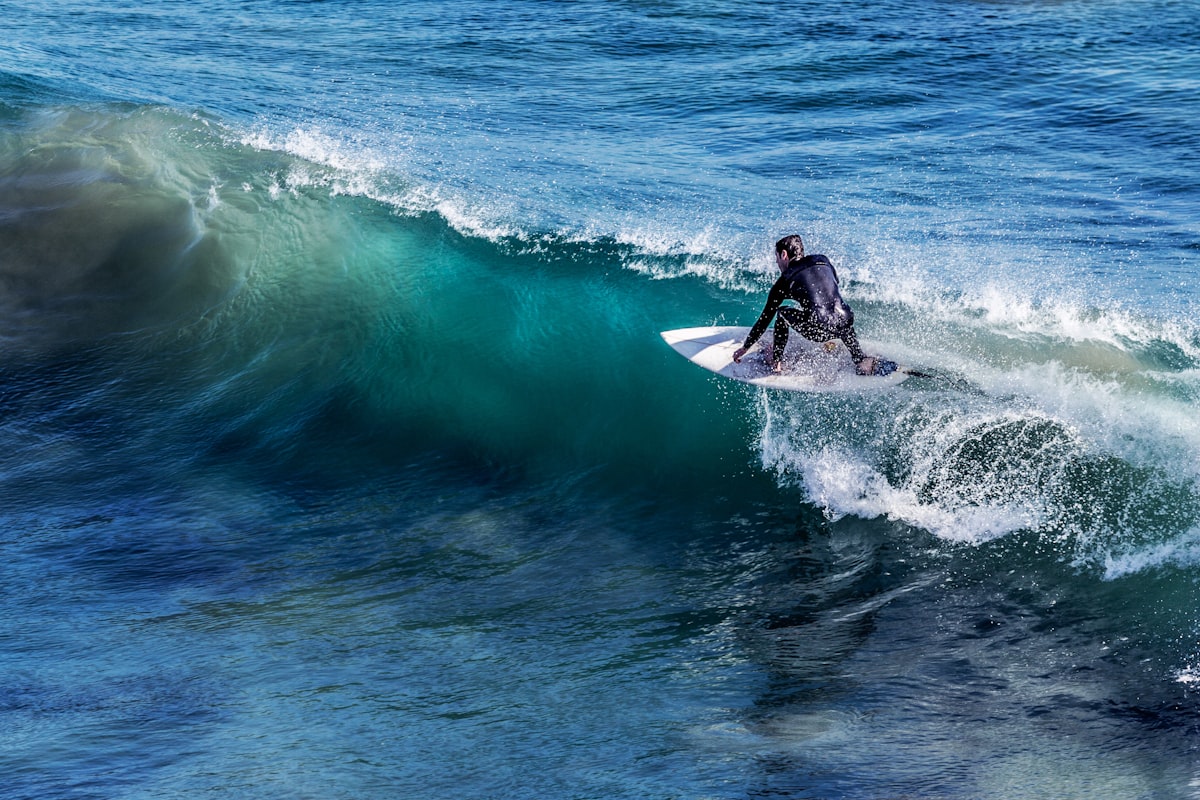
The Universal Rules Still Apply
Priority belongs to the surfer deepest, closest to the peak. Don't drop in. Don't snake (paddle around someone to claim deeper position on a wave that's already theirs). Don't paddle through the takeoff zone — go wide around it.
Match the Local Tempo
Some lineups operate on strict priority — one surfer goes per wave, everyone else waits. Some are looser, with parties sharing waves. Some are pure free-for-alls. Watch how the locals handle it and conform to their pace. If they're patient, be patient. If they're going on every wave, go when it's clearly your turn.
Don't Sit on the Peak Right Away
Even if you're a strong surfer, sit one or two positions back from the prime takeoff spot on your first session. Earn your way deeper by catching waves cleanly, not by paddling past the people who've been there longer. This isn't about ego — it's about how lineups actually work everywhere in the world.
Talk to People
A quiet "hey, how's it going" to whoever you're sitting near goes a long way. You're a stranger; saying hello makes you a person. If someone asks where you're from, answer honestly and ask a question back. Local surfers usually want to share information with respectful visitors — they're protecting their wave from disrespect, not from outsiders in general.
Etiquette as a Visitor: The Unwritten Rules
Beyond the technical rules of priority, traveling surfers operate under an additional set of expectations.
Don't Bring a Crew
If you've shown up with five friends, splitting into two groups makes the lineup feel less invaded. Five new faces paddling out together changes the energy. Two pairs and a solo, spread over the first hour, is much less disruptive.
Don't Out-Surf Your Welcome
Even if you're capable of dominating, don't. Take some waves, share some waves, sit some out. A visitor who catches more than their fair share, no matter how skilled, will leave a worse impression than one who got slightly fewer and was clearly stoked.
Don't Geo-Tag or Brag
If the spot is somewhat hidden, keep it that way. Don't post the name on social media. Don't tag the location. The fastest way to be remembered badly is to publicly out a spot that locals have been protecting. The same applies to surf reports and forums — give vague answers about where you scored.
Thank Someone in the Lineup
Before you paddle in, find someone you exchanged a word with and say thanks. It's tiny. It also resets the local read of you from "visitor" to "respectful visitor" — and you'll have an easier session next time.
Adapting Your Surfing in Real Time
A new spot will expose any rigidity in your surfing. The surfer who can adapt fastest catches the most waves and looks the best doing it.
Adjust Your Takeoff Style
If the wave breaks faster than your home break, you need to commit earlier and paddle harder. If it's slower, you need to wait. New surfers at fast waves consistently get caught in the lip. New surfers at slow waves consistently nose-dive trying to force a takeoff that hasn't formed yet. Read what the wave wants and give it that.
Adjust Your Line
Every wave has an ideal line. At a point break you may need to trim high and stay forward to make a section that walls up. At a beach break you may need to commit immediately and pump through flat spots. Watch where the local surfers are setting their line and copy it, even if it feels wrong.
Accept That You'll Surf Worse Than Usual
You will. That's normal. A first session at a new spot is rarely your best surfing — but if you stay calm, gather data, and adjust, your second session will be dramatically better. A lot of frustration comes from expecting your home-break performance to instantly transfer. It doesn't. That's part of what makes traveling fun.
After the Session: The Most Useful Habit
When you get to the car or back to where you're staying, take five minutes and write down what you learned. Not a journal — just a quick list:
- Where did the wave actually break?
- What tide and swell did it work on?
- Who held the peak, and where did they sit?
- What worked in my surfing? What didn't?
- What would I do differently next session?
This is the habit that separates surfers who get better at every new spot from surfers who repeat the same first-session mistakes everywhere they go. If you're traveling for a week, those five-minute notes compound. By day four, you're effectively a regular.
If you film your sessions or use a coaching tool to review your surfing, even better — pair the conditions notes with footage so you can see exactly how the new wave broke and what you did with it. Patterns emerge fast when you actually look.
Common Mistakes That Mark You as a Tourist
A few specific behaviors will torch your standing in a new lineup faster than anything else. Avoid them all.
- Paddling out through the peak. Always go wide, even if it's a longer paddle. Cutting through the takeoff zone is the single most resented move a visitor can make.
- Going on every wave that comes near you. Wave hogging from a stranger is the fastest way to get glares or worse.
- Apologizing constantly. One genuine apology after a real mistake is fine. Constant "sorry, sorry, sorry" reads as either nervous or insincere. Take responsibility, fix the behavior, move on.
- Talking loudly in the lineup. Some lineups are chatty, most aren't. Default to quiet until you know the tone of the place.
- Sitting on the inside as a beginner. If you're working on your skills, sit wide and inside where the smaller waves are. Don't park yourself on the prime peak.
The Long-Term Payoff
Surfing unfamiliar breaks well is one of the highest-leverage skills in surfing. It opens up travel. It makes road trips and surf trips actually produce waves instead of frustration. It builds confidence and adaptability that flow back into your home surfing — because once you've figured out a steep, fast, shallow reef in a foreign country with locals watching, your home beach break stops feeling intimidating.
The truth is, every great surfer is a great visitor somewhere. They've spent time being the new person in the water. They've watched, listened, adapted, and earned their way in. The framework here isn't a shortcut around that process — it's a way to do it well.
So next time you pull up to a wave you've never surfed before, slow down. Sit on the bluff. Watch the sets. Pick your moment. The wave isn't going anywhere, and the surfers in it have been there long before you arrived. Give the place the respect it deserves, and it usually gives you a wave back.
Read it. Then take it to the water.