How to Read a Lineup

Neptune
May 16, 2026
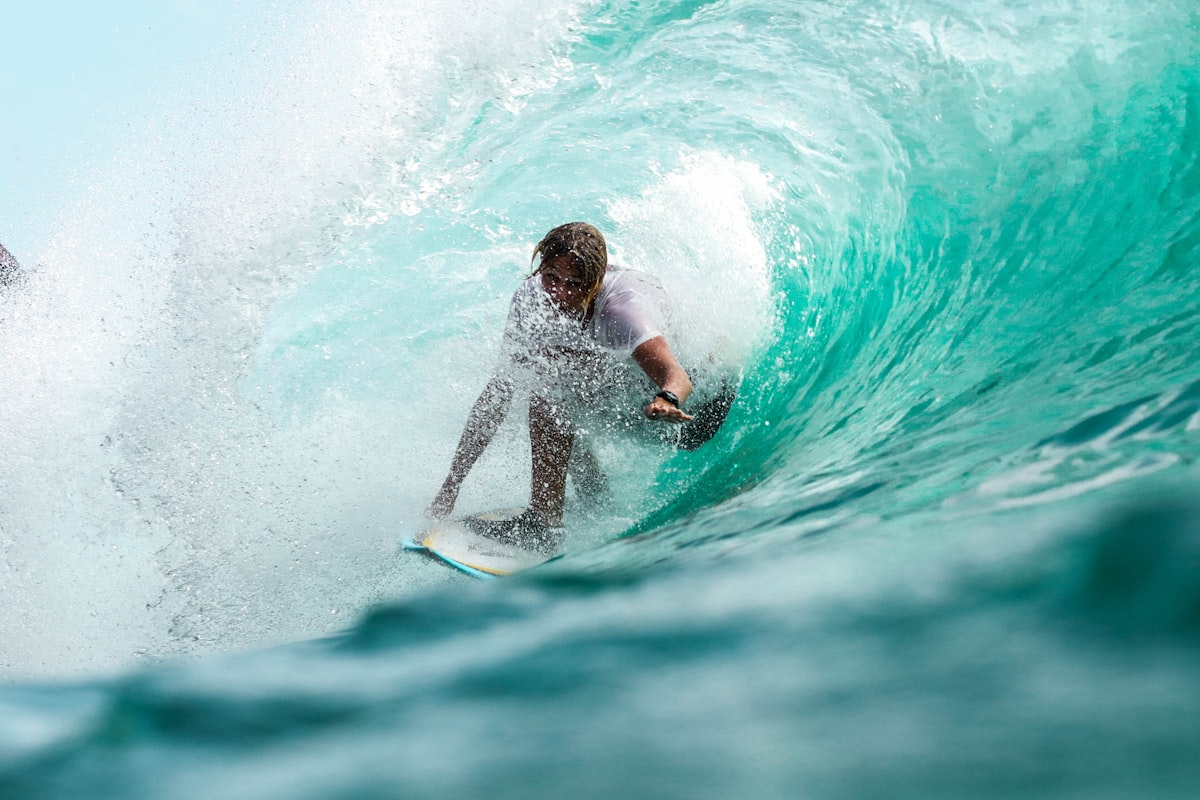
The Most Skilled Surfer Doesn't Always Catch the Most Waves
Wave count is distributed by positioning, not by talent.
Sit fifteen feet from the peak and none of the other skills matter.
What a Lineup Actually Is
A lineup is the area outside the breaking waves where surfers wait, position, and catch waves. The word is a holdover from when surfers literally lined up using two landmarks on shore to triangulate position — a practice that still works today.
Inside the lineup, there's almost always a sweet spot called the peak: the point at which the wave first begins to break. From there, the wave peels — left, right, or both directions — and the rideable face fans out from that origin. Whoever is closest to the peak, with priority, gets the wave. Everyone else gets the leftovers, or nothing at all. Reading a lineup is the practice of finding that peak, predicting where it will shift, and positioning yourself there before everyone else gets the same idea.
Read Before You Paddle Out
The biggest mistake at an unfamiliar break is paddling straight out and joining the crowd. You can't read a lineup from inside it — perspectives flatten, distances compress, and you lose the visual anchors that let you see patterns. Before you suit up, give yourself at least ten minutes on the beach with the following checklist.
Identify the Peak (or Peaks)
Watch fifteen to twenty waves in a row. Where does each wave first start to break? At consistent point breaks and reef breaks, the peak might land in the same spot wave after wave. At beach breaks, the peak can shift fifty feet between waves as sandbars and swell direction interact. Note whether the peak is stationary or wandering.
If you see consistent breaking in a single spot, that's your target. If the peak migrates, you'll need to be more reactive — surfing a beach break is a constant repositioning game, not a sit-and-wait one.
Watch Where the Locals Sit
The cluster of surfers in the water has already done the work of finding the peak. Their position is the most reliable indicator of where the action is. Look at the longest-haired, most relaxed-looking surfers in the pack — they're usually the regulars, and where they sit is where the waves are.
But don't just plant yourself on top of them. Note their position relative to a fixed point on the beach (a tree, a building, a cliff feature), then plan to sit nearby — not directly in their spot, especially if you're new to the break.
Count Set Frequency and Size
Sets are groups of larger waves separated by lulls. Time them. A typical pattern at a moderate-size break is three to seven waves per set, separated by lulls of one to three minutes. Bigger swells push the set frequency lower; choppy windswell pushes it higher.
Knowing the rhythm tells you when to commit to paddling out (during a lull) and how patient to be once you're sitting (longer lulls = longer waits, but bigger waves arriving when they do).
Read the Channel and Currents
Look for the band of darker, smoother water alongside the breaking waves. That's the channel — the deep-water pathway where currents push outward and waves don't break. Channels serve two purposes for lineup reading: they're your highway out, and they tell you which direction the current is flowing inside the lineup.
If the current pushes north, you'll need to constantly re-paddle south to hold your position. If it pushes you toward the impact zone, you'll get tired fast. Understanding the current upfront lets you choose a position that requires less correction.
Triangulation: The Old-School Skill Still Worth Learning
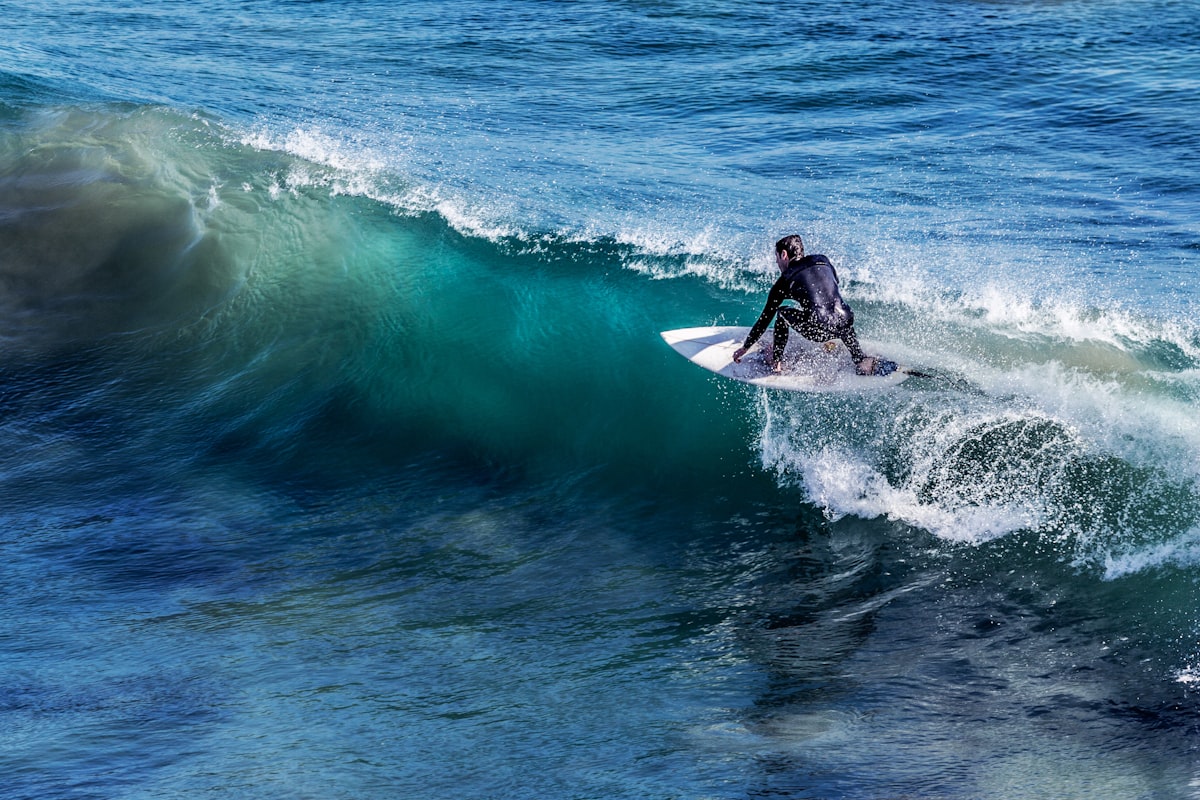
Before GPS and surf apps, surfers held their position using a technique called triangulation. The principle: pick two fixed landmarks on shore that are roughly perpendicular to each other from your point of view, and use them to lock in your spot.
How to Triangulate
- Watch a great wave break. Note where the surfer was sitting when they paddled into it.
- Pick a primary landmark. Look directly toward the beach. Find something unmistakable — a flagpole, a peaked roof, a distinctive tree, a power-line tower. Note that your position is "in line with" that landmark.
- Pick a perpendicular landmark. Turn ninety degrees and look down the beach. Find another fixed feature — a point of land, a building edge, the end of a parking lot. Note that your position is "in line with" the lineup of those two features.
- Hold both lines. When both landmarks line up correctly, you're in the spot. When one drifts, you've moved, and you can paddle back to re-align.
This sounds analog, and it is — but it works flawlessly. Triangulation is how surfers held position at remote reefs long before any electronic tools existed, and it remains the most reliable way to anchor yourself when current is pushing you around. Use phone landmarks at night surf spots, or natural features at remote breaks.
Why It Beats "Feel"
Most beginners try to hold position by feel — paddling when they notice they've drifted. Drift is gradual and continuous, though, and by the time you notice you're out of position, you've already missed the next set. Triangulation is preventive: you correct using two reference points before the drift accumulates into a lost wave.
Working on how to read a lineup? Partner with Neptune on iPhone and Apple Watch.
Get the free appReading a Wave Before It Breaks
Positioning is half the equation. The other half is wave selection — knowing which waves to paddle for and which to let pass. Three quick visual cues tell you whether an incoming wave is worth chasing:
- Definition of the lip. A wave with a clean, distinct lip is more likely to peel cleanly. A soft, indistinct top will usually crumble or close out.
- Angle of approach. A wave that bends gradually as it approaches is going to wrap and peel. A wave arriving parallel to the shore is going to close out — every section will break at once.
- The first break point. Look at the highest part of the wave. That apex is where it will pitch first. If the apex is in front of where you're sitting, you're in position. If it's down the line from you, the wave is for someone else.
The temptation in a crowd is to paddle for everything. Don't. Each missed wave costs energy, and missed waves often leave you out of position for the better wave behind. The strongest surfers are the most selective: they paddle hard for waves they've already mentally claimed and let mediocre waves roll past untouched. When in doubt, let it go.
How to Position in a Crowd Without Being a Jerk
Reading a lineup well isn't just a personal skill — it's a social one. Sit too aggressively and you'll get burned, snaked, or yelled at. Sit too passively and you'll get bypassed all session.
The Shoulder vs. the Peak
In any lineup, surfers cluster around the peak. The peak is where the priority surfers sit — usually the locals, the strongest paddlers, or those with the most patience. Sitting on the shoulder — slightly down the line from the peak — is where you catch the leftover waves that the peak surfers either miss, can't make, or don't want.
For visitors, beginners, and intermediates at unfamiliar breaks, the shoulder is your friend. You'll catch fewer "best" waves but more total waves, you'll avoid friction with locals, and you'll get a feel for the break's rhythm before competing for the peak.
Earning Your Place
After a session or two on the shoulder, you'll have a clearer read on the lineup hierarchy. Once you've identified the peak, the regulars, and the rhythm, you can slowly migrate inside (closer to the peak) on subsequent sessions. The unwritten rule of lineup advancement: don't take a wave that someone deeper than you is paddling for, give a few waves before you take one, and never paddle aggressively past a surfer who's been patiently waiting.
Use Eye Contact and Voice
Lineup positioning is a constant negotiation. A glance toward another surfer, a small nod, even a brief "you going?" — these communicate intent and prevent collisions or burns. The cleanest sessions are full of small, polite communications between strangers. Read the body language of the surfers around you and make your intentions visible.
For the full rules of right-of-way and lineup conduct, see our surf etiquette guide.
How Each Break Type Changes the Reading

Different break types reward different lineup reading strategies. Lumping all breaks together is the fastest way to misread a new spot.
Point Breaks
Point breaks have the most consistent peak. The wave wraps a fixed point of land and peels in one direction, often for hundreds of yards. Triangulation works exceptionally well here because the peak doesn't wander. The challenge is usually the crowd — because the peak is so predictable, everyone stacks up in the same spot and the priority pecking order is rigid. Sit slightly down the line at first, learn the rhythm, then slowly migrate up the point.
Reef Breaks
Reef breaks behave similarly to point breaks — fixed peak, predictable behavior — but the consequences of mis-positioning are higher. A bad paddle at a reef can put you on dry coral or stuck on the impact zone with nowhere to hide. Read these from the beach aggressively and don't paddle out until you understand the peak position and the safe escape routes.
Beach Breaks
Beach breaks are the moving target of the surf world. Sandbars shift between every tide, swell direction changes the peak shape, and the same beach can have three or four separate peaks on any given day. Don't anchor in one spot — stay mobile, paddle north or south based on the last few sets, and prefer the peak currently producing the cleanest waves, even if that means abandoning a spot you've been sitting at for ten minutes.
Slab Breaks
The peak at a slab break is usually razor-sharp — narrow takeoff window, steep face, and waves often close out beyond that exact spot. Reading a slab is more about timing than position. You can be in the right zone and still miss waves because you didn't commit hard enough to the late drop. These waves reward discipline and patience over coverage.
Compress the Learning Curve
The fastest way to improve at lineup reading is to treat it as a deliberate skill, not a passive habit. After each session at an unfamiliar break, jot down where you sat versus where the best surfers sat, the wind and swell, where the peak appeared, and the rough current direction. After three or four sessions at a single break, you'll have a personal cheat sheet that captures details no surf app can give you.
Video helps too. If you film your sessions or grab a clip from a surf cam, watch how you positioned yourself relative to the wave. Most beginners are shocked to see how often they sat ten or more feet outside the peak. And when possible, sit near — not on top of — a local who clearly knows the spot. Watch their landmarks, their micro-adjustments between sets, and the moments they paddle to reposition.
Mistakes That Will Cost You Waves

Even good surfers fall into predictable lineup mistakes. Avoiding these is often the difference between a frustrating session and a great one.
Sitting Too Far Out
The single most common error. New surfers, intimidated by the break's size, sit ten or twenty feet outside the actual peak. From there, every wave starts breaking before they can paddle into it. Push in — if you're occasionally getting caught by a set, you're probably in the right zone.
Sitting in the Channel
Waves don't break in channels — that's why they exist. New surfers often drift into the channel because it feels safer, but you'll watch the entire session from there. Use the channel for paddling out, then exit it once you reach the lineup.
Refusing to Move Between Sets
The peak migrates. Holding rigid position because "that's where I caught one earlier" leaves you behind when the swell direction shifts or the sandbar changes. Every two or three sets, ask yourself: is this still where the best waves are breaking?
Burning Energy on Bad Waves
Every wave you paddle for and miss costs fifteen to twenty seconds of recovery and pulls you out of position. Two well-chosen waves are worth more than five marginal ones.
A Lineup Reading Routine for Any New Break
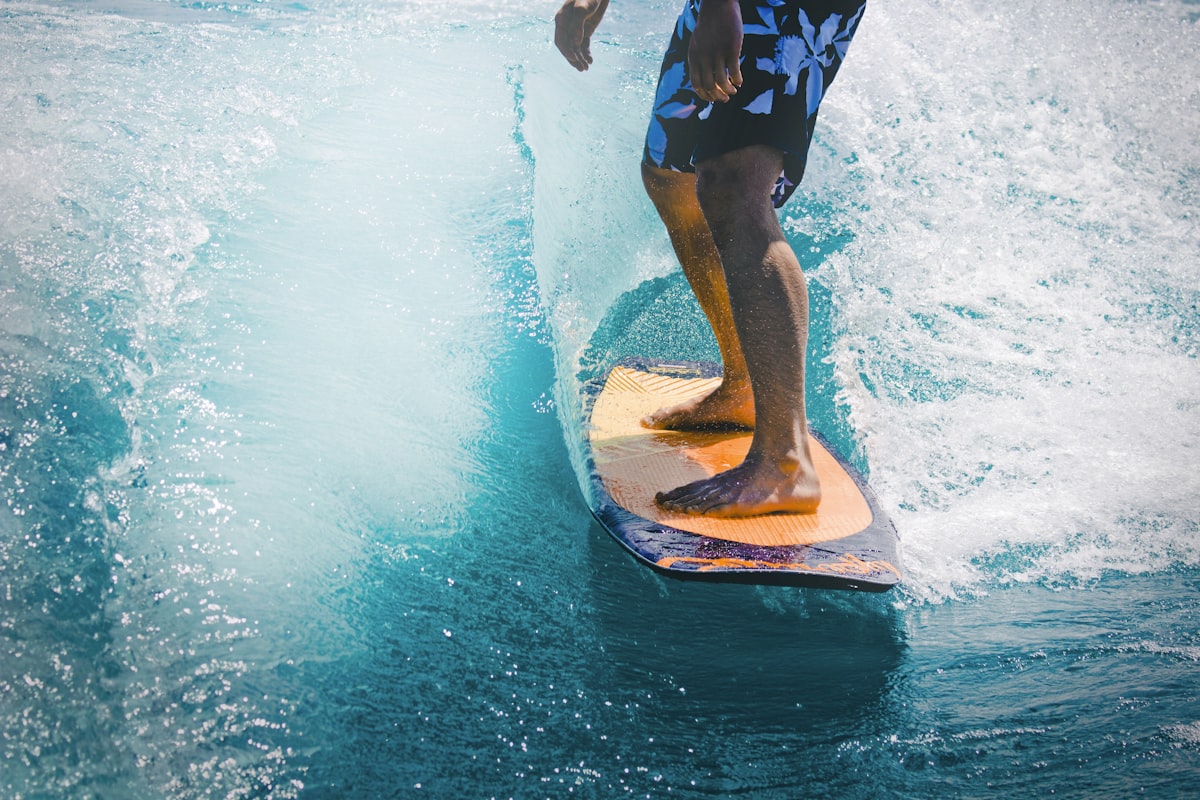
On the beach for ten minutes, watch fifteen to twenty waves, note where they break, identify the cluster of surfers, time the sets, and find the channel. In the water for the first twenty minutes, sit slightly outside the cluster on the shoulder side and don't paddle for anything — just confirm the peak is where you predicted and lock in two landmarks for triangulation. During the session, re-check your position every two or three sets and be willing to paddle thirty feet north or south if the peak shifts.
After enough sessions, this becomes automatic. You'll arrive at an unknown break, watch for five minutes, paddle directly to the sweet spot, and start catching waves while everyone else is still figuring it out. Unlike many surf skills, lineup reading is something you can practice from the sand, with your eyes alone.
The wave count of a great session isn't an accident. It's the visible result of an invisible skill: reading the ocean and the people on it, faster and more clearly than anyone else in the water.
Read it. Then take it to the water.