How to Kick Out of a Wave

Neptune
May 5, 2026
The Most Ignored Skill in Surfing
Clips cut before the wave ends. In real surfing, that ending is a large part of the session.
A clean kick-out gets you back to the lineup. A sloppy one costs waves and your back.
The kick-out — the deliberate, controlled exit off the back of a wave before it closes out — is the quietest, most underrated skill in surfing. Beginners don't have one. Intermediates have a clumsy version. Advanced surfers have several, chosen on the fly based on the section in front of them. By the time you're consistently choosing how to end your wave, you've crossed an invisible line in your surfing.
This guide breaks the kick-out down into the four versions that cover almost every wave you'll ride, the timing cues that tell you which one to use, and the mistakes that cost you waves without you realizing it.
Why the Kick-Out Matters More Than You Think
Most surfers measure their session by counting waves. A better metric is the average time between waves — your wave-to-wave interval. The longer the interval, the worse the session feels, regardless of how many waves you actually caught.
A clean kick-out cuts that interval dramatically. Here's the math, roughly. If you ride a wave to its closeout and get washed ashore, you might spend three to six minutes paddling back through whitewater to your peak. If you exit cleanly off the back into the channel, you might be repositioned and catching another set wave in ninety seconds. Over a two-hour session, that's the difference between catching twelve waves and catching twenty-five.
The other reason it matters is your body. Every closeout you ride into is a controlled crash. Your knees compress, your back absorbs the impact, your shoulders get yanked when the leash snaps tight. Multiply that by every session for ten years and you've explained why a lot of intermediate surfers in their thirties have lower back problems. Surfers who consistently kick out simply absorb less wear.
Finally, kick-outs are an etiquette signal. A surfer who finishes their wave cleanly, paddles around the lineup rather than through it, and reappears at the peak ready for the next set is a surfer locals notice and respect. The opposite — washing into the impact zone, scrambling back through paddlers, getting in everyone's way — marks you immediately, no matter how good your bottom turn was.
What "Kick-Out" Actually Means
The terminology gets sloppy. Strictly speaking, a kick-out is a deliberate exit off the back of the wave, with intent and direction. It's distinct from:
- Falling off — losing balance and going down with the wave.
- Pulling out — a generic term for ending a wave that includes kick-outs but also lazy bail-outs.
- Cutting back — turning back toward the curl, which is mid-wave technique, not an exit.
- Closing out the wave — riding into the foam pile when the wave folds, which is what most beginners do by default.
A real kick-out has three properties: it's chosen, it's controlled, and it ends with you in a position to immediately do something useful — usually paddle for the next set or duck-dive an oncoming wave.
The Four Kick-Outs Every Surfer Should Own
Different sections demand different exits. The sooner you stop trying to do one universal kick-out, the sooner your wave count goes up.
1. The Project — Your Default Off the Shoulder
This is the kick-out you'll use most often. The wave has a clean shoulder, you've ridden it as long as it's offering, and the section ahead is fading or about to back off. You want to launch off the back, not drift over.
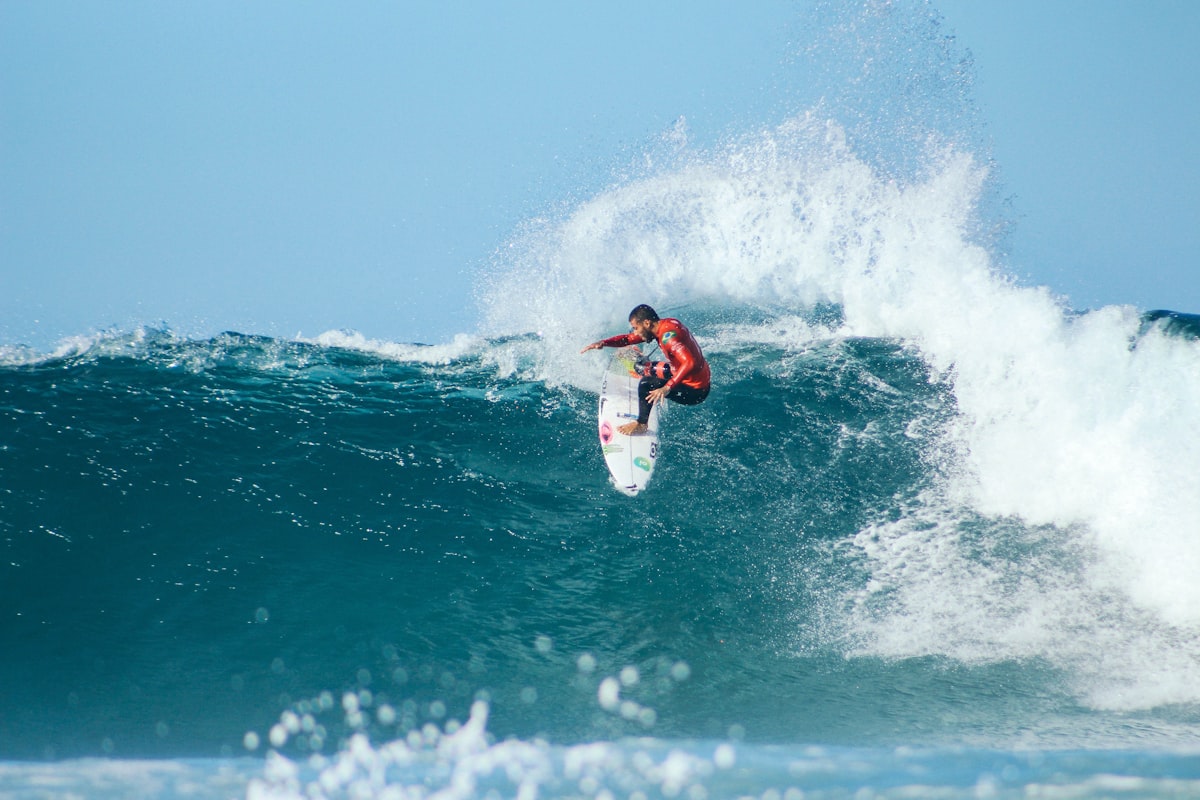
The mechanics: as you finish your last maneuver — say a snap or a cutback — keep your weight forward over the front foot. Carve up the face into the lip with momentum, ideally hitting the lip just as it's pitching. As your board reaches the top, unweight and let your fins release. Your board will project off the back of the wave, you'll be airborne for a brief moment, and you'll land on the back of the swell facing toward the lineup.
The single most common mistake is bleeding off speed before the exit. If you decelerate to "set up" the kick-out, you don't have enough push to get over the back and you instead get sucked back over the falls. The correct mental model is: the kick-out is the last maneuver, not a separate move after the maneuvers end. Carve hard, project, release.
When you nail this one, you land facing the next wave with paddle momentum already in motion. You're back at the peak before the surfers who fell off your wave have even reset.
2. The Pull-Off — When the Section Closes Out Ahead
Sometimes there's no shoulder to project off. The wave is going to close out in three seconds. You're not going to make the section. The pull-off is your bail.
The mechanics: ride high on the wave face — almost to the lip — with your weight back. Drag your back foot or back hand into the face if you need to slow yourself, then simply step off the back of the board over the lip. As the wave folds in front of you, you'll find yourself behind the closeout, in the flat water, with the broken wave ahead of you instead of on top of you.
The key is positioning yourself high before the closeout, not at the bottom. Most beginners try to pull off from the trough and end up getting smashed because the lip lands directly on them. From the lip, you barely have to move — gravity pulls you back over the shoulder while the wave folds forward.
A pull-off lacks the airborne style of a project, but it's the safer option in seventy percent of real-world situations. Recognize that early enough and you'll never get pile-driven by a closeout again.
3. The Knee-Drop — For Closeout Sections in Critical Spots
When the wave is hollow, the section is closing out, and pulling off the back isn't an option because you're already too deep, you need a different exit. Drop to your knees and let the wave pass over you.
This sounds inelegant, and it is. But it works. As the wave throws over you, sink your weight low, plant both knees on your board, grab the rails, and let the lip pass overhead. You'll get pushed down and slightly forward as the wave breaks. When the foam clears, you're under the wave, your board is still under you, and you can pop back up and paddle out.
This is the kick-out for shallow reef setups, beach-break tubes that close suddenly, and situations where bailing your board would put it in another surfer's path. It's also the move that prevents the most catastrophic wipeouts — the ones where you go over with the lip and your board comes with you.
It's worth practicing this on small days when the consequences are low. Drop to your knees on the shoulder, grab your rails, and ride out the foam. Once you've done it ten times in mellow conditions, the muscle memory is there for when you genuinely need it.
4. The Lay-Back Exit — The Style Move
Working on kick out? Partner with Neptune on iPhone and Apple Watch.
Get the free appThis is the show pony of kick-outs, and it's worth learning because it's actually highly functional once you've got it.
The mechanics: as you reach the end of your wave, instead of carving up to project off the back, you lean back hard, let your back hand and shoulder drag into the face, and let the wave essentially pass underneath you. Your board pivots, your weight transfers backward, and you settle into the trailing whitewater while the wave moves on.
This works best on small, mushy waves where projecting off the back isn't going to happen anyway because there's no lip energy to launch off. It also works on long, fading shoulders where you want to let the wave die under you while you stay on the board. You finish the wave already in the trim line for the paddle out.
The lay-back exit isn't the highest-priority kick-out to learn, but on small-wave days it's often the most appropriate one — and it looks unreasonably good on video.
Reading the Section: How to Choose
The four kick-outs aren't interchangeable. Picking the wrong one is how you end up eating your board or getting tumbled. The good news is that the section in front of you tells you which exit to use, if you know what to look for.
The 30-Foot Rule
About thirty feet ahead of you, the wave is already deciding what it's going to do. Beginners look at the water directly in front of their nose; advanced surfers look thirty feet down the line. That's where the kick-out decision actually happens.
- Tapering shoulder, lip not pitching aggressively? Project off the back.
- Shoulder slamming closed, lip throwing forward? Pull off the back high.
- Wall going hollow, you're deep, no clean shoulder? Knee-drop.
- Wave running long and weak, no real ending? Lay-back exit.
You make this read in the half-second after you finish your last maneuver. Over time it becomes automatic — you don't consciously think "I see X so I'll do Y," you just do the right exit.
The Tell-Tale Cues
Specific things to look for:
- The lip's curl direction. A lip pitching forward and outward signals a section closing out. A lip feathering up and rolling rather than throwing tells you the section will fade.
- The water color in the trough. Darker, deeper water in front means the wave will hold its shape. Whitewater bleeding back into the trough means the section is breaking down already.
- The wind on the face. Offshore wind holds shoulders open longer, giving you time to project. Onshore wind collapses sections faster, so default to pulling off earlier than you think you need to.
- Other surfers paddling on the shoulder. If three people are scrambling out of the way, the wave is reaching them — meaning your exit is closer than you realized. Get out.
The Paddle-Back Strategy: Don't Waste the Kick-Out
A clean kick-out is only useful if you do something useful afterward. Most surfers waste their exits by floating, sitting up, looking around for ten seconds, and then starting to paddle. By then, the next set is on top of them and they're eating it.
The right pattern: as your kick-out completes and you land on the back of the wave, your hands are already in the water. You paddle immediately, not after a beat. Your line back to the peak is set before the kick-out happens, which means you don't waste seconds figuring out where you are.
If you've kicked out into the channel — the deeper water flanking the break, where waves don't break — your paddle back is essentially free. Stay in the channel until you reach the peak, then paddle laterally into position. If you've kicked out into the impact zone, that's a positioning mistake from earlier in the wave, and you'll spend three minutes paddling out instead of one. Over a session, that's why some surfers are always in the right place and others are always playing catch-up.
Common Mistakes That Cost You Waves
Here are the patterns that show up most in surfers who can't figure out why their wave count is low.
Riding Every Wave Until It Closes Out
The single biggest leak. There's a deeply ingrained beginner instinct that says "the longer I ride, the better surfer I am." Wrong. Riding a wave four seconds past its useful section costs you a kick-out, costs you a paddle-back, and turns a clean wave into a wipeout. If the wave is fading or about to fold, exit. The discipline of ending a wave early is one of the highest-leverage things you can learn.
Slowing Down to Set Up the Kick-Out
You can't project off a wave you've already stalled. If you're riding fast and decide to exit, commit hard — don't decelerate first. The carve up to the lip generates the momentum that gets you over the back. If you bleed off speed, you bleed off the exit.
Bailing the Board
Pushing your board away as you exit is occasionally the right call (in a true emergency), but it's a habit that becomes a problem. Bailed boards become projectiles. If there's anyone within twenty feet of you, your bailed board can hit them, and the leash recoil can hit you. Practice exits where the board stays under you. Save the bail for the rare situations where it's genuinely needed.
Kicking Out Into the Lineup
It's possible to kick out cleanly and land directly on top of another surfer's wave. This is the kind of thing that gets you yelled at, and rightly so. Look down the line during your wave, not just at the section in front of you. Kick out into open water, not into the path of the next set rider.
Forgetting to Look Behind
Right as you exit, glance over your shoulder. There may be another wave breaking right behind the one you just rode. If there is, you don't want to land on the back of yours and immediately get crushed by the next. Knowing that next wave is there lets you time your kick-out — sometimes you finish the wave a beat earlier specifically to get under the following one with a duck dive.
Drills to Build This Skill
You can't really practice kick-outs on land, but you can structure your sessions to develop them faster.
The Early-Exit Session
For one session, set yourself a rule: exit every wave you ride at least two full seconds before you would normally end it. You'll feel like you're cutting your rides short. You'll also discover that your wave count goes up — sometimes dramatically — because you're back in position for the next set instead of getting churned in foam.
After a few sessions of this, you'll recalibrate. The "natural" ending of a wave for you will move earlier, and you'll spend less of your time in the impact zone.
The One-Style-Per-Session Drill
Pick one of the four kick-outs and use only that one for an entire session. Project off the back every time, even when it's not ideal. Pull off the back every time. Knee-drop every time. The point isn't that the chosen exit is always correct — it's that doing it twenty times in two hours builds muscle memory faster than doing it occasionally over the course of a year.
Cycle through all four over four sessions. By the end, you'll have a working version of each, and your subconscious will start choosing the right one in real-time.
The "Watch the Pros End" Drill
This is a video study drill, not a water drill. Pull up clips of surfers you admire — but instead of watching the maneuvers, watch only the endings. Note how often they project, how often they pull off, how rarely they ride into closeouts, and how their hands and head move during the exit. You'll see the same patterns repeating. Mimicking those patterns in the water gets you to a clean kick-out faster than figuring it out from scratch.
When the Kick-Out Becomes the Surfing
The deepest version of this skill flips the script entirely. Once your kick-outs are clean, you start choosing waves partly based on how they're going to end. You see a wave with a fading shoulder forty yards down — beautiful, kick-out into the channel, fast paddle back. You see a wave that's going to closeout at the inside — you might still take it, but you set up your final section to give yourself a clean exit before that happens.
This is what people mean when they talk about surfers who "see the whole wave." It isn't mystical. It's that they've made the ending of the wave part of the wave. Every section they ride is in service of the section after it, including the final section, which is the exit.
The visible part of surfing is what happens between the takeoff and the kick-out. The invisible part — the part that decides everything — is how those endings shape your time in the water. You catch more waves. You stay fresher. You position better. You earn respect in the lineup. None of it shows up in a highlight reel, and all of it shows up in your actual sessions.
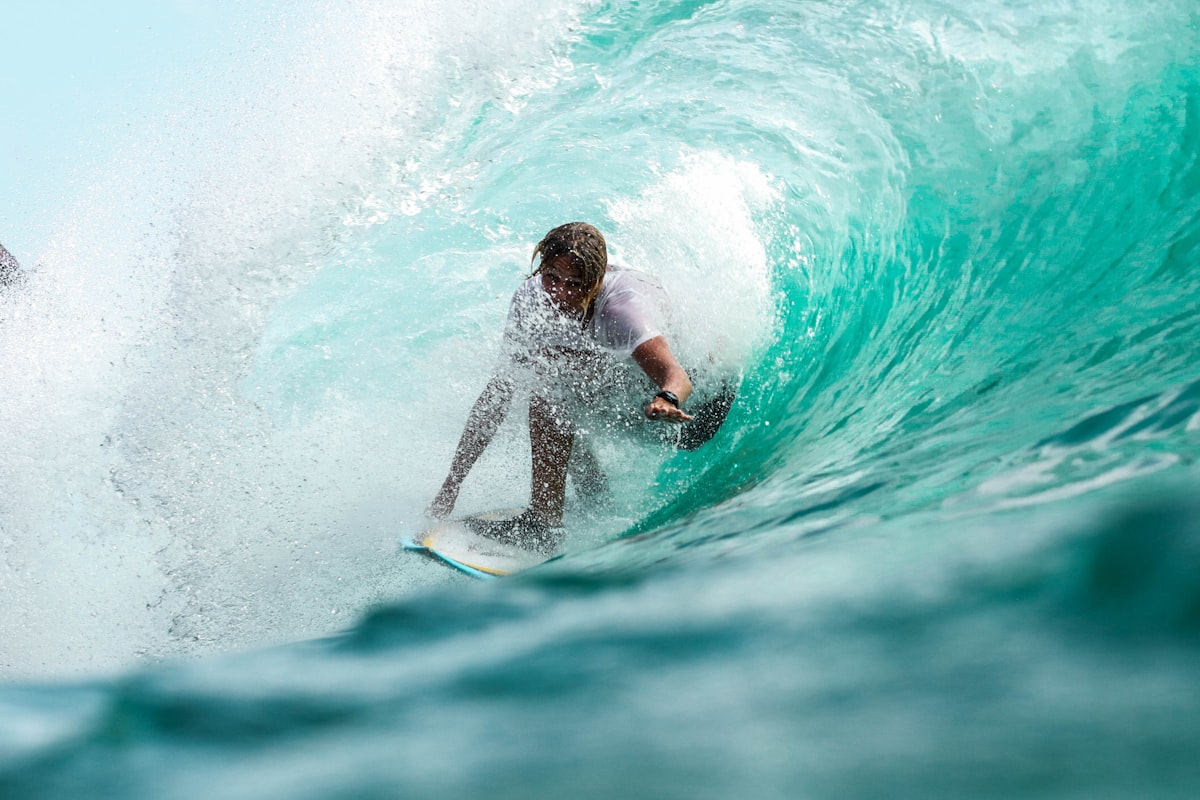
Start Today, on the Next Wave
You don't need a new board, a swell forecast, or a session at a specific break to start working on this. The next wave you catch, regardless of size or shape, has an ending. Pay attention to it. Decide which of the four kick-outs fits it. Execute. Repeat.
Within ten sessions you'll notice it. Within thirty, you'll see the wave count change. Within a year of consistent attention to your endings, your surfing will have moved up a level — not because you learned a new turn, but because you stopped wasting the back half of every ride.
The takeoff makes the wave. The maneuvers make the highlight. The kick-out makes the surfer.
Read it. Then take it to the water.