Twin Fin Surfboards

Neptune
May 31, 2026
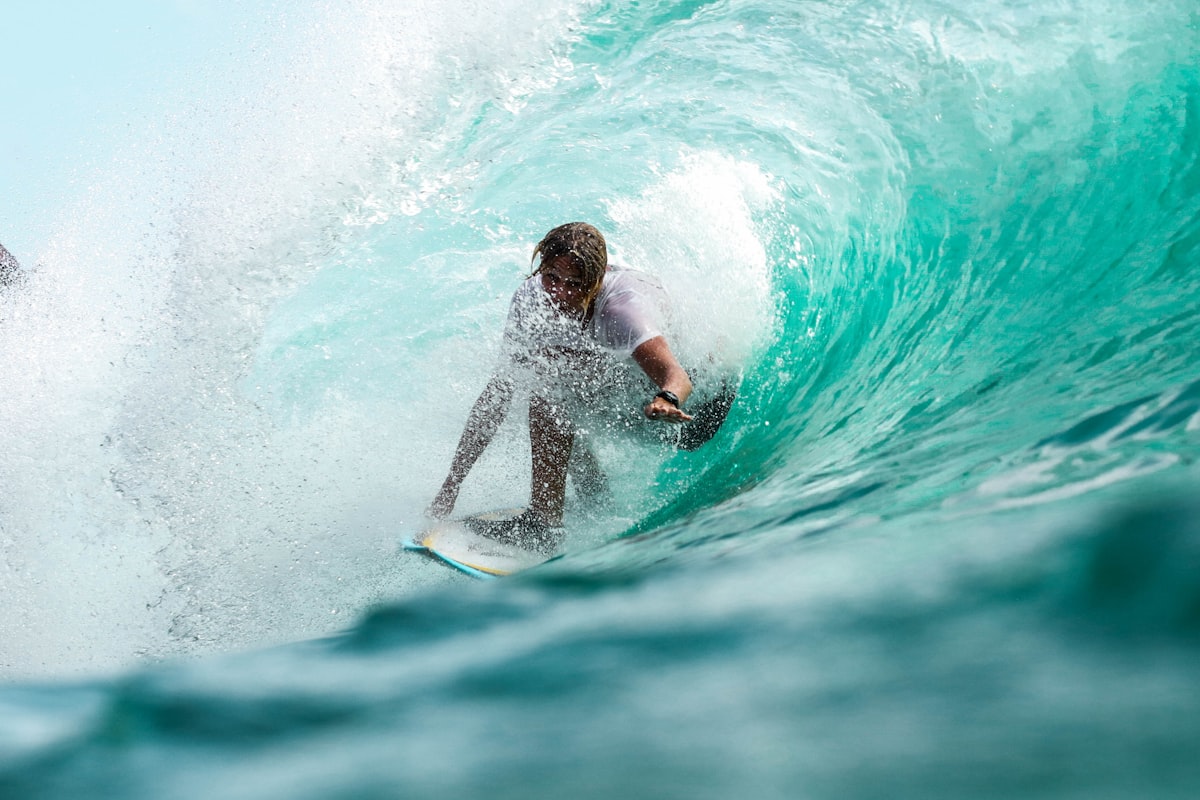
Why Twin Fins Are Having a Moment
The two-fin design performance surfing left for dead in the late 1980s is back in the racks.
Modern twins are refined — fast in dead sections, loose in the pocket, and usable in a wider range of conditions.
This guide is about what twin fins actually do under your feet, why they feel different from a thruster, who they suit, and how to ride one without sliding out on every turn. By the end you'll know whether the twin fin renaissance is for you, and if it is, you'll know exactly which kind to start with.
A Short History: How We Got Here
The twin fin lineage starts in San Diego in the late 1960s with Steve Lis and the original kneeboard fish — a compact, swallow-tailed craft with two keel fins set wide and forward. Mark Richards then refined the outline with upright fins and won four consecutive world titles between 1979 and 1982 riding a twin in waves of every size.
Then Simon Anderson's thruster arrived in 1981. Three fins, more drive, more vertical control. By the mid-1980s the twin had been pushed out of competitive surfing, and for thirty years it survived as a retro curiosity ridden by longboard hobbyists and a small cult of fish enthusiasts.
The current revival traces to shapers like Joel Tudor, Album Surfboards, and Christenson in the 2010s, accelerated when Mick Fanning made a high-profile shift to twin fin DT designs in 2019. As surfers grew tired of the same vertical thruster surfing in every clip, the twin offered something different: speed without effort, lines that flow rather than fight the wave, and the playful unpredictability that made surfing fun in the first place.
What a Twin Fin Actually Does Differently
The thruster's three-fin setup is engineered for one thing: rail-to-rail control during hard, vertical turns. The center fin acts as an anchor that lets you commit to a hard cutback or off-the-lip without sliding out. The trade-off is drag. A center fin in the middle of the tail is always sitting in the cleanest water under your board, and it's always slowing you down.
Remove that fin and three things happen.
You go faster. Less wetted fin area means less drag. A twin glides through dead sections at a noticeably higher base velocity and hunts for the open face on its own.
You go looser. Without the center fin's anchor, the tail releases more easily during turns. Snap turns become slide turns. Cutbacks come around faster and feel like they're flowing rather than carving.
You lose vertical authority. A twin won't hold a line in a steep, late-section vertical hit the way a thruster will. You can spin out. The twin teaches you to draw rounder lines and surf the open face rather than constantly redirecting off the lip.
This last point is the source of every twin fin convert's testimony: the board changed how I read waves. Instead of looking for a single section to hit, you start to see the whole face and connect three or four flowing maneuvers across it. That's the unlock.
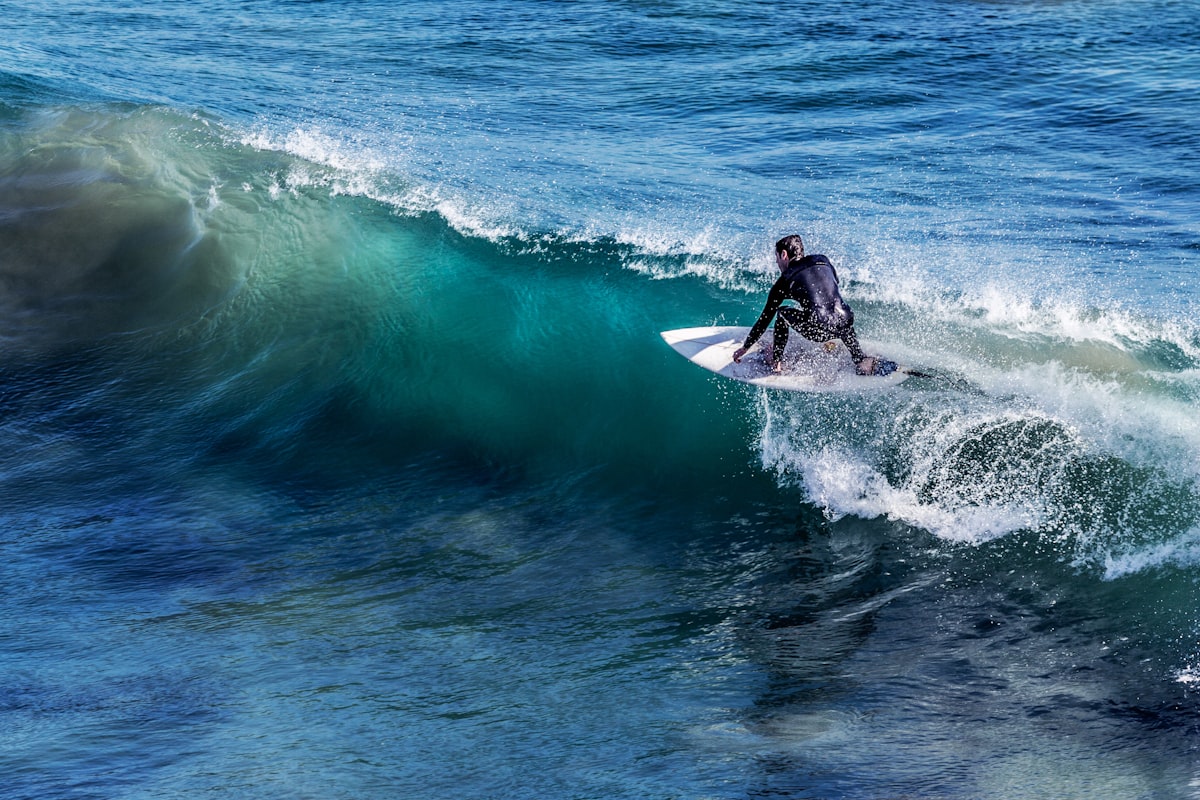
The Three Main Twin Fin Styles
Not every twin fin feels the same. The category covers three distinct design families, each with a different ride feel and a different ideal user.
The Keel Fish
The original San Diego design. Wide outline, low rocker, deep swallow tail, and two large keel fins set wide and forward. The fins themselves are big, swept-back, and trapezoidal, with a long base that creates massive drive down the line.
A keel fish surfs fast and flat. The board wants to be on rail and going forward. Hard vertical turns are not its strength — you'll spin out trying to do them. What it excels at is generating impossible speed in tiny, mushy, fat waves and connecting long racy lines from peak to inside. If your home break is waist-high and gutless, the keel fish is the most fun-per-wave board you can own.
Common dimensions for an intermediate-to-advanced surfer: 5'4" to 5'8", with significantly more width and thickness than your shortboard. A 170-pound surfer riding a 5'10" performance shortboard might ride a 5'6" keel fish.
The Modern Performance Twin
This is the Mark Richards lineage updated for 2026. Narrower outline than a fish, more rocker, a more sophisticated foil, and upright fins instead of swept keels. Often built with the same construction as a high-performance shortboard.
A performance twin surfs fast and loose. You give up some of the keel's down-the-line speed, but you gain enormously more responsiveness in turns. It can still surf vertically — you just need to commit harder and trust the tail. Many modern performance twins also incorporate a small trailer fin (the "twin plus" or "DT" — Dean Thomas — setup) that gives back some of the thruster's vertical hold without killing the looseness.
Common dimensions: ride one within an inch or two of your shortboard length. The width is comparable to a modern shortboard, maybe a quarter-inch wider.
The "Twin Plus One" Adjacent
Not technically a pure twin, but worth knowing. Some shapers blend twin fin DNA with a small center trailer fin to give back some hold without killing the looseness. If you've never ridden a twin and your home break is steep or hollow, this is the safest entry point.
Who Should Ride a Twin Fin
Twin fins are not magic and they are not for every surfer at every level. Here's the honest breakdown.
Good candidates
Working on twin fin? Partner with Neptune on iPhone and Apple Watch.
Get the free appIntermediate surfers stuck in a thruster rut. If you're catching waves and surfing them mostly through forward motion plus a couple of pumps, a twin will make your average session more fun than another year of grinding on a high-performance shortboard. You'll catch more waves, you'll be faster on the ones you catch, and you'll start to feel speed and flow that a too-narrow thruster has been actively hiding from you.
Surfers whose home break is small, mushy, or inconsistent. A keel fish in 2-foot beachbreak slop is more fun than a thruster in 3-foot point break perfection. The twin's ability to make speed where there isn't any is precisely what crap waves need.
Longboarders looking for a shortboard step-down. If you ride a longboard but want something faster and more performance-oriented in slightly bigger surf, a fish or modern twin is far more forgiving and rewarding than jumping straight to a thruster.
Surfers wanting to expand how they read waves. The twin will reward flowing lines and punish constant redirection. If your surfing feels mechanical or section-by-section, this is the board that retrains it.
Poor candidates
True beginners. A twin fin is not a beginner board. The looseness that intermediates love will feel like instability to someone still learning to pop up. Start on a soft top or mini-mal.
Surfers focused on competition. If you're scoring waves for judges, you want the vertical hold of a thruster. Almost every competitive heat on the world tour is surfed on a three-fin or three-plus-one for a reason.
Surfers who only ride steep, hollow waves. Big day at Pipeline or a reef where every wave is vertical? The twin will spin out. Bring the thruster.
How to Pick Your First Twin Fin
The number-one mistake when buying your first twin is treating it like a thruster. The dimensions, the fin choice, and the conditions you'll use it in are all different. Here's a practical framework.
Step 1: Decide what waves you want it for
Be specific. "Knee-to-shoulder beachbreak on weak days" leads to a different board than "head-high points and reefs on glassy mornings." If your honest answer is the first one, you want a keel fish. If it's the second, you want a performance twin.
Step 2: Size up from your shortboard, not down
Twin fins planeing surface and width let you ride significantly shorter and thicker than your performance shortboard. A common starting point:
- Keel fish: 4 to 6 inches shorter than your shortboard, with 2.5 to 3.5 liters more volume.
- Performance twin: 0 to 2 inches shorter than your shortboard, with 1 to 2 liters more volume.
If you ride a 6'0" / 28-liter shortboard, a 5'8" / 31-liter keel fish or a 5'10" / 30-liter performance twin is roughly equivalent in catching power.
Step 3: Pick the right fin shape
This matters more on a twin than any other board because there are only two fins doing all the work. The two main shapes:
Keel fins — large, swept, trapezoidal, with a long base. Maximize drive and down-the-line speed. Pair with fish-style boards. Brands like Captain Fin, Futures Keel, FCS Mark Richards Keel.
Upright twins — shorter base, taller and more vertical. Maximize pivot and looseness. Pair with performance-style twins. Examples: Futures Machado Keel (shorter, more upright variant), FCS II Mark Richards Twin (upright performance twin).
Fin material matters too. Fiberglass-honeycomb fins ride stiffer and have more drive than fully soft fins; you generally want some stiffness in a twin so the board has something to push against during turns.
Step 4: Buy a known shape
The twin space is full of small shapers making great boards, but also full of garage hacks selling outlines that don't work. For a first twin, stick with established designs: a CI Twin Pin, Album Insanity, Christenson Tractor, Hayden Shapes Misc, Lost RNF, or Pyzel Astro Twin. These are refined production shapes you can resell easily if it's not for you.
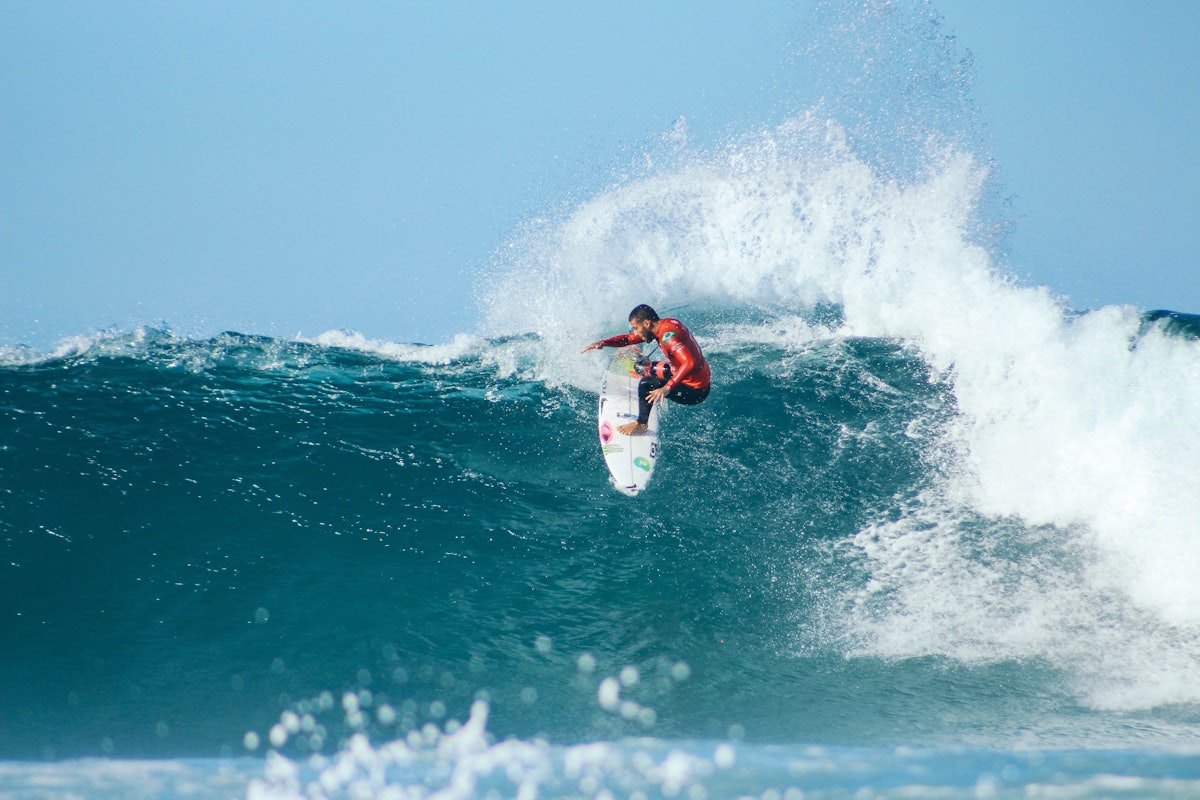
How to Actually Ride a Twin Fin
You can't surf a twin the way you surf a thruster and expect good results. The adjustments are real but learnable.
Drive from the front foot
On a thruster you live on your back foot — pivoting, pumping, snapping. On a twin your front foot becomes the throttle. Press into it through flat sections and the board accelerates dramatically. Lean too far back and the tail releases and you spin out. A useful drill: on your first three pumps deliberately weight the front foot more than feels natural.
Draw rounder, longer lines
Stop thinking section-by-section. On a twin, your bottom turn should set you up for two or three connected maneuvers, not just the next hit. Aim for arcs, not angles — cursive, not print.
Commit on the cutback
The twin's cutback is the move everyone falls in love with. Because the tail releases easily and the board carries speed through the turn, a twin cutback comes around wider and faster than a thruster's. Commit your hips and shoulders all the way around. A timid twin cutback is the easiest way to spin out; a committed one is one of the best feelings in surfing.
Don't pump like a thruster
A thruster pump is a hard back-foot pivot. A twin pump is a body weight shift — front foot, then back — that lets the board's natural glide do the work. If you're pumping a twin as hard as a thruster, you're killing the speed the design generates for you.

Common Twin Fin Mistakes (And How to Fix Them)
Spinning out on turns. Almost always one of two things: you're standing too far back, or you're trying to surf the board vertically. Move your stance forward and aim your turns through the wave face rather than at the lip. If it's still spinning out, your fins may be too small or too soft.
Feels squirrely paddling out. The wider outline and lower rocker make the board faster on flat water but more wobbly side-to-side. Center your weight, paddle deliberately, and resist the urge to wiggle. Most surfers adapt within two sessions.
Getting beaten by the section every wave. You're surfing it like a thruster — looking at the lip in front of you and trying to hit it. Train your eyes to look two sections ahead and draw a line that gets there.
Feels too loose. Try a slightly larger fin, a fin with more sweep, or a board with a small trailer. But before changing anything, ride it ten more times. Most "too loose" complaints disappear once your weight distribution adapts.
Where the Twin Fin Fits in a Quiver
If you're building a quiver, the twin earns its slot as the small-to-medium-wave specialist:
- Longboard or mid-length for ankle-to-knee days.
- Twin fin for waist-to-shoulder mush and fat point days.
- Performance thruster for shoulder-to-overhead, hollower waves.
- Step-up for overhead and bigger.
For most surfers in most home conditions, the twin and the longboard will see far more water time than the thruster. That's the secret most twin riders won't admit: once you have one, you stop wanting to surf the thruster on average days. The thruster comes out only when the waves are good enough to demand it.
A Final Word
Twin fins make average surfers look better. The design enforces flowing lines, rounded turns, and a relaxed front-foot stance, and even mid-level surfers end up with footage that looks intentional. That's not a reason to buy one on its own, but it points at the broader truth of the revival: it's about the feeling of speed, glide, and connection to the wave.
If you've been stuck in a rut, if your average session feels mechanical, or if you're curious why your friend with the funny-looking board is grinning more than you are — that's your sign. Go demo one. Ride it for a month. There's a real chance it changes the way you surf for the rest of your life.
Read it. Then take it to the water.