How to Build a Surfboard Quiver

Neptune
May 7, 2026
Why You Need a Quiver, Not Just a Surfboard
One board is not enough. The everyday shortboard sinks on two-foot glass. The fun-shape is an anchor on overhead swell.
Build the mix on purpose, or you just accumulate.
Three years later, they own four boards and ride one of them.
This guide is about doing the opposite. We'll walk through how to think about a quiver as a system, the categories every quiver should cover, how many boards you actually need at each skill level, and how to avoid the most common — and most expensive — quiver-building mistakes.
What a Quiver Actually Is
A quiver is the set of surfboards you own that, together, let you surf well across the full range of waves you actually encounter. The keyword is together. A good quiver isn't five favorite boards. It's a coordinated set where each board has a job, and the jobs don't overlap too much.
Think of it like a golf bag. You don't carry fourteen drivers. You carry a tool for the tee, a tool for the fairway, a tool for the rough, and a tool for the green. Each one does something the others can't. A quiver works the same way.
The shape of your quiver is determined by three things, and only three things:
- The waves you actually surf — not the waves you wish you surfed, or the waves you surf twice a year on trips
- Your current skill level — what you can ride well, not what you aspire to ride
- What you're trying to develop — the specific technical or stylistic goals you're working on right now
Get those three honest, and the quiver almost designs itself.
The Five Categories Every Quiver Considers
Before talking about how many boards you need, it helps to know the categories. Most quivers draw from some combination of these five.
1. The Everyday Driver
This is the board you ride 60–80% of the time in average conditions at your home break. For most intermediate-to-advanced surfers in everyday surf, that's a performance shortboard or a hybrid in the 5'10"–6'4" range, with enough volume to paddle comfortably but enough rocker and rail to perform on the wave.
The everyday driver is the most personal board in your quiver. It should fit your surfing like a worn-in pair of shoes. If you're going to put real money anywhere, put it here.
2. The Small-Wave Board (Groveler or Fish)
Small, weak waves don't reward performance shortboards. They reward planing area, low rocker, and a fin setup that drives through soft sections. This is the territory of the fish, the groveler, the egg, and the modern hybrid.
A small-wave board lets you surf the 75% of days that aren't actually pumping. For most coastlines — including most of California, Florida, the East Coast, and northern Europe — that's the difference between a season of frustration and a season of waves.
3. The Longboard or Mid-Length
A longboard or mid-length opens up an entirely different style of surfing: trimming, cross-stepping, nose-riding, and gliding through sections that a shortboard can't connect. It's also the most forgiving option on the smallest, slowest, mushiest days.
Longboards aren't just a beginner board you graduate from. Many of the world's best surfers ride them weekly because they teach a different relationship with the wave — about flow rather than punctuation.
4. The Step-Up
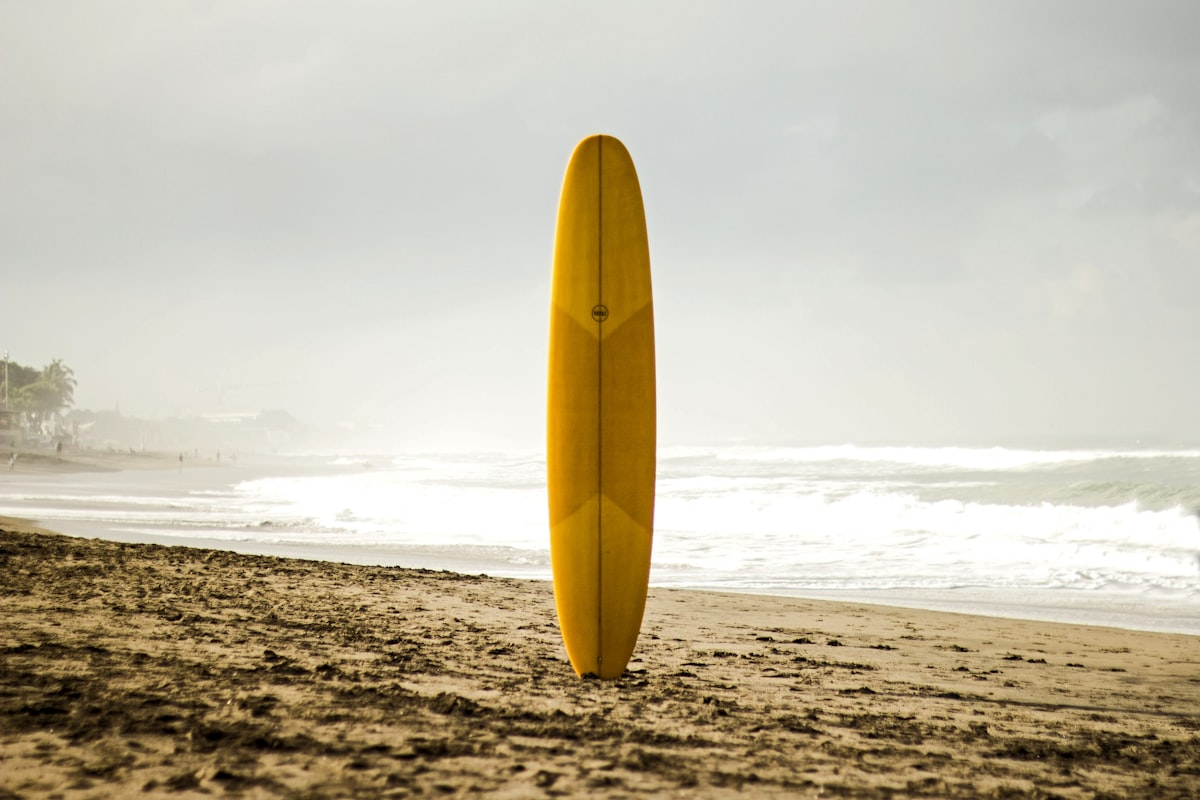
When the swell finally lights up — overhead, fast, hollow — your everyday shortboard suddenly feels too light, too loose, and too thin to handle the speed. The step-up is a slightly longer, slightly thicker, slightly more drawn-out version of your everyday board. It's not a gun. It's the board you grab when you'd be undergunned on your daily driver but you're not yet at big-wave-board territory.
A typical step-up runs 2–4 inches longer than your everyday board, with a touch more volume and a slightly pulled-in tail.
5. The Specialty Board
The category that will eat your wallet if you're not careful. Twin fins. Single fins. Asymmetricals. Alaias. Foam-tops for friends. Travel boards. Big-wave guns. Mini Simmons.
Specialty boards are great — they teach you to surf differently and they're usually the most fun board in the quiver on the right day. But they're also the boards most likely to gather dust. Be honest about whether you'll really ride them.
How Many Boards Do You Actually Need?
The most common mistake in quiver-building is buying too many boards too soon. Here's a more honest progression.
The Beginner Quiver: One Board
If you've been surfing for less than about a year, your quiver should be one board: a soft-top in the 8–9 foot range, or a beat-up foam-glass mid-length. That's it.
You don't need a fish. You don't need a longboard and a soft-top. You need to surf the same board so often that you stop thinking about it, and you start understanding waves. Boards do not accelerate learning. Wave count does.
Working on board selection? Partner with Neptune on iPhone and Apple Watch.
Get the free appThe Intermediate Quiver: Two Boards
Once you can paddle into open-face waves consistently, generate a bit of speed, and link a few turns, you've outgrown the soft-top. Now we're starting to think like a quiver.
The classic two-board intermediate setup:
- A high-volume hybrid or fun-shape (6'6"–7'6") — your everyday board for most conditions
- A longboard or mid-length (8'0"–9'0") — for the small days and to develop trim, cross-stepping, and reading the wave at a slower tempo
That's it. Two boards covers 90% of what you'll encounter. Resist the urge to add a shortboard "for when I'm ready" — when you're ready, you'll know, and you'll buy something appropriate at that time. Boards bought for your future self are almost always wrong.

The Advanced Quiver: Three Boards
When your turns are working, you're getting barreled occasionally, and you're starting to feel limited by your hybrid in steeper conditions, three boards is the sweet spot:
- An everyday performance shortboard (5'10"–6'4") — your daily driver
- A small-wave board (fish, groveler, or modern hybrid, 5'8"–6'2") — for soft days
- A longboard or mid-length — for the smallest days and stylistic development
This three-board quiver covers everything from ankle-high to slightly-overhead, gives you genuine performance options for every category of day, and doesn't require a garage to store. It's the quiver most committed surfers settle into and stay with for years.
The Complete Quiver: Four to Five Boards
If you're surfing four or more days a week, traveling regularly, or chasing serious swells, a four-to-five-board quiver makes sense:
- Everyday performance shortboard
- Small-wave board
- Longboard or mid-length
- Step-up (typically 2–4 inches longer than your everyday board)
- One specialty board you'll actually ride (twin fin, alternate-shape, or a dedicated travel board)
Beyond five boards, returns diminish quickly. The boards you ride least are not the marginal additions to your quiver — they're the boards displacing the ones you'd ride more. Each new board you add competes for the same finite number of sessions.
Building for the Wave You Actually Surf
The single biggest mistake in quiver-building is designing a quiver around an idealized version of your surfing instead of your real conditions.
If you live somewhere that produces ankle-to-waist-high mush 80% of the year, your quiver should not be optimized for double-overhead reef breaks. You should not own a step-up. You should not own a gun. You should own two boards optimized for soft, weak waves and one board for the rare day it actually gets bigger.
Be brutal about this. Pull up your last hundred sessions. (If you log surfs, this is easy. If not, just be honest about your average session over the past year.) What was the actual size? The actual quality? The actual board you rode?
Most surfers find that:
- Their average wave is smaller than they think
- Their best board for those conditions is not the board they ride most
- They own two boards that overlap heavily and zero boards for the kind of day they get most
Fixing this single mismatch is usually the highest-ROI move you can make in your equipment.
Volume: The Number That Matters Most
If you take only one technical concept away from this guide, make it volume.
Volume is the most important number on a surfboard. It determines how the board floats, how easy it is to paddle, how forgiving it is on the takeoff, and how it sits in the water when you're trying to generate speed. Length, width, and thickness only matter to the extent that they produce volume in the right places.
A rough rule of thumb: your everyday board volume in liters should be somewhere around your body weight in kilograms, give or take 10–20%. Beginners and small-wave boards skew higher. Performance shortboards and step-ups skew lower. Past that, fit your boards to your conditions and skill, not to what your favorite pro is riding.
The most common volume mistake is being underboarded — picking up a board because it looks like the boards you see in magazines, only to find that you can't paddle it, can't catch waves, and surf worse than you did on the bigger board. If you're between sizes, go slightly bigger. The volume cost of being slightly overboard is far smaller than the wave-count cost of being underboard.
How to Add Boards Without Wasting Money
Once you know the categories and your conditions, here are the practical rules for actually growing a quiver intelligently.
Buy used until you know what you want
A new shortboard runs $700–$1,200 in 2026. A nearly-identical used board runs $300–$500. Until you know exactly what dimensions and shape work for you, buying used is dramatically smarter. You'll also feel much less precious about putting it through real conditions.
Resist the urge to fill every category at once
If you're building from a one-board quiver to a three-board quiver, don't buy two boards on the same day. Buy one. Surf it for two months. Notice what's missing. Then buy the next one to fill the actual gap, not the imagined one.
Keep notes on each board
Once you have more than two boards, you'll start losing track of which one feels best in which conditions. A small note in a session log — "rode the 5'10" today, felt sluggish, should've grabbed the fish" — is gold. Over a year, those notes show you exactly which boards earn their keep.
Sell what you don't ride
Every six months, look at your boards. If a board hasn't been surfed in three months and conditions for it have been there, sell it. The cash funds a better board, the rack space relieves your storage, and the mental load of choosing between boards goes down. A quiver you can't decide between is worse than a smaller quiver you can.
Don't chase the pro model
Pros ride boards designed for very specific waves and an enormous skill ceiling. The board your favorite surfer is riding at Pipeline is almost certainly the wrong board for you. Boards built for the average surfer at the average break are not "lesser" — they're correctly tuned for what most of us actually ride.
Quivers Evolve
Your quiver is not a fixed thing. It's a snapshot of who you are as a surfer right now. The boards that are perfect this year will feel wrong in two years, because you will be different. Your turns will be tighter. Your wave selection sharper. Your conditions might change because you moved, or got a new job with different hours, or had a kid.
Treat the quiver as a living system. Cull boards that don't fit anymore. Add boards that match where you actually are. Fight the urge to keep boards out of nostalgia, or to buy boards out of envy. The best quiver is the one where every board, when you reach for it, makes you think yes, this one, today.
That's not a collection. That's a quiver.
Where to Start This Week
If you're sitting on one board and feel ready to expand: take an honest inventory of your last twenty sessions, identify the conditions where your current board frustrated you most, and add the one board that solves that specific problem.
If you're sitting on five boards and only ride two: list every board, mark the date you last rode each one, and sell whatever's been gathering dust longest. A leaner quiver makes the boards you keep work harder for you.
And if you're somewhere in between — congratulations, you're in the right place. The job isn't to own more boards. The job is to own the right ones, and to know them well enough that picking the right board on any given morning takes about three seconds. That's when you stop thinking about gear and start surfing.
Read it. Then take it to the water.