The Mental Game of Surfing

Neptune
March 21, 2026

Why Your Mind Is the Biggest Factor in Your Surfing
Perfect mechanics still fail if your mind is not in the session.
You are balancing on a moving platform in water you cannot control.
The surfers who progress fastest aren't always the most athletic or the most naturally talented. They're the ones who have learned to manage what's happening between their ears. They paddle out with purpose, stay calm when things go wrong, and trust their body to execute what they've practiced — even when fear is screaming at them to pull back.
This guide is about that inner game. Whether you're a beginner trying to get comfortable in overhead surf, an intermediate surfer stuck on a plateau, or an experienced surfer looking to push into bigger or more critical waves, the mental skills covered here will unlock the next level of your surfing.
Understanding Fear in the Water
Fear is the single biggest obstacle most surfers face, and it shows up at every level. Beginners fear whitewater. Intermediate surfers fear bigger waves or shallow reefs. Advanced surfers fear heavy barrels and massive swells. The waves change, but the feeling is the same — that tight chest, the hesitation before committing, the voice in your head saying maybe I should sit this one out.
Here's the critical thing to understand: fear in surfing is not your enemy. It's information.
Rational Fear vs. Irrational Fear
The first step in managing fear is learning to distinguish between two very different types:
Rational fear is your brain correctly identifying genuine danger. If the surf is well beyond your ability, if you're surfing alone over a shallow reef you don't know, if conditions are deteriorating and you're already exhausted — that fear is protecting you. Respect it. Paddle in.
Irrational fear is your brain overreacting to a situation that is within your capability but outside your comfort zone. This is the fear you feel when the waves are a little bigger than what you're used to, when you're at a new break, or when you haven't surfed in a while. Your body treats it as a threat, but rationally you know you can handle it.
The goal is never to eliminate fear. The goal is to accurately assess which type of fear you're experiencing and respond accordingly. Rational fear keeps you alive. Irrational fear keeps you stuck.
The Physiology of Fear
When fear kicks in, your body activates the sympathetic nervous system — the fight-or-flight response. Your heart rate spikes. Your breathing becomes shallow. Your muscles tense. Blood flows away from your extremities and toward your core. Adrenaline floods your system.
In a survival situation, this response is invaluable. In a surfing context, it's usually counterproductive. Tense muscles make your movements stiff and robotic. Shallow breathing reduces your oxygen reserves — exactly the opposite of what you need if you're about to get held under. And the cognitive narrowing that comes with high arousal makes it harder to read the wave, time your takeoff, and make split-second decisions.
The good news: you can train yourself to regulate this response. Not by pretending you're not scared, but by using specific techniques that bring your nervous system back under conscious control.

Practical Techniques for Managing Fear
Box Breathing
Before you paddle out — especially on days when the surf looks intimidating — spend two minutes doing box breathing. Inhale for four seconds, hold for four seconds, exhale for four seconds, hold for four seconds. Repeat.
This technique activates your parasympathetic nervous system, which directly counteracts the fight-or-flight response. Navy SEALs use it before high-stress operations. Big wave surfers use it before paddling into the heaviest waves on the planet. It works because it gives your rational brain a window to override the panic response.
Do it on the beach before your session. Do it sitting on your board in the lineup. Do it after a heavy wipeout while you're recovering. The more you practice, the faster it brings you back to center.
Progressive Exposure
The most reliable way to expand your comfort zone is through gradual, deliberate exposure. This means intentionally surfing conditions that are slightly outside what feels comfortable — but not so far outside that you're in genuine danger.
If overhead waves scare you, don't jump straight into double overhead. Instead, seek out head-high days and force yourself to paddle out. Stay on the shoulder if you need to. Catch a few smaller ones. Let your nervous system learn that this environment is survivable. Next time, you'll feel calmer. The time after that, even calmer.
This process can't be rushed. Your nervous system adapts on its own timeline, not yours. But it does adapt — reliably and permanently — if you give it consistent exposure.
The Commitment Principle
Here's a pattern that leads to most surfing injuries and bad wipeouts: half-committing. You paddle for a wave, then hesitate at the critical moment. You pull back at the lip instead of going for it. You try to straighten out instead of committing to the turn.
Half-measures in surfing are more dangerous than full commitment. When you pull back on a steep takeoff, you end up going over the falls in the worst possible position. When you hesitate on a bottom turn, you lose speed and get caught by the lip.
Make a rule for yourself: once you've decided to go, you go. No second-guessing mid-wave. If you're not sure you want a wave, let it pass — that's fine. But once your arms are moving and you've made the decision, commit 100%. This single mindset shift will immediately reduce your wipeouts and improve your wave count.
Recovering from Bad Sessions and Wipeouts
Every surfer has bad days. Sessions where nothing connects. Wipeouts that shake your confidence. Hold-downs that leave you rattled for days. How you process these experiences determines whether they become setbacks or growth opportunities.
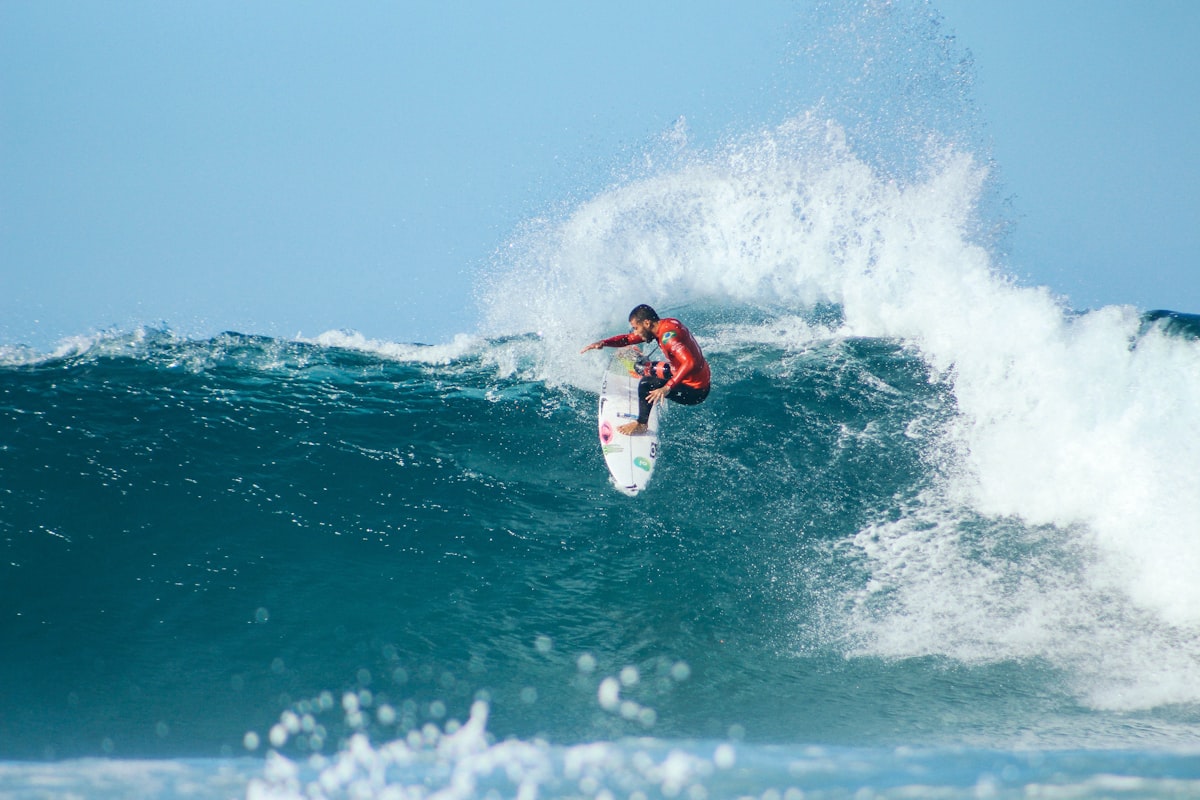
Reframing Wipeouts
A wipeout is not a failure. It's data. Every wipeout tells you something specific about what went wrong — your positioning, your timing, your commitment level, your reading of the wave.
After a wipeout, resist the urge to get frustrated or to immediately paddle back out in a reactive state. Instead, take thirty seconds. Catch your breath. Ask yourself: What specifically caused that? Was I too deep? Too late? Did I lean too far forward on the takeoff? Did I misjudge the section?
Working on mental training? Partner with Neptune on iPhone and Apple Watch.
Get the free appThis transforms a negative emotional experience into useful feedback. Over time, you'll notice patterns in your wipeouts that reveal the specific gaps in your technique or decision-making.
The Post-Session Debrief
Most surfers get out of the water and immediately move on with their day. They might vaguely think "that was a good session" or "that was rough," but they don't extract real lessons.
Spend two minutes after every session — while it's still fresh — asking yourself three questions:
- What went well? Even in a terrible session, something went right. Maybe your paddle-out was efficient. Maybe you read one wave correctly. Anchor the positive.
- What's one specific thing I want to improve? Not five things. One thing. Be precise. "I want to look down the line earlier on my takeoff" is useful. "I want to surf better" is not.
- What wave stood out, and why? Replaying your best wave in your mind reinforces the neural pathways that produced it. This is free mental practice.
If you do this consistently, your rate of improvement will accelerate dramatically. You're no longer just accumulating hours in the water — you're actively processing and integrating what those hours teach you.
Visualization: Training Your Brain Without Water
Visualization is one of the most powerful and underused tools in a surfer's mental toolkit. Research in sports psychology has consistently shown that mental rehearsal activates many of the same neural pathways as physical practice. Your brain, to a remarkable degree, can't tell the difference between vividly imagining an action and actually performing it.
How to Visualize Effectively
Bad visualization is vague and passive — a hazy mental movie of yourself surfing well. Good visualization is specific, vivid, and embodied.
Here's how to do it right:
Set the scene. Close your eyes and imagine a specific break you know well. See the color of the water. Feel the temperature. Hear the sound of the waves. The more sensory detail you include, the more your brain treats it as real experience.
Walk through the sequence. Pick a specific maneuver or situation you want to improve. A steep takeoff. A backside bottom turn. A late drop. Now mentally rehearse it from a first-person perspective — not watching yourself from outside, but seeing through your own eyes.
Feel your hands on the rails. Feel the board accelerating down the face. Feel the pressure in your back foot as you initiate the turn. Feel the spray on your face as you project up the wave face. The more physical sensation you incorporate, the more effective the visualization.
Rehearse both outcomes. Visualize executing perfectly. Then visualize things going slightly wrong — a bobbled takeoff, a section that closes out faster than expected — and see yourself recovering. This builds mental flexibility, so your brain has a plan for imperfection.
When to Visualize
The best times for visualization are:
- The night before a session. Spend five minutes mentally rehearsing the kind of waves you expect and how you want to surf them.
- On the drive to the beach. Instead of zoning out to music, mentally warm up by rehearsing your first few waves.
- Flat days. When you can't surf, visualization is the next best thing. Ten minutes of focused mental rehearsal on a flat day is more valuable than passively watching surf videos for an hour.

Building Unshakable Confidence
Confidence in surfing isn't about convincing yourself you're better than you are. That's delusion, and the ocean will correct it quickly. Real confidence is a deep, quiet knowledge that you've prepared, that you belong in the conditions you're facing, and that your body knows what to do.
Confidence Comes from Evidence
You can't talk yourself into confidence. You have to earn it through experience. Every wave you catch, every wipeout you survive, every session where you pushed slightly past your comfort zone — these are deposits in your confidence bank.
This is why progressive exposure is so powerful. Each small success in slightly uncomfortable conditions provides concrete evidence that you can handle more than you thought. Over months and years, these deposits compound into genuine, unshakable self-belief.
The Confidence-Competence Loop
Confidence and competence feed each other in a virtuous cycle. When you're confident, you commit more fully to waves. Full commitment leads to better execution. Better execution builds more confidence. And so on.
The opposite is also true. When your confidence is low, you hesitate. Hesitation leads to poor execution and wipeouts. Wipeouts further erode your confidence. Breaking out of a negative spiral requires deliberately going back to basics — surfing waves that are well within your ability, stacking small successes, and rebuilding from there.
There's no shame in this. Even professional surfers do it after injuries or extended time out of the water. Confidence is rebuilt the same way it was built in the first place: one wave at a time.
Detaching from Outcomes
One of the most freeing mental shifts you can make is to stop judging your sessions by outcomes — how many waves you caught, how well you surfed relative to others, whether you "performed" well enough.
Instead, judge your sessions by inputs. Did you paddle out when you felt nervous? Did you commit to the waves you went for? Did you stay focused and present? Did you try something new?
You can control your effort, your attitude, and your commitment. You can't control the waves, the crowd, or whether that one set wave lets you make the section. Attaching your satisfaction to things you can't control is a recipe for frustration. Attaching it to things you can control is a recipe for consistent growth — and a lot more fun.
Pre-Session Rituals That Set Your Mind Right
The mental state you bring to the water is largely determined by what you do in the thirty minutes before you paddle out. Developing a consistent pre-session routine primes your brain for performance.
Watch Before You Paddle
Spend at least five minutes observing the surf before you get in. Watch where the waves are breaking. Watch where other surfers are positioning themselves. Identify the channels, the peaks, and any hazards. This isn't just tactical — it tells your nervous system that you're approaching this thoughtfully, not reactively, which reduces anxiety.
Set an Intention
Before you paddle out, choose one thing to focus on for this session. Not a goal — an intention. "Today I'm focusing on looking down the line before I pop up." "Today I'm going to commit to every wave I paddle for." "Today I'm going to stay relaxed and enjoy the process."
A single intention gives your mind a compass. Without one, your attention scatters — you're thinking about the crowd, the cold, the wave you missed, the surfer who dropped in on you. With one, you have something to return to every time your focus drifts.
Warm Up Your Body to Warm Up Your Mind
Physical tension creates mental tension. A five-minute dynamic warm-up on the beach — arm circles, torso rotations, hip openers, a few squats — doesn't just prepare your muscles. It tells your brain that you're taking this seriously, that you're prepared, and that you're ready. The act of preparing is itself a confidence builder.

Staying Present in the Water
The ocean exists only in the present moment. The last wave is gone. The next one hasn't arrived. The only wave that matters is the one rolling toward you right now.
Yet most surfers spend their sessions mentally somewhere else. They're replaying the wave they blew. They're worrying about the set on the horizon. They're comparing themselves to the surfer next to them. They're thinking about work, about dinner, about whether they should have brought the other board.
Anchoring Techniques
When you notice your mind drifting, use a simple anchor to bring it back:
- Feel your hands in the water. Focus on the temperature, the texture, the resistance. This instantly grounds you in physical sensation.
- Listen to the ocean. Really listen — to the hiss of whitewater, the deep rumble of an approaching set, the silence between waves.
- Watch the horizon. Not anxiously scanning for the next set, but calmly observing. Let your eyes soften. This activates a relaxed alertness that's ideal for wave reading and reaction time.
These aren't meditation exercises. They're performance tools. The ability to be fully present in the water — aware of everything, attached to nothing — is what allows the best surfers to react instinctively, to read waves a split second earlier, and to flow through maneuvers without overthinking.
Putting It All Together
The mental game of surfing isn't a separate skill you practice alongside your surfing. It is your surfing. Every wave you've ever ridden was shaped as much by your mental state as by your physical technique.
Start small. Pick one technique from this guide and apply it in your next session. Maybe it's box breathing before you paddle out. Maybe it's setting a single intention. Maybe it's the post-session debrief. Give it three sessions before you judge whether it's working.
Over time, layer in more. Build your pre-session routine. Start a visualization practice on flat days. Practice distinguishing between rational and irrational fear in real time. Develop the habit of committing fully once you've decided to go.
The ocean will always be unpredictable, powerful, and humbling. You can't control it. But you can control how you show up — mentally prepared, emotionally grounded, and ready to surf at your best. That's the real game within the game, and it's the one that will transform not just your surfing, but your entire relationship with the ocean.
Read it. Then take it to the water.