A Pre-Surf Warm-Up and Stretching Routine

Neptune
March 18, 2026

Why Most Surfers Skip the Warm-Up (And Pay for It Later)
Most surfers sprint from the parking lot to the water.
Surfing asks for power, endurance, and range of motion — often in cold water that tightens you first.
Paddling out cold doesn't just feel stiff — it actively limits your performance. Your pop-up is slower. Your shoulders fatigue faster. Your turns feel restricted. And over months and years, the cumulative stress of cold-start sessions leads to the injuries that plague surfers most: rotator cuff tears, lower back pain, neck strain, and hip impingement.
A proper warm-up takes 10 minutes. That's it. Ten minutes that will make the first wave of your session feel like the fifth, extend your water time, and protect your body from the chronic issues that force surfers out of the water for weeks or months at a time.
This guide gives you a complete, surf-specific warm-up routine you can do on the beach, in the parking lot, or even at home before you drive to the break.
The Science Behind Warming Up for Surfing
Before we get into the routine, it helps to understand what a warm-up actually does at a physiological level — because this isn't just about "feeling loose."
What Happens in Your Body
Increased blood flow: Light movement raises your heart rate and pushes more blood into your muscles. This delivers oxygen and nutrients while flushing metabolic waste. Cold muscles are literally less capable of generating force.
Elevated muscle temperature: Warm muscles contract more forcefully and relax more quickly. Studies show that a 1°C increase in muscle temperature improves power output by approximately 5%. In surfing terms, that translates directly to paddle speed and pop-up explosiveness.
Improved neural activation: A warm-up "wakes up" the neural pathways between your brain and your muscles. Your reaction time decreases, your coordination improves, and complex movement patterns — like the pop-up — become more fluid.
Greater range of motion: Dynamic stretching temporarily increases your joints' available range of motion. For surfers, this means deeper bottom turns, more fluid cutbacks, and less strain on your shoulders during extended paddle sessions.
Dynamic vs. Static Stretching
This is critical: your pre-surf routine should be dynamic, not static.
Static stretching — holding a stretch for 30+ seconds — has been shown to temporarily decrease muscle power output and reaction time. That's the opposite of what you want before hitting the water. Save static stretching for after your session, when your muscles are warm and you want to promote recovery.
Dynamic stretching involves controlled movement through your full range of motion. It raises your heart rate, activates your muscles, and improves mobility — all at the same time.
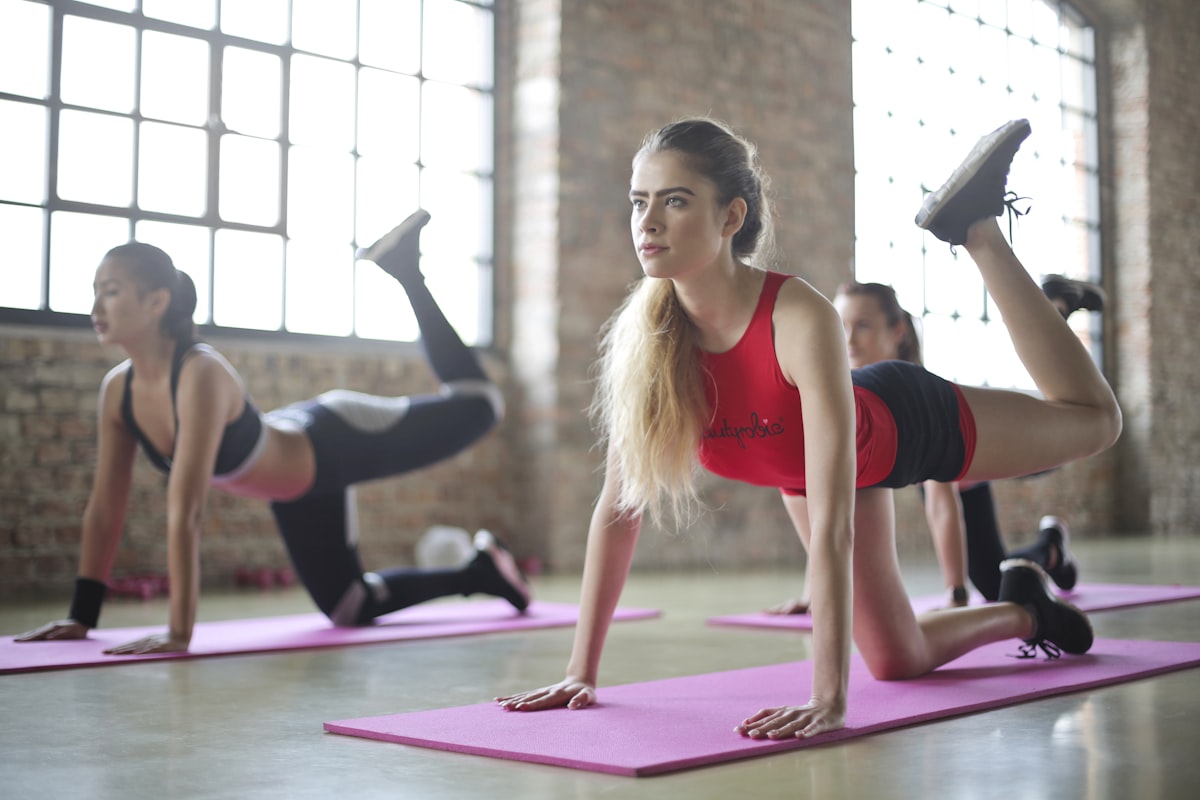
The 10-Minute Pre-Surf Warm-Up Routine
This routine targets the four areas surfers need most: shoulders, thoracic spine (mid-back), hips, and core. Do each exercise for the prescribed time or reps, then move directly to the next one. The whole sequence should take about 10 minutes.
Phase 1: Get the Blood Moving (2 Minutes)
Start with light cardio to raise your heart rate and body temperature.
Jog or brisk walk on the sand (60 seconds) Don't sprint — just move at a pace that gets you breathing slightly harder. Running on soft sand is ideal because it also activates your ankle stabilizers and calf muscles, both of which are critical for balance on the board.
Jumping jacks (30 seconds) A classic for a reason. Jumping jacks move your arms through a full range while keeping your heart rate elevated.
High knees (30 seconds) Drive your knees toward your chest while pumping your arms. This wakes up your hip flexors and core, and it mimics the explosive hip drive you need for the pop-up.
Phase 2: Shoulder Mobility (3 Minutes)
Your shoulders do more work during a surf session than almost any other joint. Paddling demands sustained shoulder endurance, and without proper warm-up, the rotator cuff takes a beating.
Arm circles — small to large (30 seconds each direction) Start with small circles and gradually increase to full range. Keep your core engaged and avoid shrugging your shoulders up toward your ears. This lubricates the shoulder joint and activates the rotator cuff muscles.
Cross-body arm swings (30 seconds) Swing both arms horizontally across your body, alternating which arm is on top. This dynamically stretches your posterior deltoid and rhomboids — the muscles that tend to tighten up during long paddle sessions.
Thread the needle (5 reps per side) Start on all fours. Reach your right arm under your left armpit, threading it through until your right shoulder touches the ground. Then reverse, opening your right arm toward the sky. This is the single best dynamic stretch for your thoracic spine, which is essential for rotation in your turns.
Working on shoulder stretching? Partner with Neptune on iPhone and Apple Watch.
Get the free appBand pull-aparts or reverse flys (10 reps) If you keep a resistance band in your car (highly recommended), do pull-aparts at chest height. If not, stand with a slight forward lean and mimic the motion with your arms, squeezing your shoulder blades together at the end of each rep. This activates the muscles that stabilize your shoulder blades — critical for healthy paddling mechanics.
Phase 3: Hip and Lower Body Mobility (3 Minutes)
Your hips are the engine of your surfing. Every turn, every pump, every bottom turn is driven by hip rotation and extension. Tight hips don't just limit your surfing — they transfer stress into your lower back.
Leg swings — forward and back (10 per leg) Hold your board or a railing for balance. Swing one leg forward and back like a pendulum, gradually increasing the range. Keep your torso stable and don't arch your lower back.
Leg swings — side to side (10 per leg) Same setup, but swing your leg across your body and out to the side. This opens up your hip adductors and abductors, which stabilize you during lateral movements on the board.
Walking lunges with rotation (5 per side) Step into a lunge, then rotate your torso toward the front knee. This combines hip flexor stretching with thoracic rotation — two of the most important movement patterns in surfing. Keep your back knee hovering just above the ground and your front knee tracking over your toes.
Deep squat hold with thoracic rotation (30 seconds) Drop into a deep squat with your feet slightly wider than shoulder width. Place one hand on the ground and reach the other arm toward the sky, rotating through your mid-back. Hold for a few seconds, then switch sides. This is a powerful full-body mobilizer that hits your ankles, hips, and spine simultaneously.

Phase 4: Core Activation and Surf-Specific Movements (2 Minutes)
Now that you're warm and mobile, it's time to fire up your core and rehearse the movements you'll actually use in the water.
Dead bugs (8 per side) Lie on your back with your arms extended toward the ceiling and your knees at 90 degrees. Slowly extend your right arm overhead while extending your left leg toward the ground. Return to start and switch sides. The key is keeping your lower back pressed into the ground throughout — this trains the deep core stabilizers that protect your spine during wipeouts.
Pop-up rehearsals (5 reps) Lie face down on the sand and practice your pop-up at about 70% speed. Focus on hand placement, foot position, and landing in a balanced stance. This isn't about power — it's about grooving the motor pattern so your first pop-up in the water is smooth and automatic.
Prone paddle simulation (20 seconds) Lie face down and mimic the paddling motion, focusing on full arm extension, a high elbow catch, and engaging your lats rather than just your shoulders. This activates the exact muscles you'll use for the next hour.
Adjusting the Routine for Conditions
Not every session demands the same warm-up. Here's how to modify based on what you're facing.
Cold Water or Early Morning Sessions
When the water is cold or you're surfing at dawn, your muscles are tighter and take longer to warm up. Add an extra minute of light cardio at the beginning and spend more time on the shoulder mobility phase. Cold shoulders are the most common injury trigger for surfers.
Big Wave Days
If you're surfing waves that are bigger than your usual, focus extra attention on your hip mobility and pop-up rehearsals. Bigger waves demand a faster, more committed pop-up, and tight hips will slow you down exactly when you need speed.
If You've Been at a Desk All Day
Office workers who surf after work are particularly prone to tight hip flexors and a stiff thoracic spine. Double up on the walking lunges with rotation and thread the needle exercise. Your body has been folded into a chair for 8 hours — it needs extra attention before you ask it to perform.

Common Warm-Up Mistakes to Avoid
Holding static stretches before surfing: As mentioned earlier, save static stretching for after your session. Pre-surf, stick to dynamic movement.
Only warming up your upper body: Paddling is upper-body dominant, so most surfers focus their warm-up there. But your hips and legs drive your actual surfing. A surfer with warm shoulders but cold hips will paddle fine but surf terribly.
Going too hard: The warm-up should feel like a gradual ramp-up, not a workout. If you're breaking a heavy sweat or breathing hard, you're using energy that should go toward catching waves.
Skipping it when you're "already warmed up": Driving to the beach on a hot day doesn't count as warming up. Your muscles need active movement, not ambient heat.
Doing the same three stretches forever: Your body adapts to repetitive stimuli. Rotate through different exercises and progressively challenge your range of motion over time. The routine in this guide is a solid foundation, but feel free to add new movements as you learn them.
The Post-Surf Cool-Down (Bonus)
While this guide focuses on the pre-surf warm-up, a quick post-surf cool-down makes a significant difference in recovery. After your session, spend 5 minutes on static stretches:
- Chest doorway stretch (30 seconds per side): Opens up the chest and anterior shoulder, which tighten during paddling.
- Pigeon pose (45 seconds per side): Deep hip flexor and glute stretch. This is the single best stretch for surfers.
- Cat-cow (10 reps): Gently mobilizes your spine after all the extension from lying on your board.
- Neck rolls (30 seconds each direction): Releases tension from looking up while paddling.
These stretches don't need to be aggressive. Just ease into them, breathe deeply, and let your muscles relax.
Building the Habit
The biggest challenge with a warm-up routine isn't knowledge — it's consistency. Here are a few strategies that help:
Anchor it to something you already do: Do your warm-up while your wetsuit is half on, or while you're watching the waves to read the conditions. Pairing it with an existing habit makes it automatic.
Keep a resistance band in your car: Having equipment accessible removes one more barrier. A light resistance band takes up zero space and adds significant value to the shoulder portion of your routine.
Start with 5 minutes: If 10 minutes feels like too much, start with Phase 1 (cardio) and Phase 2 (shoulders). Once that becomes habit, add the other phases. A 5-minute warm-up is infinitely better than no warm-up.
Track it: If you're using an app like Neptune to log your sessions, note whether you warmed up. Over time, you'll likely notice a pattern — sessions where you warmed up feel better, last longer, and produce fewer aches afterward.

The Bottom Line
Ten minutes of preparation gives you a better session and a longer surfing life. The surfers who are still ripping in their 50s and 60s aren't genetically gifted — they're the ones who take care of their bodies before and after every session.
Your warm-up doesn't need to be complicated. It doesn't need special equipment. It just needs to happen. Start with the routine in this guide, make it your own over time, and notice the difference it makes — not just in how your first wave feels, but in how your body feels the morning after.
The waves will still be there in 10 minutes. Use that time wisely.
Read it. Then take it to the water.